Celebrating Betty
from her past to the present… and beyond!
She was just a bit player when she made her first film appearance in Dizzy Dishes, part of the Fleischer's Talkartoon series starring the then-very popular character Bimbo, a dog with some decidedly human traits. This precursor to Betty Boop didn’t have a name and didn’t even appear until nearly three minutes into the six-minute film. But the big-eyed, floppy-eared nightclub singer quickly captured Bimbo’s attention— and ours.
The Fleischers responded quickly to the character’s positive reception. They began featuring her in more films with larger roles, and it wasn’t long before she surpassed Bimbo in popularity. As her popularity grew, her canine features also started to transform. She became increasingly human, demonstrating an indomitable spirit, steadfast optimism and unfailing goodwill that established her as a star in her own right. In 1932 she became the star of her own Betty Boop series of films.
All these years later, Betty continues to win hearts, incite joy and inspire fans around the world. So join us in celebrating Betty’s evolution from her first appearance as a saucy, dog-eared nightclub singer to the leading lady and cultural icon we know today.
On Being Human…
While other animated female characters had graced the silver screen before her, they’d been mostly animals and were always relegated to supporting roles (like Minnie Mouse).
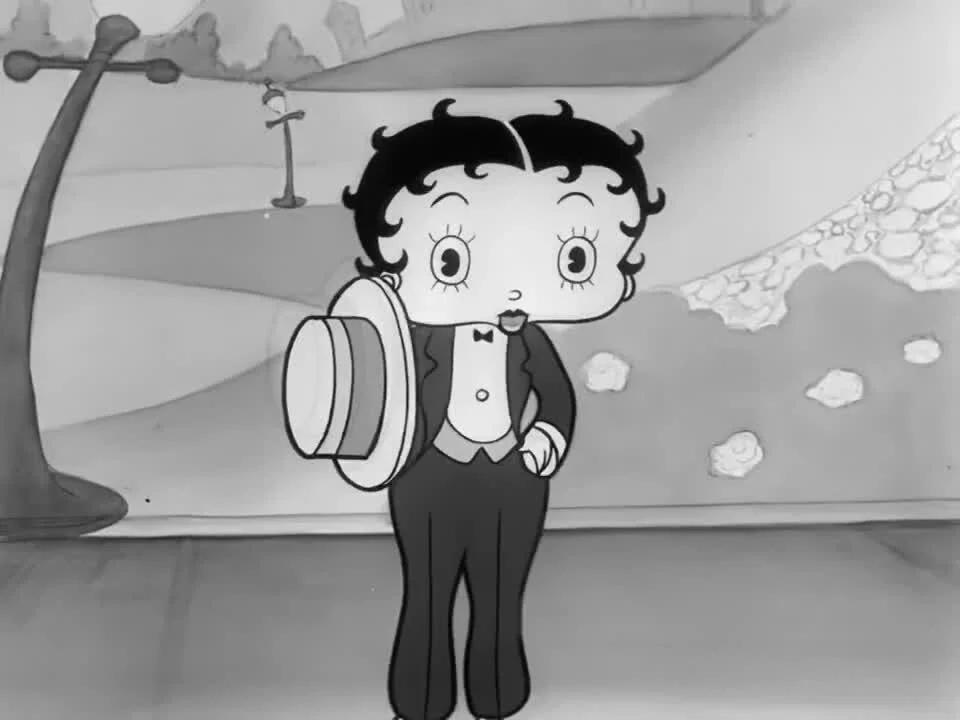
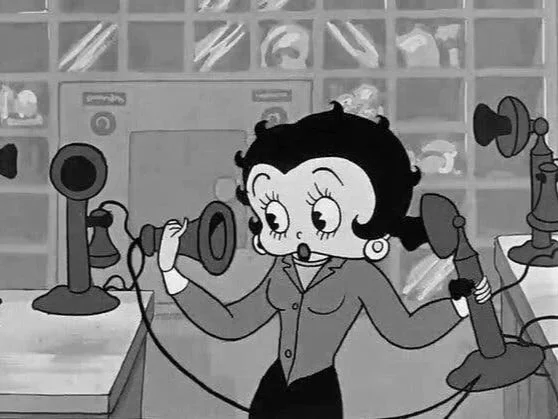
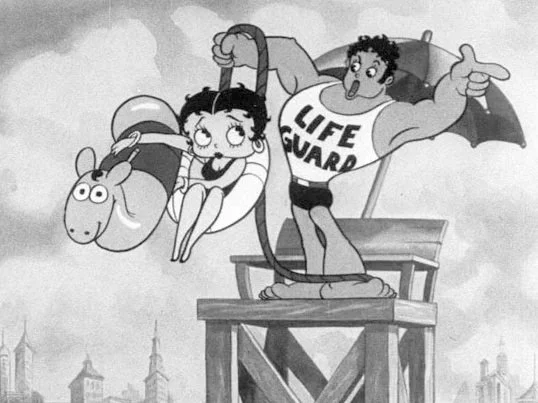
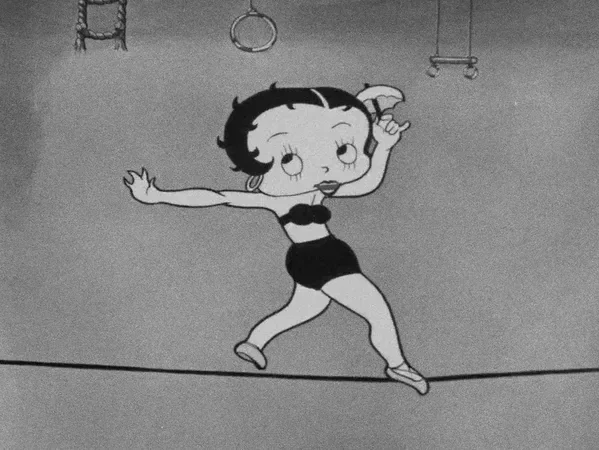
When the droopy-eared jazz singing character shed her canine characteristics, and evolved into the character we know today as Betty Boop, she became the very first fully female, fully human animated star.
The impact this had on the world of animated entertainment can be clearly felt in this June 1932 article in The Film Daily:
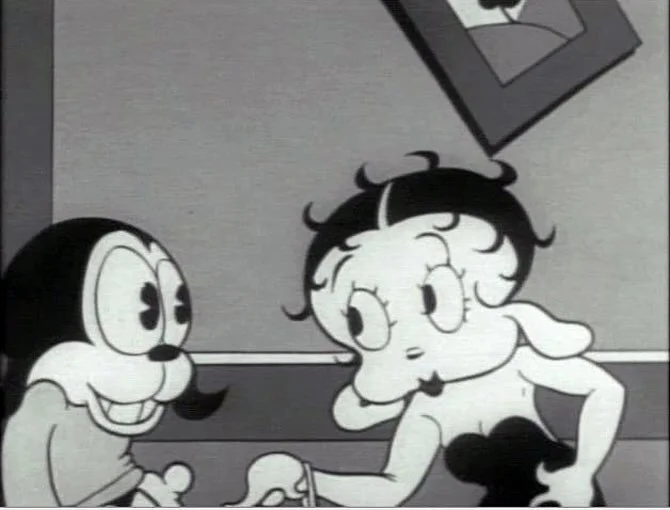
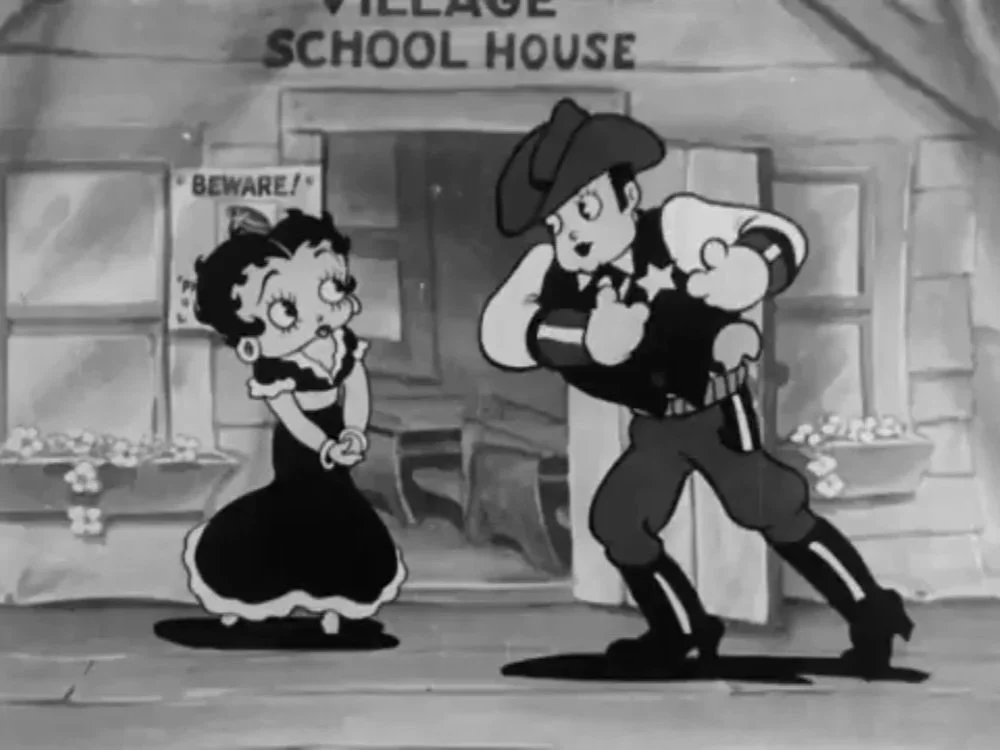
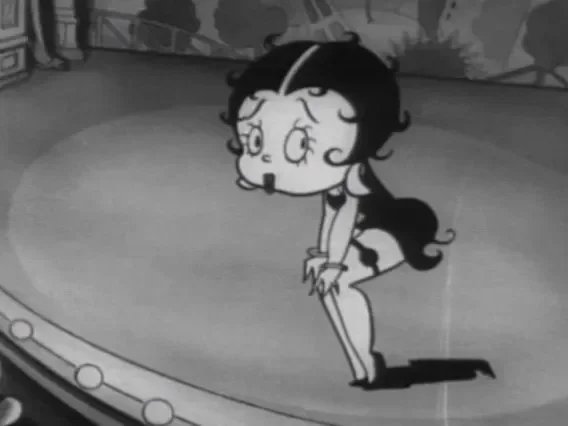
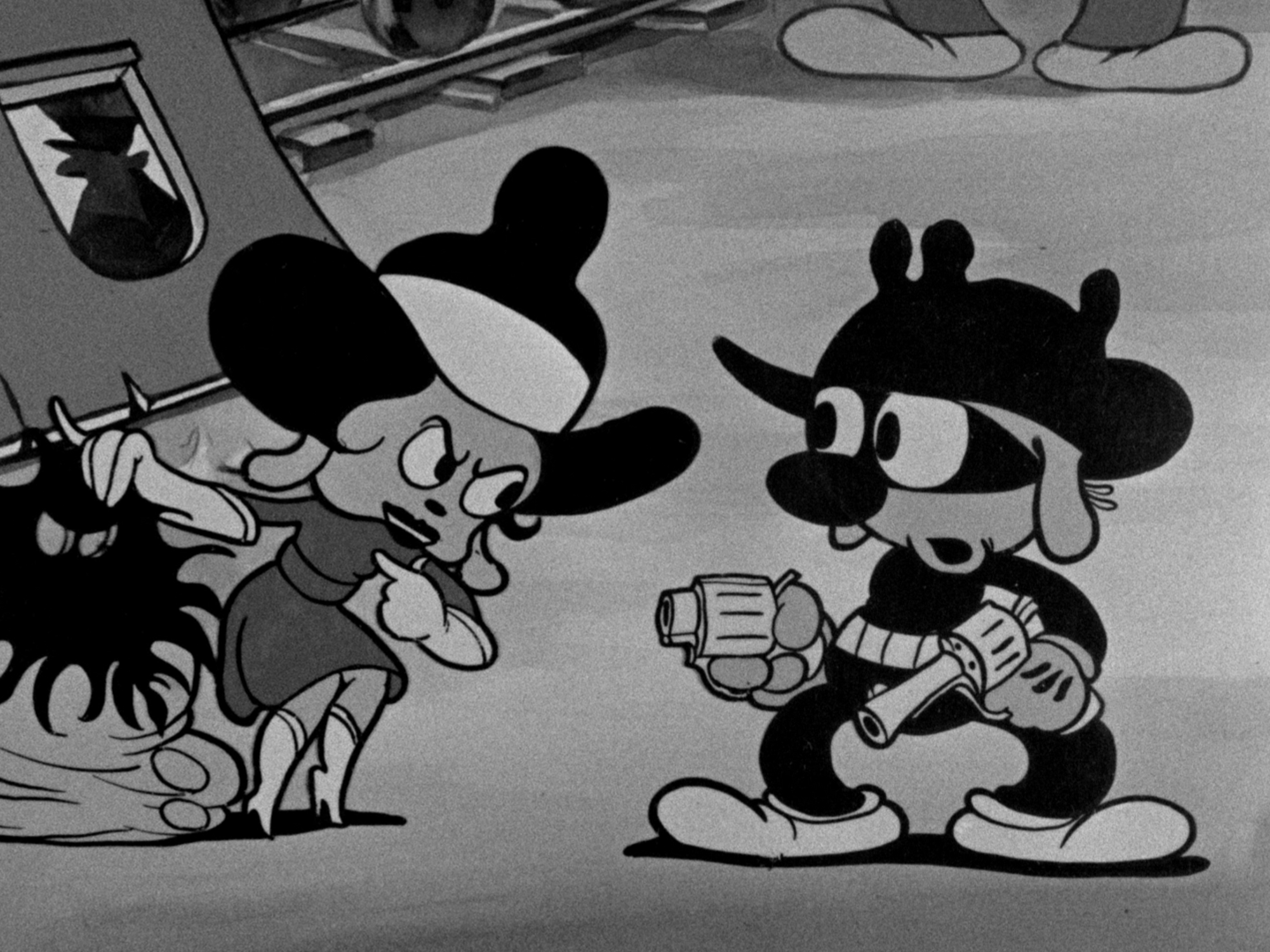
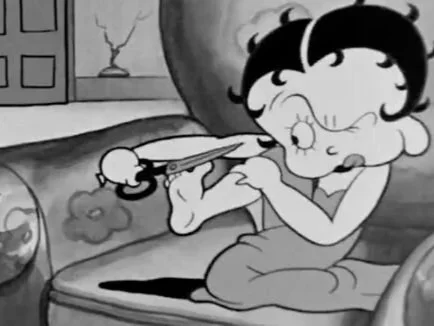
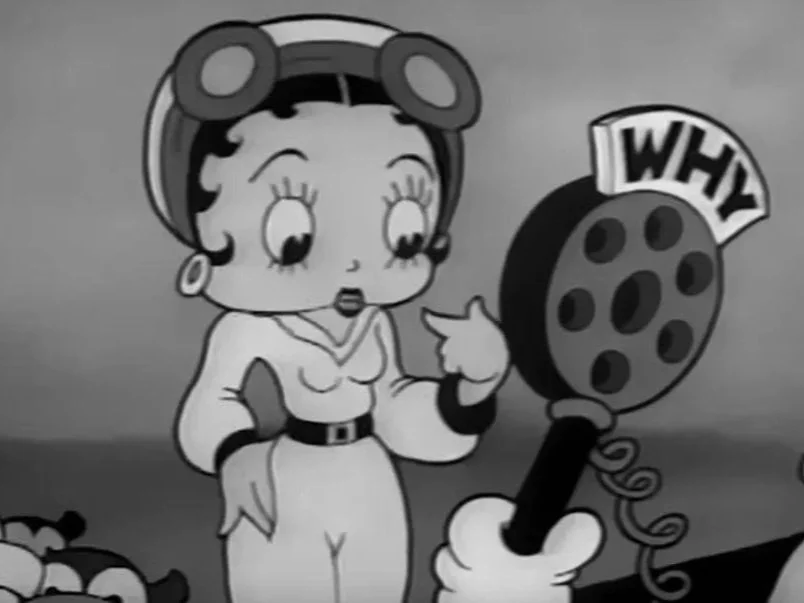
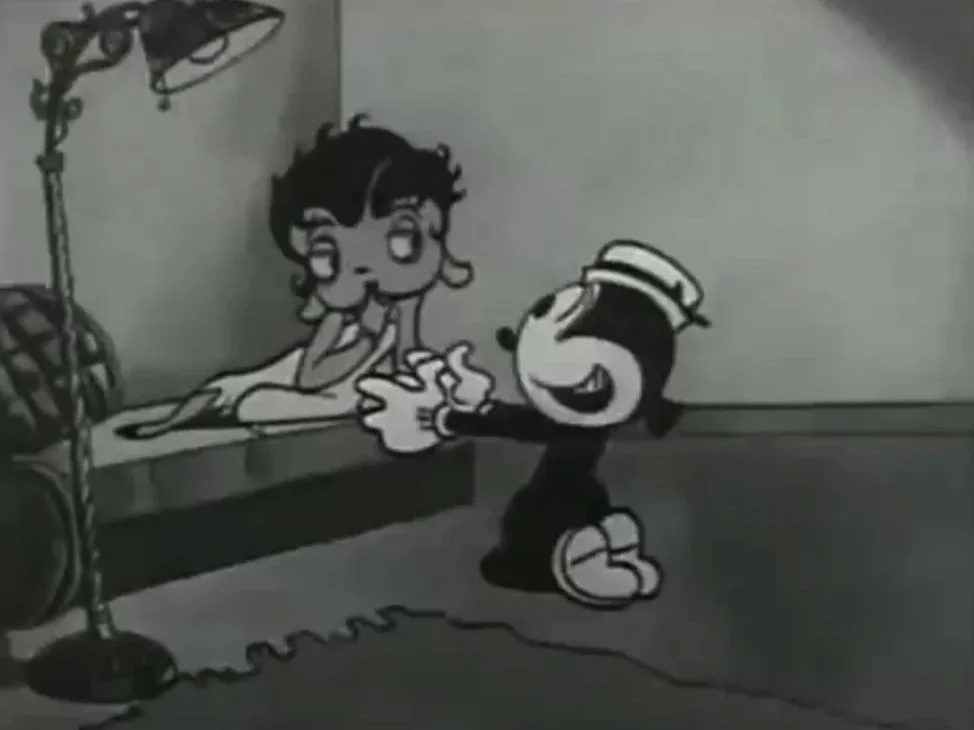
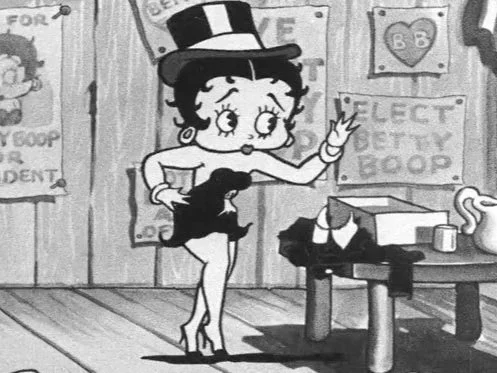
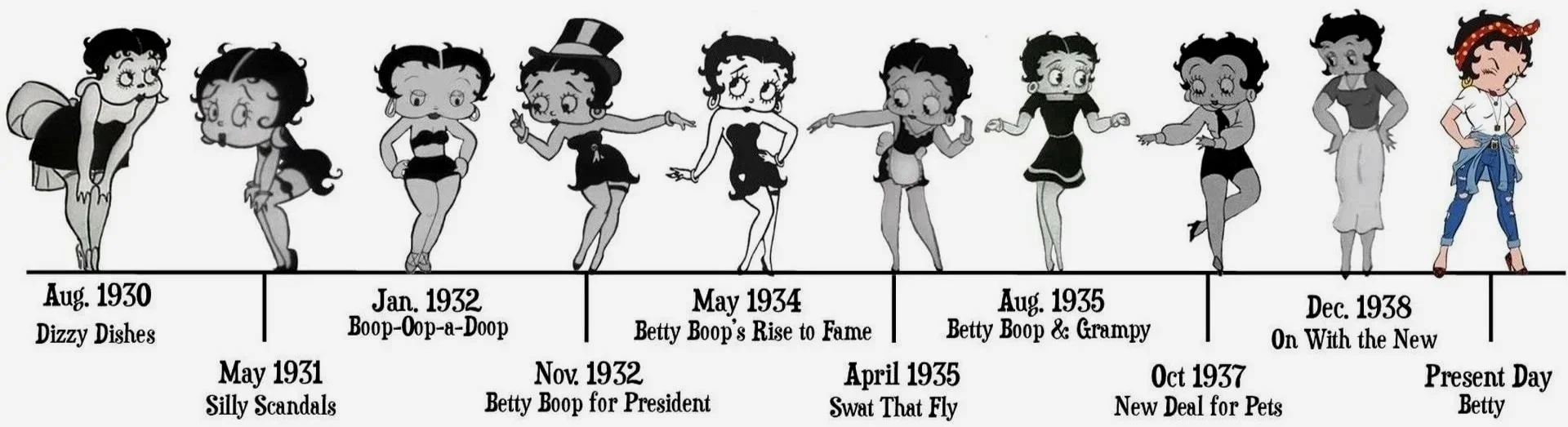
Check out Becoming Betty Boop in our History Section to learn more about the evolution of the iconic Betty Boop.
First words
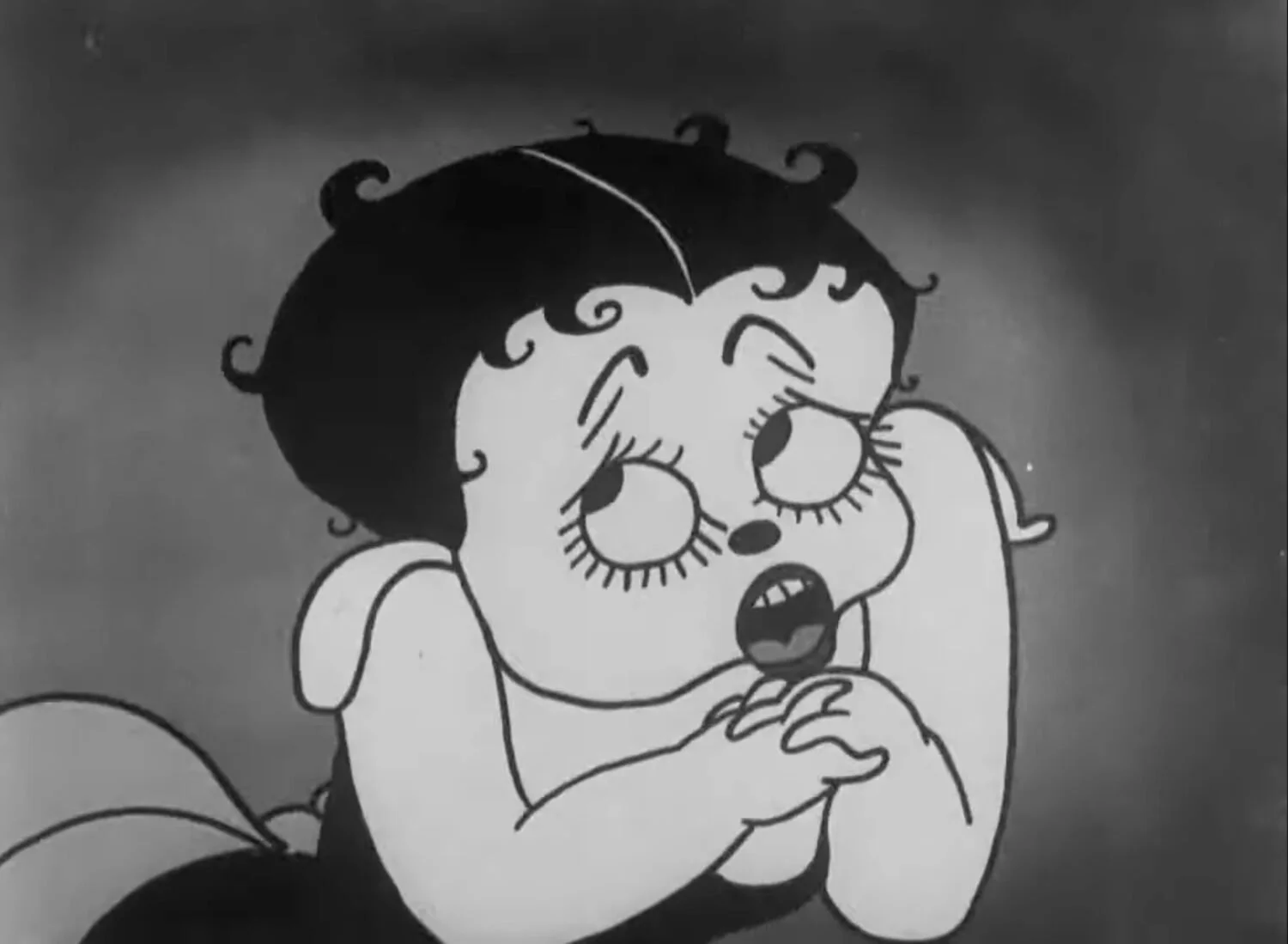
Though we heard her iconic singing voice for the first time on August 9, 1930, the Rubenesque canine songstress that made her debut in the Fleischer film Dizzy Dishes doesn’t speak a word of dialogue, and appears on screen for less than a minute. But in that brief time she wins the heart of the Bimbo, a hapless, easily distracted nightclub waiter, when she takes to the stage and performs her rendition of the Robin and Whiting song “I Have to Have You.”
Her next appearance is in Barnacle Bill where she has a substantially larger role, but no dialogue. We see her next in Accordion Joe where she speaks two words in unison with Bimbo: “Good night!”
While it isn’t terribly surprising as most of the early Fleischer sound films were music-based, it’s worth noting that it isn’t until 1931, in Bimbo’s Express, that this still-unnamed songstress with floppy dog ears, spoke her first line of dialogue. What was it? It was quite simply: “Yes.”
Bimbo’s Express, 1931
Boop-oop-a-doop
Betty Boop is forever connected with the phrase “Boop-Oop-a-Doop.” But what does “Boop-Oop-a-Doop” actually mean?
While the phrase on its own is meaningless, the use of seemingly meaningless phrases and sounds, such as Boop-Oop-a-Doop, grew out of scat singing, a vocal technique which rose to popularity during the 1920s and ‘30s. Using this technique, jazz singers were free from the constraints of lyrics and were able to improvise creatively in the way that a saxophonist or trumpeter might.
But that’s not all.
Scat singers also used this freedom from literal language in combination with context, physicality and attitude to convey things that, in the age of prohibition and morality codes, would be better left unsaid. Though it would eventually come to be viewed as a playful catchphrase, it was in this context that the phrase “Boop-Oop-a-Boop” was used.
For example, in the cartoon Boop-Oop-a-Doop!, Betty is an acrobat who finds herself fending off the unwanted sexual advances of her boss, an aggressively insistent ringmaster. Koko hears this, jumps into action, and rescues Betty. After this incident, Koko whispers an unheard question into Betty’s ear. She shakes her head and responds, “He couldn’t take my Boop-Oop-a-Doop away.” This exchange tells us everything we need to know. Making use of the phrase “Boop-Oop-a-Doop,” Fleischer animators addressed an issue that, at the time, could not have been discussed openly.
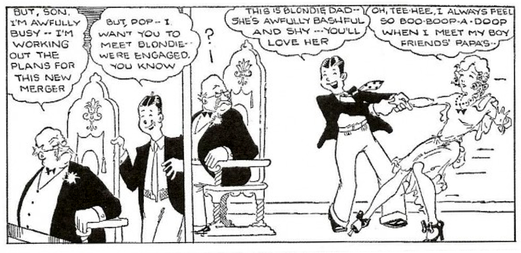
Betty isn’t the only character of the era whose name was based on the use of the nonsensical sound “boop”. Before she married Dagwood, the comic character Blondie was known by her maiden name Blondie Boopadoop. Made famous in Chic Young’s Blondie comic strip, Blondie was a flapper girl before marrying and settling down.
a vintage accessory, a modern message
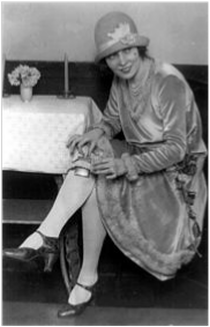
A woman hides her flask in her garter .
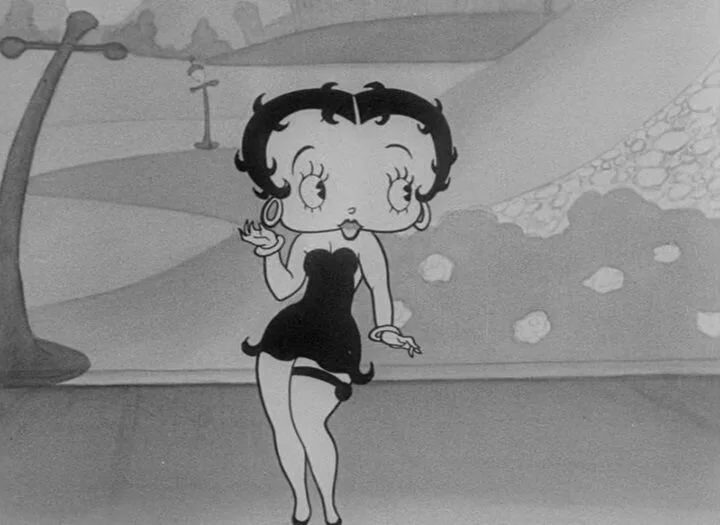
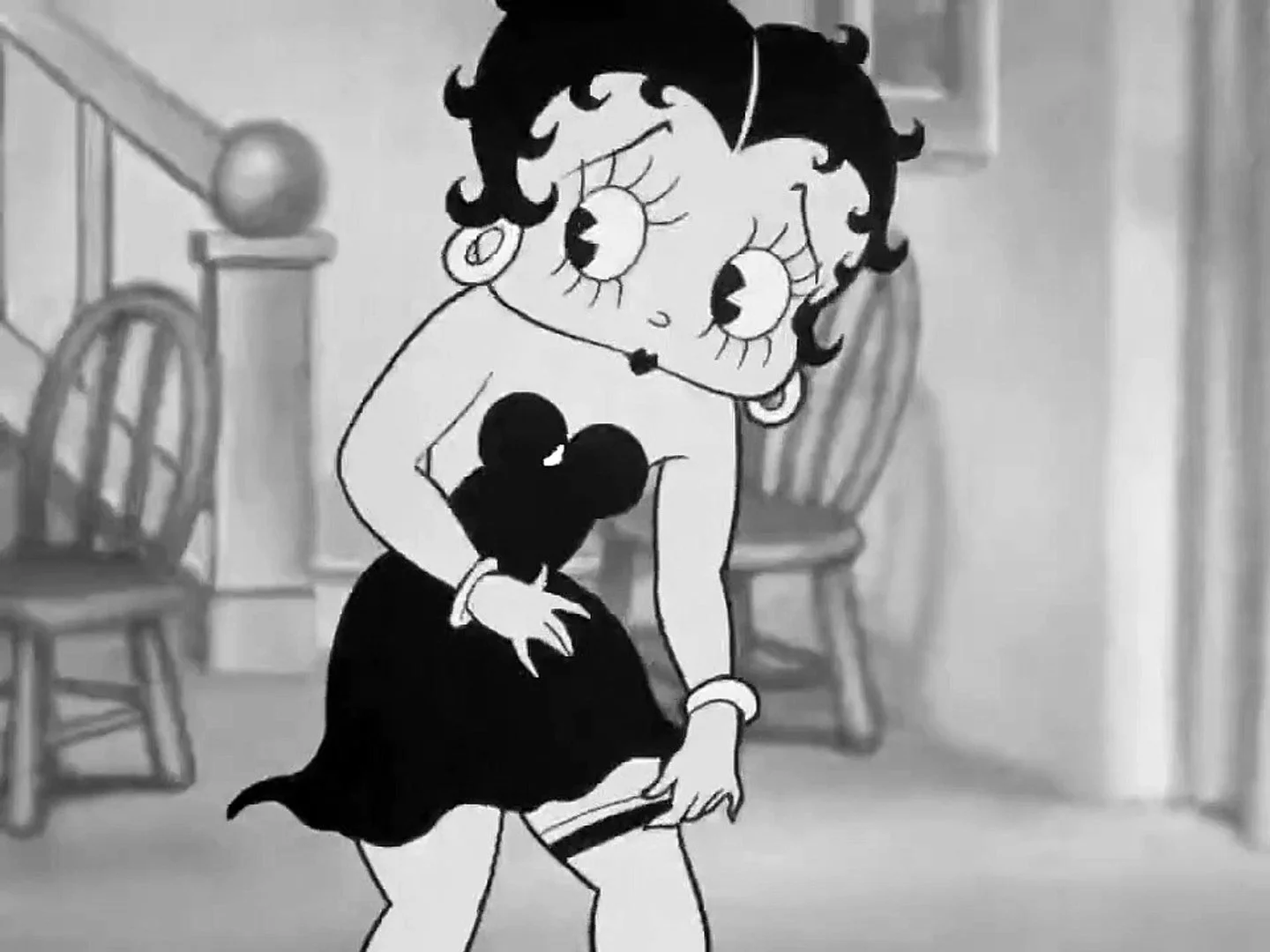
In the 1930s, women were liberating themselves from constrictive and expensive undergarments such as corsets featuring rigid stays and metal clasps that held their stockings up. The modern, forward-thinking woman of the 1930s opted instead for loose bloomers and a ‘garter belt’ or ‘roll garter’ to keep her stockings in place. As dresses got shorter and shorter, the occasional flash of a woman’s garter became a symbol of her status as a liberated woman. It was a symbol traditionalists viewed as provocative, even shocking.
While garters may strike our 21st-century sensibility as a charming vintage accessory, for 1930s audiences they sent a very clear message: this is a modern, liberated woman.
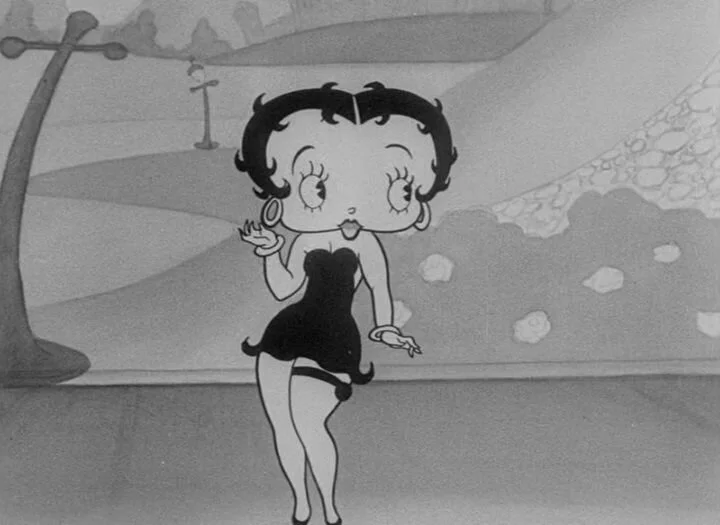
The precursor to Betty Boop who appears in Dizzy Dishes wears ‘roll garters’— circular bands of elastic covered with fabric that could be rolled over the top of each stocking to hold it in place— on both legs. It wasn’t until she appeared in Silly Scandals that she transitioned from wearing mostly functional roll garters to the single, more decorative garter that would become more commonly associated with the Betty Boop we know today.
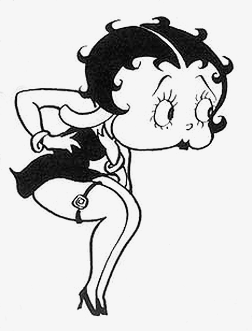
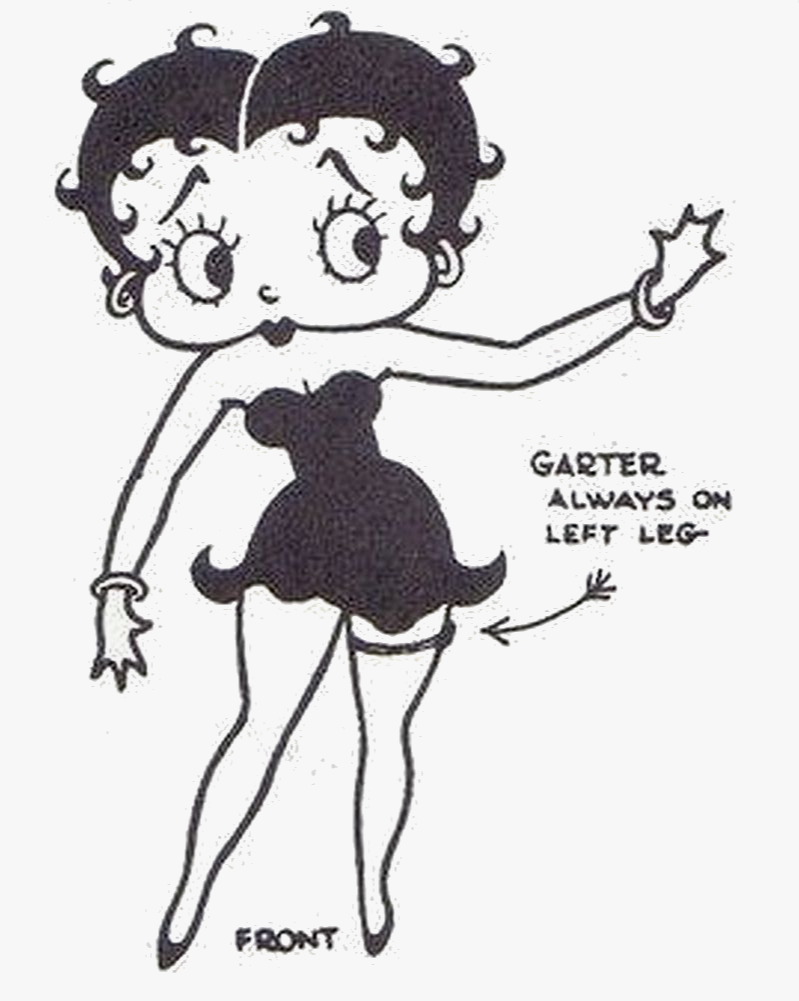
Left? Right? Left? Right?
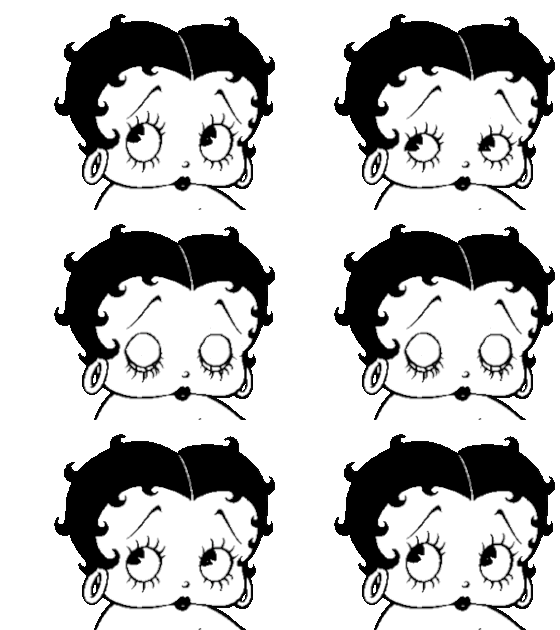
Because several animators may work on a single film, they depend on ‘model sheets’ to ensure that a character’s look is visually consistent. However, this system didn’t always work as intended.
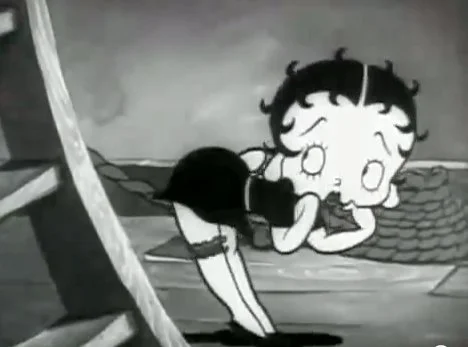
The drawing on the left, from a very early model sheet, shows a garter on the right leg. The drawing on the right, from a later model sheet clearly shows a garter on the left leg—and even includes a reminder that it should always appear there.
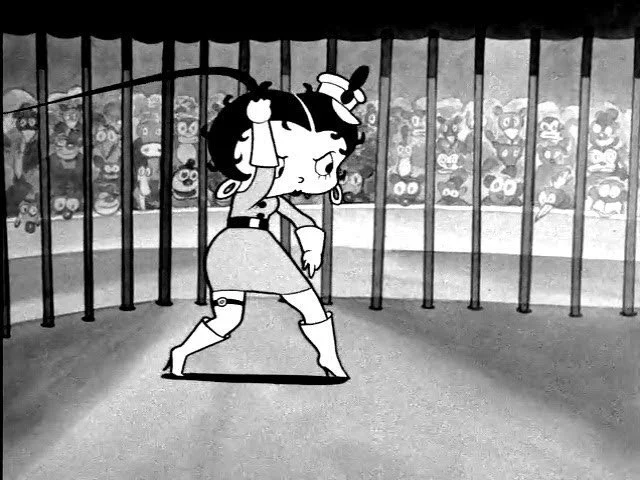
So, while Betty Boop’s garter is usually found on her left leg, it sometimes appears on the right. If you look closely, you’ll even find a few films (like Minnie the Moocher) where it appears on the right leg and the left.
Fun Fact
On August 20, 1995, Betty Boop served as the official host of Macy’s 17th annual Tap-o-Mania event in New York City. Each year, starting in 1979, the landmark department store would attempt to break the world record for the "largest assembly of tap dancers to dance in a single routine."
More than 6,500 tap dancers came together in Herald Square to participate in this exciting and very festive event, officially breaking the previous year's record of 6,252. The dancers, who wore Betty Boop t-shirts, hats, and signature garters learned their record-breaking routine from 150 tap coaches. With Betty Boop in the lead, they danced themselves into the Guiness Book of World Records.
When Betty was a redhead
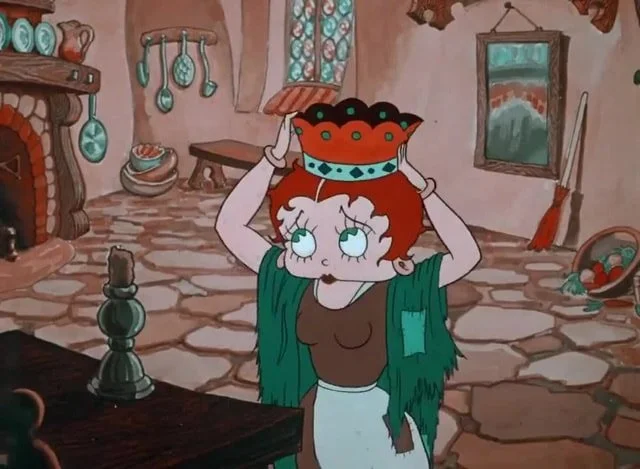
Fleischer Studios made its first color film, Poor Cinderella, featuring a red-haired Betty Boop, in 1934. It is the only color film Betty appeared in during the 1930s, and the only film in which she has red hair.
While there had been early experiments in the use of color in film, it didn’t become a practical reality until the 1930s. At the time, there were several different processes in use. Because Walt Disney had secured exclusive rights to the 3-strip Technicolor process from 1932-35, the Fleischers turned to an alternate 2-color process called Cinecolor. This process was somewhat more limited in its range of possible colors than 3-strip Technicolor technology, but the animators made every effort to take advantage of the limited palette. Making Betty a red head was a part of that effort.
The Fleischer animators also made a point of using the film to shows off the techniques they had developed to give a three-dimensional effect to their work. This can be seen most clearly in the scenes at the ball.
Poor Cinderella is also one of the first Betty Boop films in which the effects of the Hays Production Code. The Code, a set of so-called “moral” restrictions, required Betty to dress more modestly. Although the animators managed to slip in a quick glimpse of Betty in her (very long) bloomers during her transition from rags to riches, she is otherwise far more clothed than in earlier appearances.