
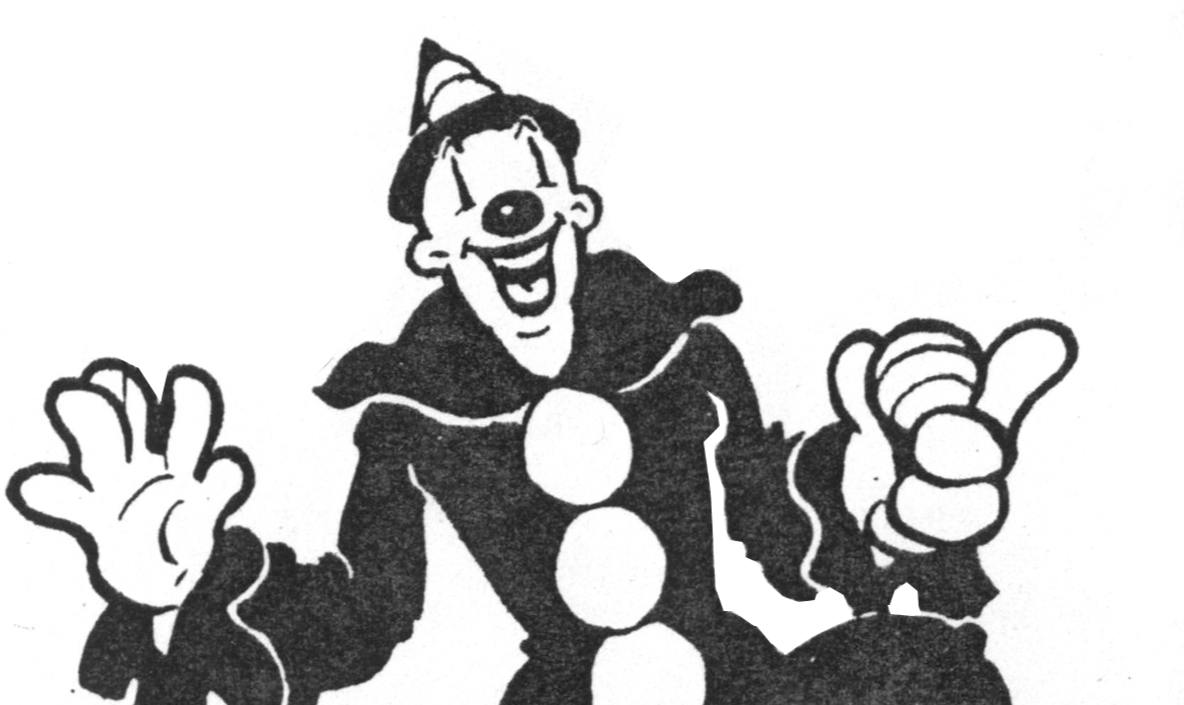
The Little Clown that became famous…
and then became Koko
It all started when...
Max Fleischer was Art Editor for Popular Science Magazine when, in 1915, he filed a patent application for a contraption he called the Rotoscope. Convinced that he could improve the jerky, jumpy quality of early animated films, Max set out to create a mechanism by which animators could use live action film as a guide for drawing animated characters, giving them more fluid, life-like movement.
After Max, with the help of this brothers, built the prototype for the Rotoscope (in his living room) they set to work creating an animated film that would prove the amazing potential of Max’s invention. It was in this moment that the Fleischers’ first animated character came to life: the impish ‘little clown,’ that would eventually become known as ‘Koko.’
A clown is born
Being an immigrant himself, Max wanted to create work that could universally understood. A clown, who communicated through pantomime, action and expression would eliminate the need for excessive text (this being the era of silent movies), expanding the reach of his work. Plus, without the need for title cards, there would be nothing to distract audiences from the astonishing life-like imagery made possible by the Rotoscope.
As it turned out, Max had access to a wonderful clown: his younger brother Dave, who worked as a clown at Coney Island’s Steeplechase Amusement Park and even had his own clown suit! As the sons of a tailor, the Fleischer brothers had access to fabric, and having one’s own costume was a plus when seeking employment as a clown, so Dave had created his own costume, which bore a striking resemblance to one Bessie McCoy, wore for a rendition the song of The Yama Yama Man that turned her, and her costume, into overnight sensations.
Dave's loose fitting black costume, with large pom-poms in the front, white gloves and a peaked hat, provided Max with precisely the kind of sharp, high contrast image he was looking for. It would make using the Rotoscope easier, and the limited color palate was well suited to black and white film.
The brothers filmed Dave, cavorting around in his clown outfit on the roof of Max’s building, and then spent most of the following year painstakingly creating hand-drawn images to match each frame of the original film, ultimately creating some 2,500 individual drawings.
The end result: a remarkable film… it lasted only one minute, but changed the look of animation forever.
A winding road to stardom
Max shopped his “little clown” film around to various animation studios, hoping to interest one of them in this new process of animation. While many were intrigued with the new technology, this early incarnation of the Rotoscope wasn’t practical for studios looking to churn out material quickly.
Finally, in 1916, J.R. Bray, an animation pioneer Max had worked with years earlier at The Brooklyn Eagle, hired Max to work at his studio and - along with other assignments - make films featuring his life-like little clown, while he continued to refine his invention and improve some of its practical limitations.
Max and his little clown seemed poised for their big break, but when America entered World War I, Max found himself in Oklahoma working on a series of military training films Bray had been contracted to create... and the little clown films were put on hold.
After the war, Max (still at Bray) returned to his “little clown” films which he called Out of the Inkwell. The films began to make their way into theaters as early as 1919, it wasn’t until 1920 – when modifications to the Rotoscope made the process less labor intensive - that the little clown began to appear in theaters across the country and very quickly became an enormous sensation.
By 1921, the little clown had grown so popular that Max and Dave decided it was time to go out on their own. They launched their own animation studio which they called Out of the Inkwell, Inc.
The little clown becomes koko
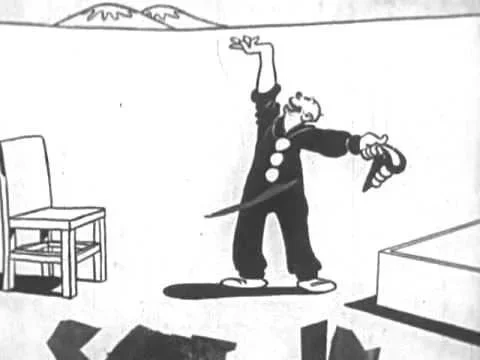
Remarkably, it wasn’t until 1923 that Max’s “little clown” finally had a name. For years he had been referred to as ‘the ‘Little Clown,’ or ‘Fleischer’s Clown,’ or at one point as the “Yama Yama Clown.”
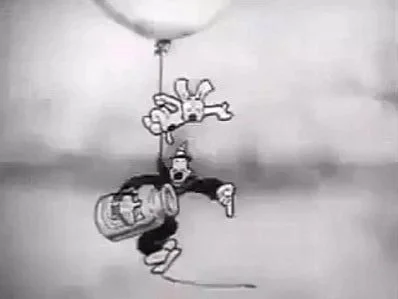
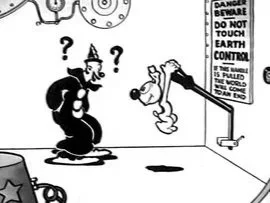
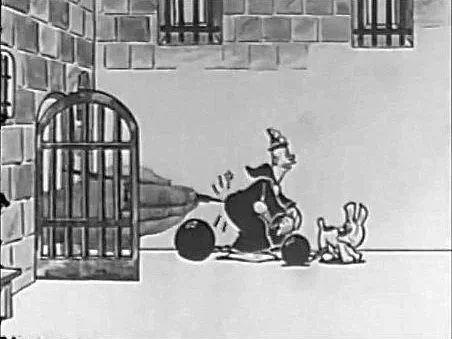
That changed when the Fleischers hired animator Dick Huemer. It was during this period, when Huemer was heavily involved in animating the clown, that he acquired a partner in mischief - a dog by the name of Fitz - and finally a name: Ko-Ko, or, as it sometimes later appeared, Koko. Huemer’s spirited work had its own special flavor and one can often spot slight shifts in style and appearance that betray Huemer’s skilled hands.
Ko-ko + bouncing ball = music
In the era of the silent movies, audience sing-a-longs were a popular part of the theater-going experience. Song lyrics would be projected onto the screen using glass slides while live music was provided by a pianist or musical group. In September 1924, the Fleischers introduced an invention that would forever be known simply – and affectionately – as the “Bouncing Ball.”
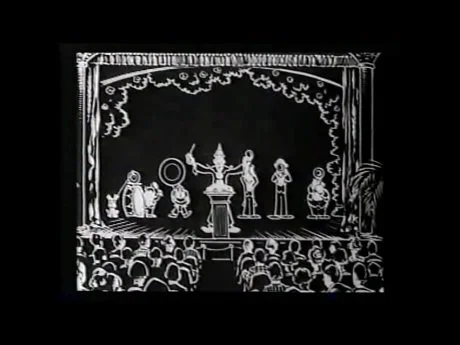
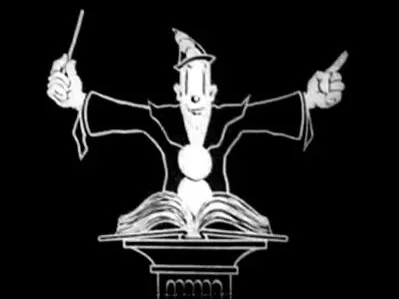
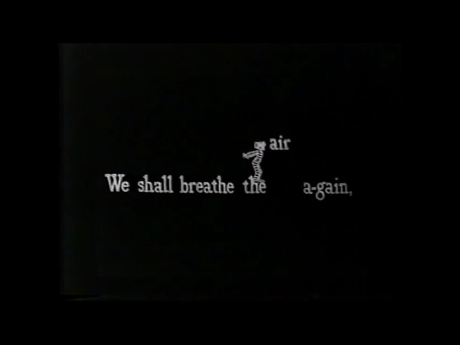
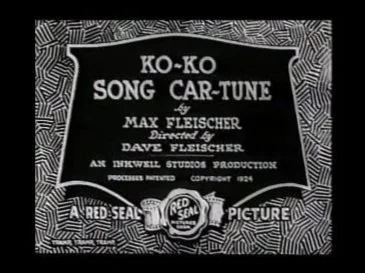
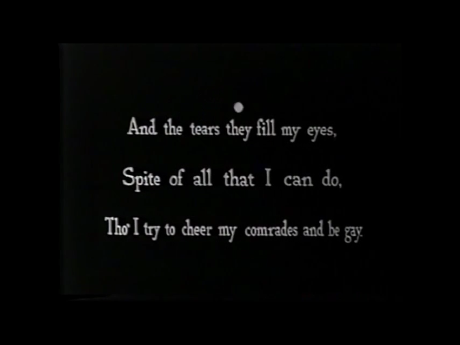
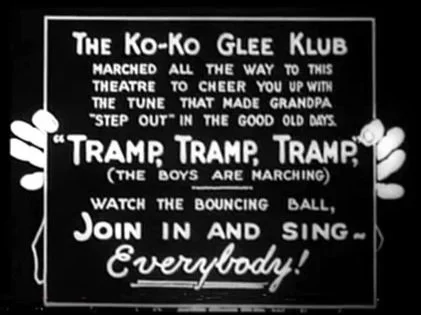
The bouncing of the ball provided the audience with a visual indication of the rhythm of the music. These films, called Ko-ko Song Car-Tunes, helped audiences sing in unison – even if they didn’t know the song - by following Koko’s instruction that everyone "join in and sing" following the Bouncing Ball.
In 1926, the Fleischers took their Bouncing Ball invention one step further by teaming up with Dr. Lee DeForest, who had invented a process by which sound could be recorded directly onto film. The resulting films, are some of the very first sound cartoons ever made. These films created such a sensation that some of the silent Ko-ko Song Car-Tunes, which had been released just a few years earlier, were re-released with sound added to them.
Viewing these films today, one can’t help but recognize these engaging, sing-a-long, musical shorts as precursors to music videos and karaoke machines.
You can't keep a good clown down
In 1929, Koko starred in Chemical Koko, his last silent film in the 1920s. With the advent of sound in film Koko – like many stars of the silent age – suddenly seemed to be a relic from a bygone age. A few months after the release of Chemical Koko, the Fleischers launched a new series called Talkartoons featuring an ever-growing stable of characters including Bimbo, a smart-talking, singing dog, who not only replaced Koko’s silent dog friend Fitz, but also had adventures of his own and quickly became a star in his own right.
But Koko wasn’t quite done yet. By 1931 he was back on the silver screen – and talking! Serving in a supporting role, Koko appeared in a number of films featuring Bimbo and, later, Betty Boop. Together the adventurous trio embarked on many great journeys and got themselves into every kind of trouble imaginable. By the time Koko made his last appearance in the 1934 Betty Boop film Ha! Ha! Ha!, he had been a Fleischer star for more than fifteen years.
Fun Fact 1
Koko, is featured in the Fleischer film Snow White, one of the most famous, and surreal, cartoons to come out of ‘The Golden Age of Animation’.
This 1933 film features a remarkable example of rotoscoping in which Koko appears to channel the signature dance moves of jazz great Cab Calloway as he sings and performs St. James Infirmary.
What makes this amazing feat of animation even more impressive is the fact that it was all done by one animator. While several animators were typically assigned to a single film, long time Fleischer animator Roland (‘Doc’) Crandall was offered the opportunity to animate Snow White in its entirety as a gift honoring his many contributions to the work of Fleischer Studios.
Fun Fact 2
Since his final appearance with Fleischer Studios in 1934, Koko has made guest appearances in films and on television, and even had his own television show in the 1960s:
In 1949, Koko made a short appearance, as a toy, in the cartoon Toys Will be Toys, made by Famous Studios.
In 1955, Koko was introduced to a new generation of fans when many of the original Koko films were re-packaged for use on TV.
In the early 1960s former Fleischer animators Hal Seegar and Myron Waldman worked with Max to create a completely new made-for-TV ‘Out of the Inkwell’ series. One hundred episodes were made starring Koko, a new sidekick Kokonut, girlfriend Kokette, and a villain: Mean Moe. Koko’s voice was by voice artist Larry Storch.
In 1989 Koko appeared in the made for TV cartoon special, Betty Boop’s Hollywood Mystery. Set in the 1930s, this half hour color special featured all of the old Fleischer characters, including Betty, Bimbo and Koko.