
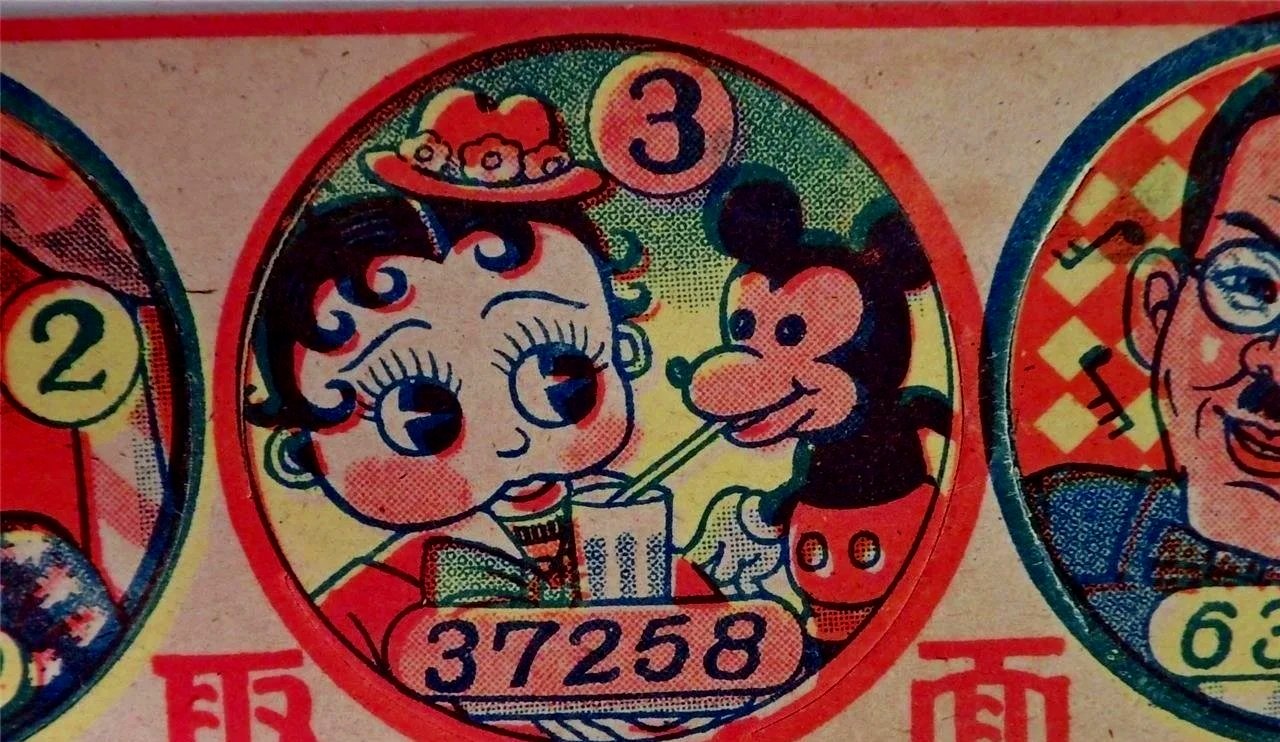
Betty Boop & Mickey Mouse
From one icon of early animation to another, Betty Boop—and all of us at Fleischer Studios—wish Mickey Mouse a happy 90th Birthday with this very special exhibit!
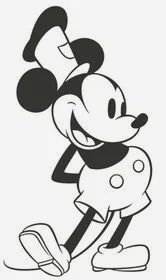
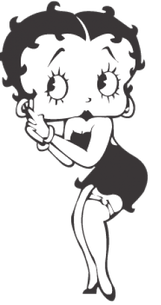
Although they were brought to life on opposite coasts, Betty Boop and Mickey Mouse both rose to animation fame in the 1930s, gracing movie houses from coast to coast in films that featured great music, hilarious hijinks and just enough mischievous fun to keep us coming back for more.
Though Disney and Fleischer were most often viewed as competing studios—and they were indeed competitors in the marketplace—the two studios had a number of talented and imaginative animators in common.
Animation was still a relatively new medium in the 1930s, and it was not uncommon for animators to move between studios. In fact, when Max Fleischer visited Disney during a trip to California in 1956, he had lunch with an entire table full of Disney animators who had once worked for him. Even his son, film director Richard Fleischer, worked with Disney!
In 1952, Disney offered Richard the opportunity to direct a film for him but, as he writes in his book Out of the Inkwell: Max Fleischer and the Animation Revolution, he told Disney he couldn't take the job without first getting his father's blessing.
"You go ahead and take it," Max told his son. His message to Disney: "You tell Walt one thing from me... that I said he's got great taste in directors."
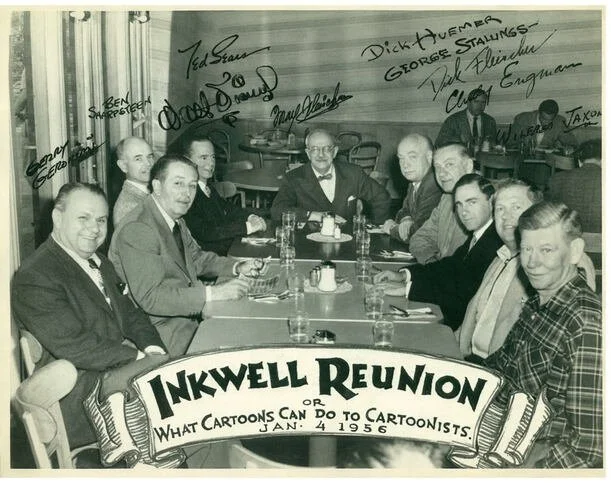
Gerry Geronimi, Walt Disney, Ben Sharpsteen, Ted Sears, Max Fleischer, Dick Huemer, George Stallings, Richard Fleischer, Andy Engman, Wilfred Jaxon eat lunch together at Disney
As it turns out, Max was quite right. The film Richard had been asked to direct was 20,000 Leagues Under the Sea, a technically remarkable and wildly successful Oscar-winning film.
That Mickey Mouse and Betty Boop have endured so long is a tremendous tribute to the many artists whose talent, hard work and imagination brought them both to life, so it only fitting that we at Fleischer Studios should celebrate Mickey who, like Betty, remains as vital and beloved today as he was 90 years ago.
Mickey Mouse and Betty Boop in Japan
While Betty and Mickey have been celebrated icons of animation for decades and to this day can be found on everything from shirts to plates to shoes (they even have their own emojis!) the fact that they were developed by competing studios means you won't find them together. At least not usually.
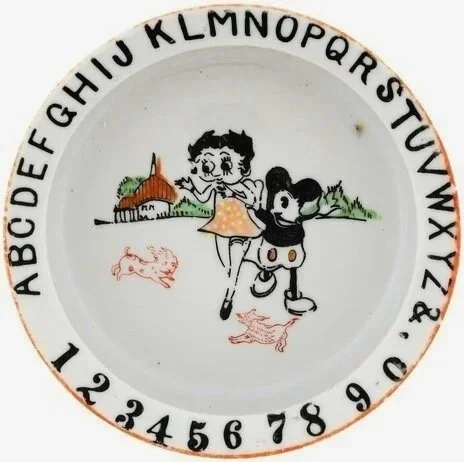
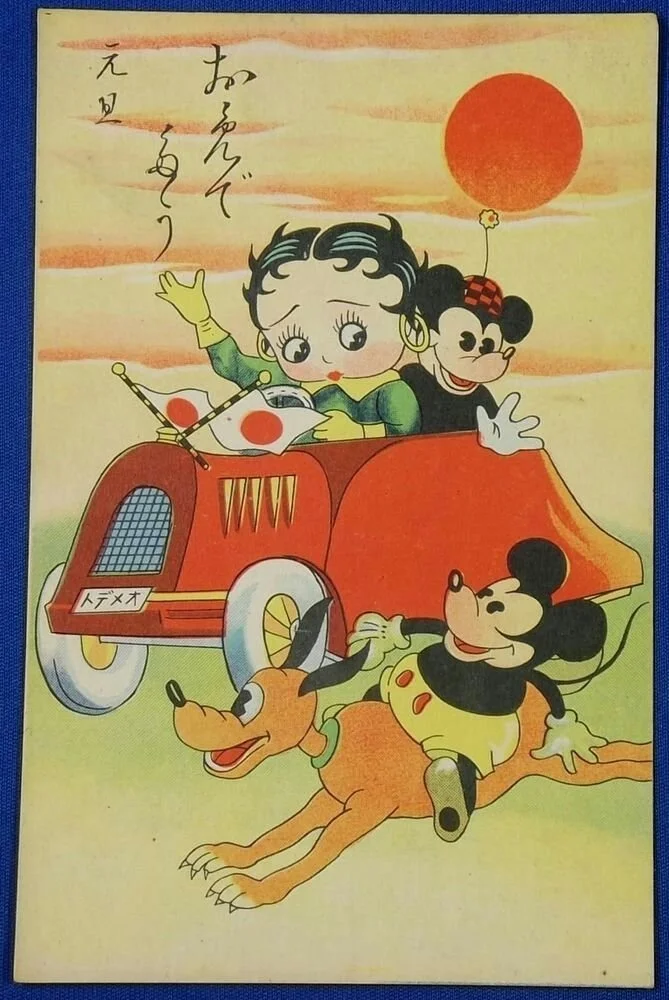
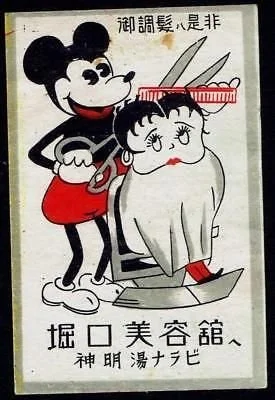
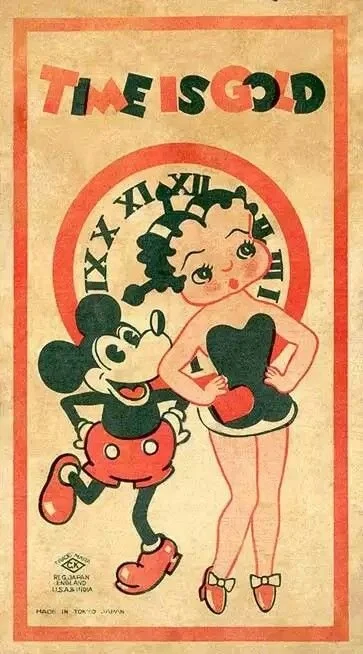
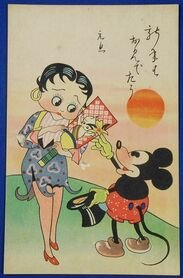
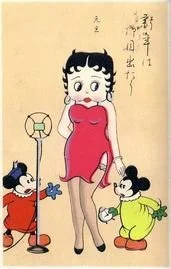
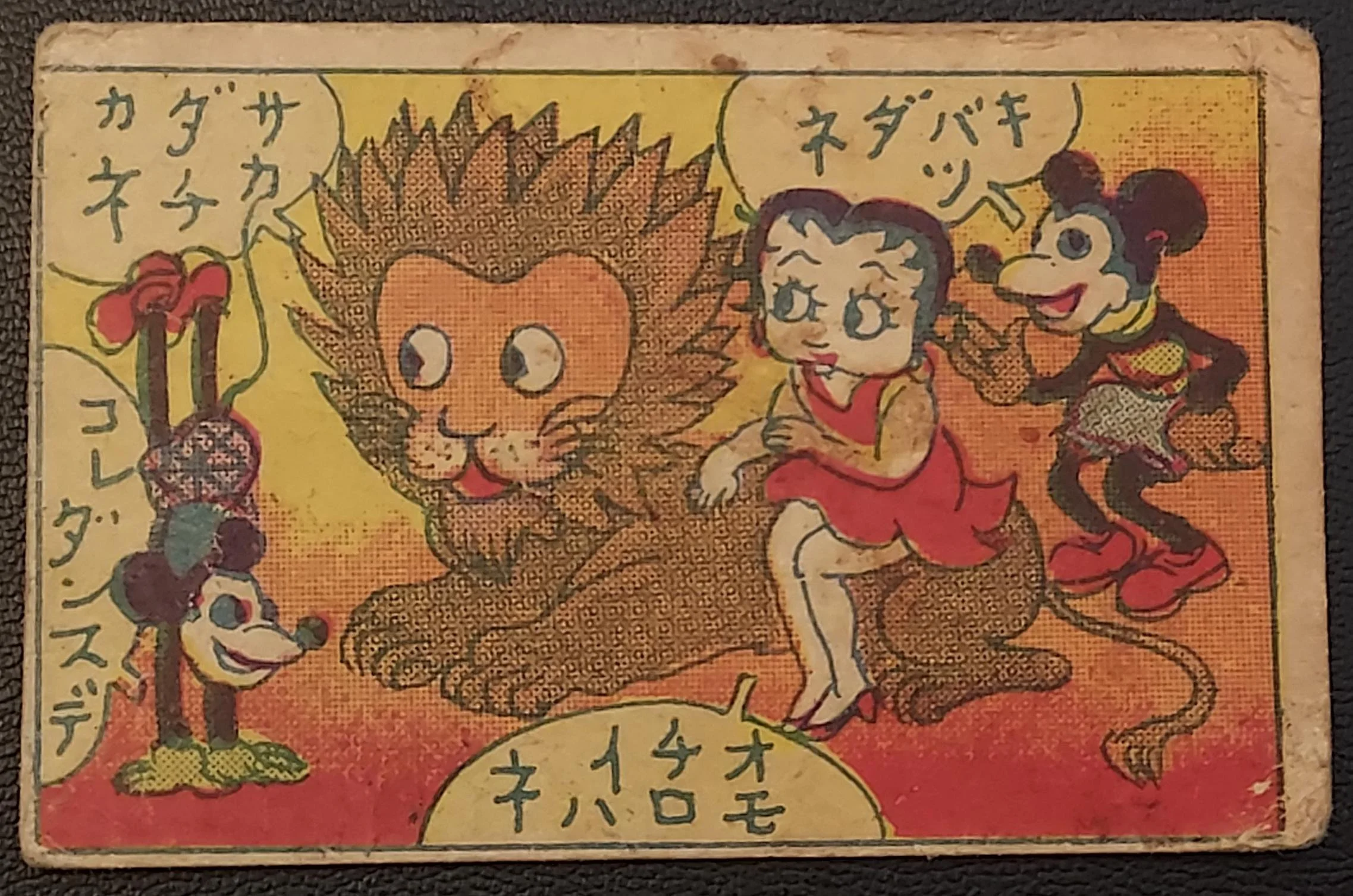
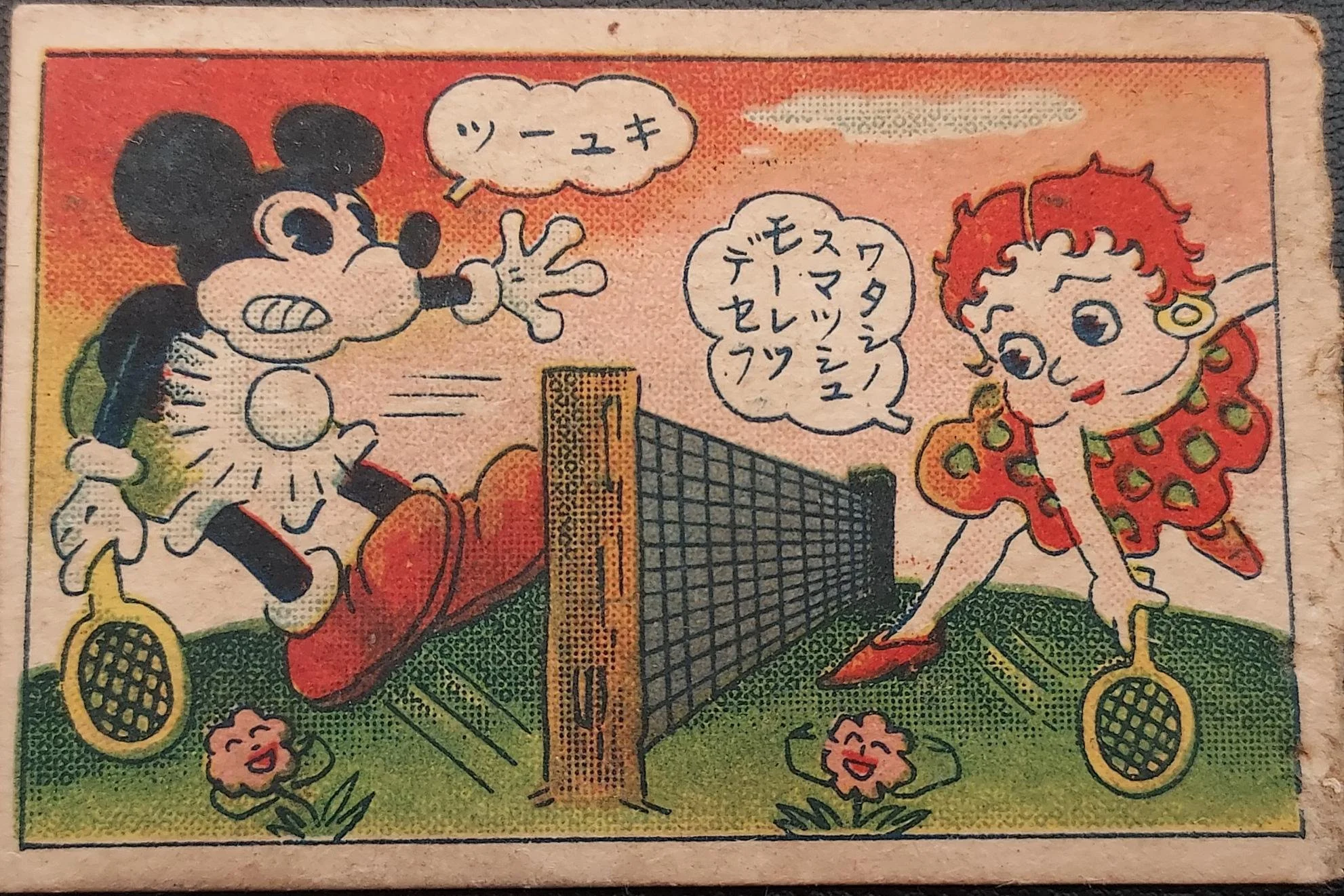
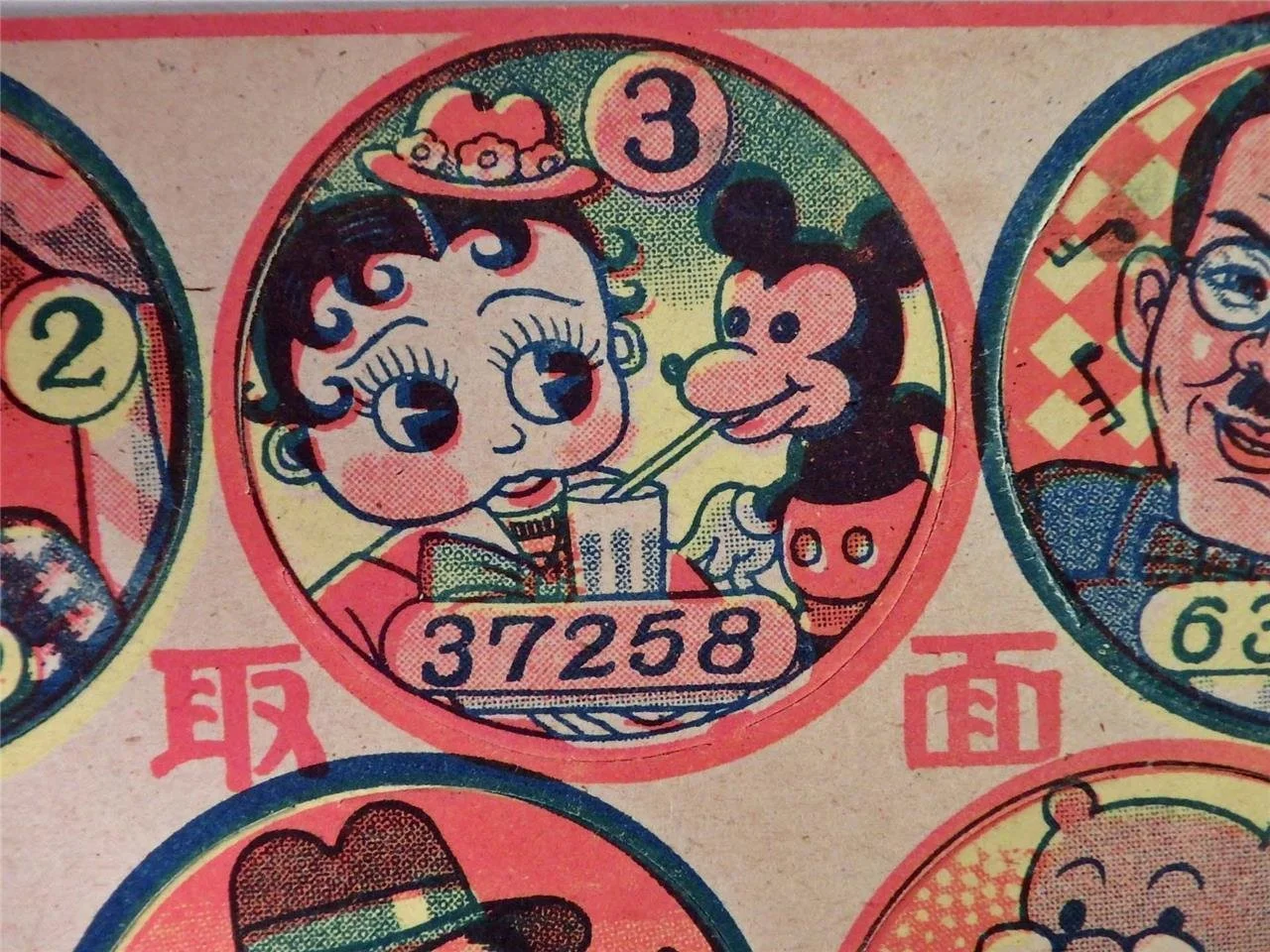
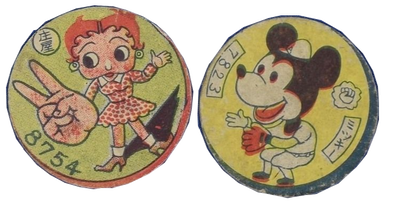
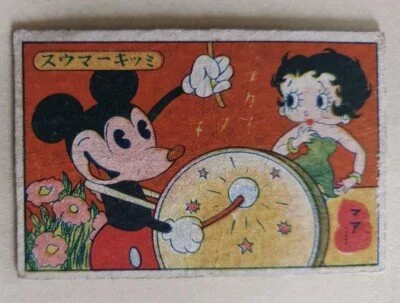
The unlicensed products on this page - featuring Betty Boop and Mickey Mouse - were not authorized by either studio. Most were produced in 1930s Japan, where copyright infringement laws were not actively enforced.
Made by small enterprises in Japan for the US popular market, no records were kept of who created the unauthorized toys, plates and cards featuring Betty, Mickey, and a whole host of other well-known characters. Though the artwork was usually poor—sometimes only barely resembling the characters they were meant to represent—these inexpensive items were often sold through catalog companies such as Montgomery Ward or Sears, and express the innovation and imagination of the manufacturers who created them.
While the products featured here were unauthorized, they are of historical interest and certainly speak to the longevity of two beloved figures of early animation who captured our hearts nearly 90 years ago, and are still going strong.
Japanese Menko Cards
Menko is a Japanese card game that dates back to the early 1600s. It's also the name of colorful cards used to play Menko. To play, one player places a card on a hardwood or concrete floor, then the other player throws down his card, trying to flip the other player's card with a gust of wind or by striking his card against his opponent's card. If one succeeds in flipping an opponent's card, he wins both cards. The game is over when one person wins all the cards. The images on Menko cards, like the ones below, tend to reflect the popular culture of the day.
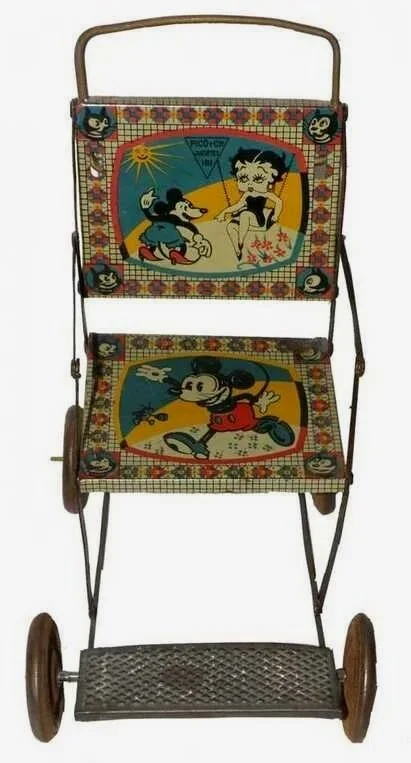
This doll-sized stroller was made in Spain in the 1930s.
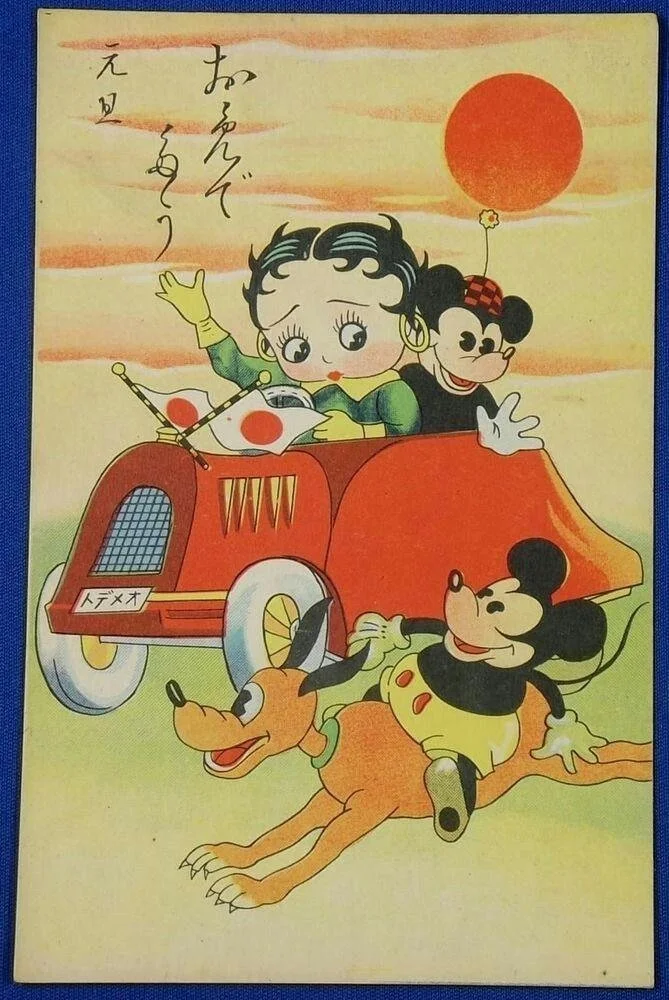
Vintage Greeting Card featuring Betty Boop, Mickey Mouse and Goofy.
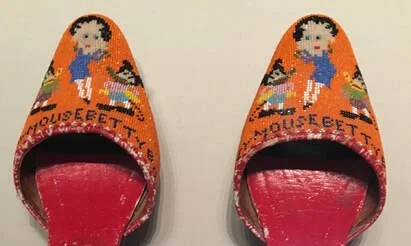
These amazing shoes (above and below) are on display at the Peranakan Museum in Malaysia.
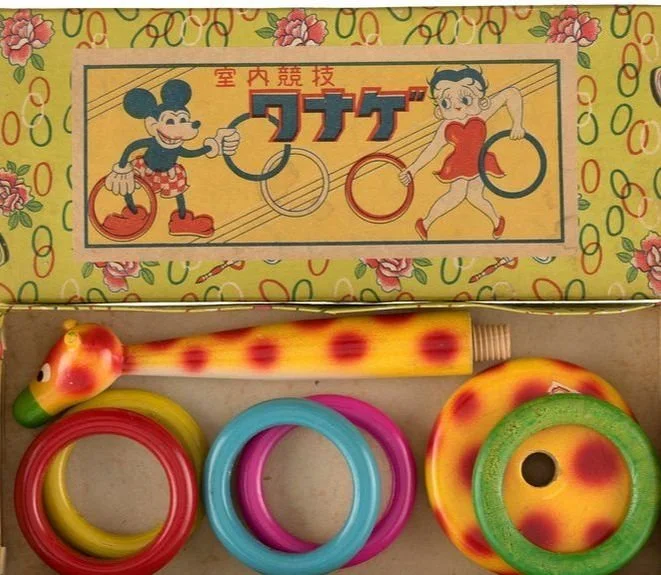
The game above is a ring toss game.
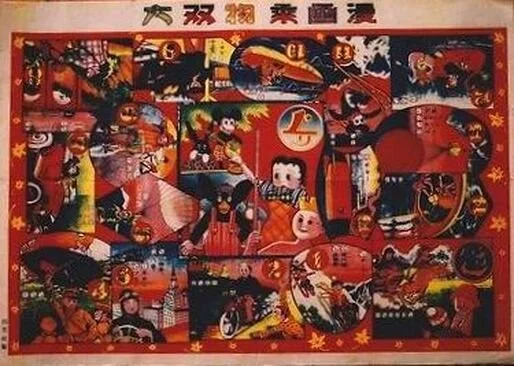
A Japanese Sugoroku Board - the game is similar to the American game Snakes and Ladders.
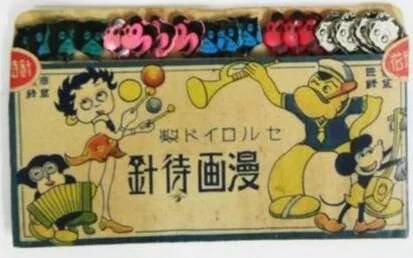
The packaging for these push pins includes Betty Boop, Popeye and Mickey Mouse. You can see the tops of the pins above the package.
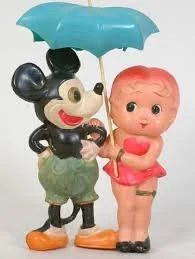
1930s Japanese Watering Can
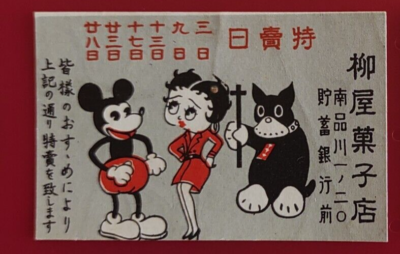
Vintage Japanese Matchbox Cover
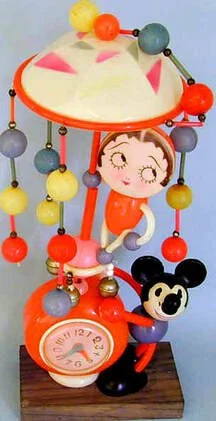
This Japanese whirligig comes from the collection of Len Ellis
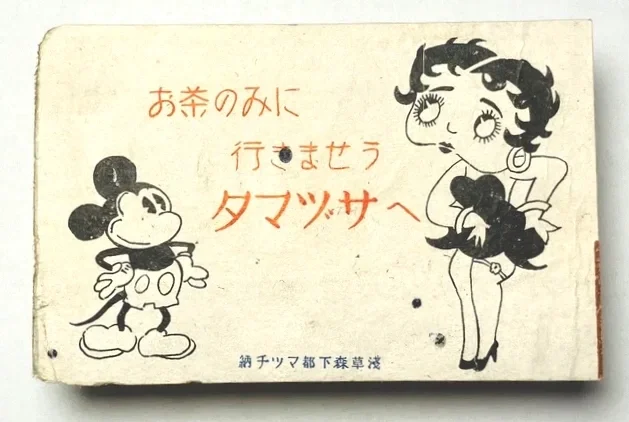
Japanese Mickey Mouse and Betty Boop Matchbox
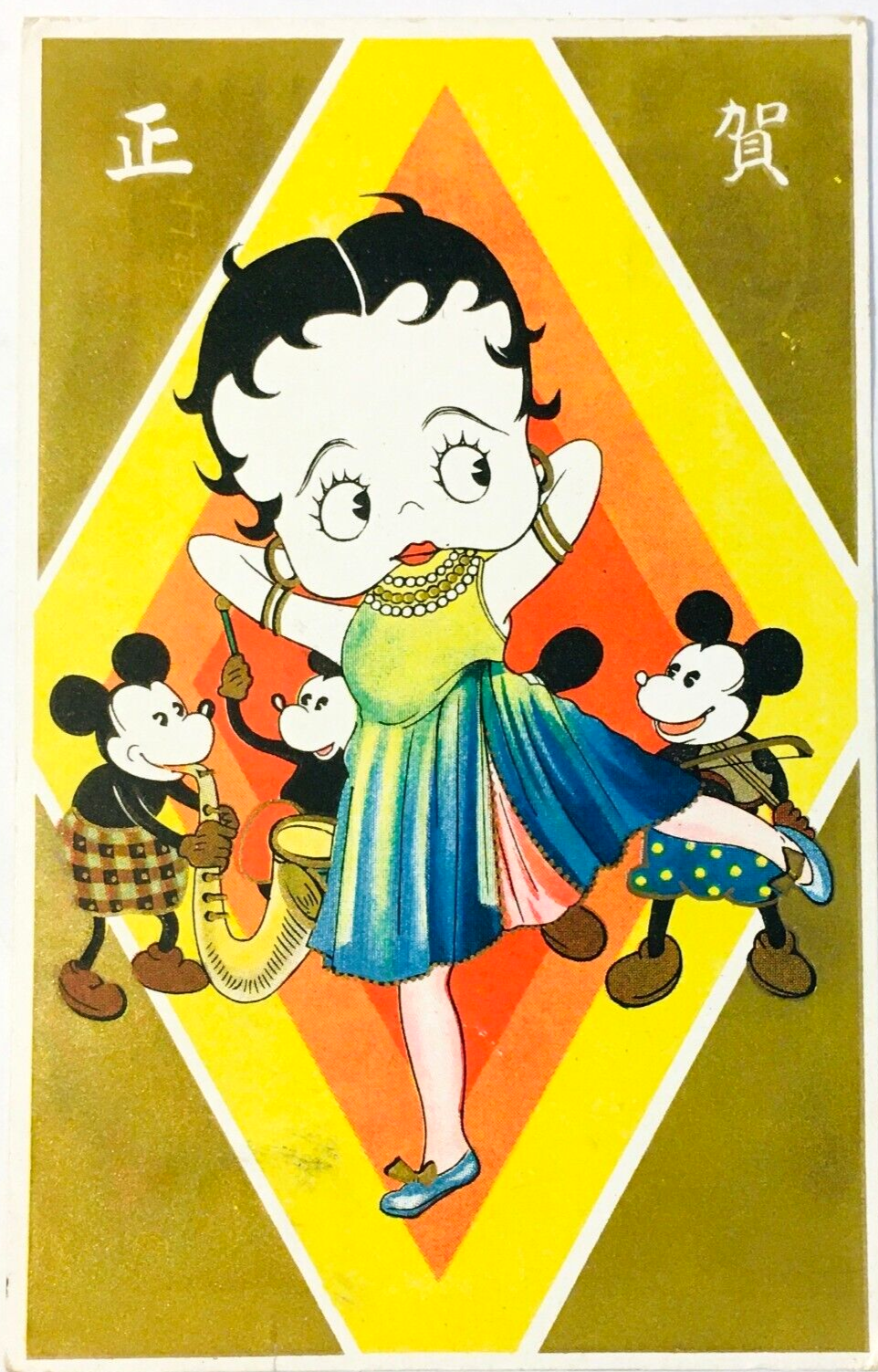
Vintage Japanese Postcard
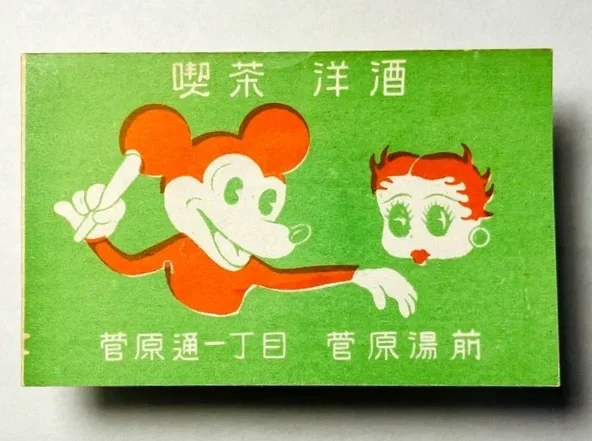
A vintage Japanese Matchbox