performance style on trial
Helen Kane, Max Fleischer and the Battle Over Booping
On August 9th, 1930, a precursor to Betty Boop made her big screen debut in the Fleischer Studios’ cartoon Dizzy Dishes. She appeared only briefly as a jazz-singing, quasi-canine character and the intended love interest of the film’s star, Bimbo. With her sassy style and scandalously rolled-down garters, she came to symbolize the voice and vitality of the modern American woman, and the growing wave of female talent enjoying success and newfound independence in the Jazz Age.
Though she appeared onscreen for only about a minute, she quickly captured Bimbo’s heart— and ours. The Fleischers responded by featuring her in more films and larger roles, refining the character and her appearance, and in 1932 she became the star of her own Betty Boop series of cartoons.
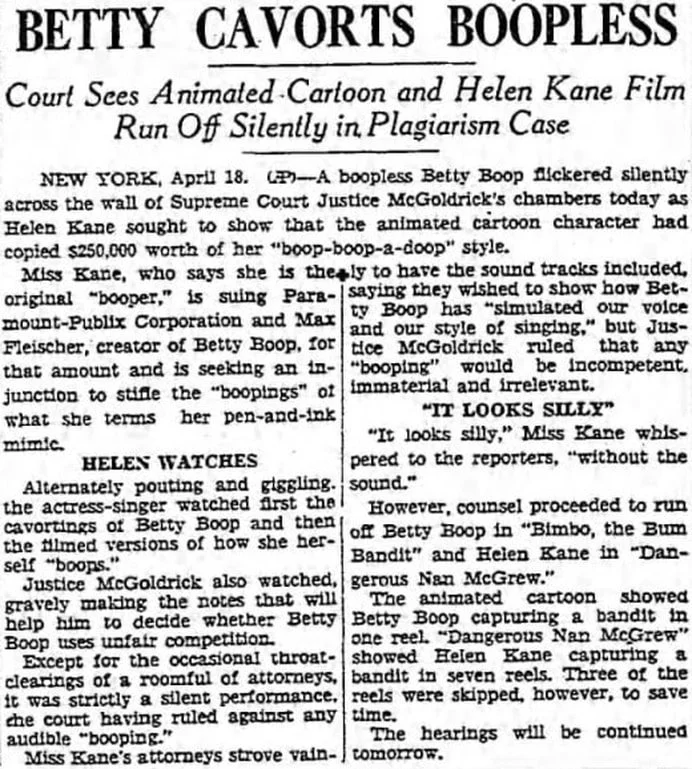
That same year, amid Betty’s rising popularity, Helen Kane— one of the best-known performers of the late 1920s— filed a lawsuit against Max Fleischer, Fleischer Studios, and Paramount Studios (the distributor of Fleischer’s cartoons). In the suit, which became one of the first high-profile celebrity lawsuits of the modern media age, Kane claimed that Betty Boop was a “deliberate caricature” of her and her unique “appearance, mannerisms, gesticulations, role, voice and style of singing.” Kane also claimed that because these traits were so closely identified with her “in the public’s mind,” the character of Betty Boop created confusion as to her identity and constituted “unfair competition.”
Kane identified several characteristics as uniquely her own: her “baby vamp” stage personality (a seductive woman speaking in a childlike voice while pouting and using mannerisms of a little girl); the “contour of her face and body,” described in court records as “adult female, with large round baby face, pouting in baby fashion, round eyes, black curly hair, parted in the middle, curls extending away from the head and appearing on the forehead and on the side of the head, tiny nose, developed breasts, curved hips and thin ankles;” and her unique style of scat-singing.
Scat singing was not itself new or unique to Kane. In fact, it was already being employed with great artistry by some of the most iconic voices of the Jazz Age. But it was her particular method of scat-singing, with a high-pitched, childlike voice and “interpolations of the sounds Boop, Boop-a-doop and Boop-boop-a-doop,” that Kane claimed was her unique creation.
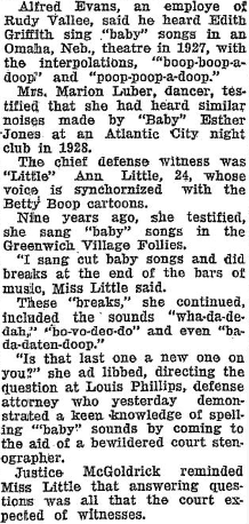
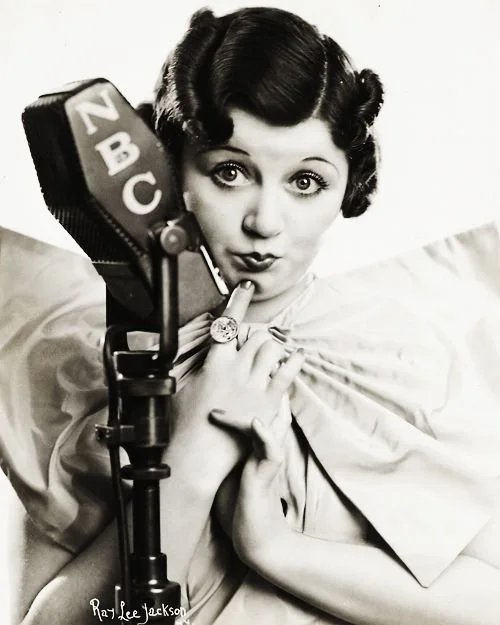
Unfortunately for Kane, the practice of high-pitched scatting, along with many of the other characteristics she claimed were uniquely her own could be found in the work of several popular performers of the day. Clara Bow, Gertrude Saunders, Florence Mills, Little Ann Little, Edith Griffith, the Duncan Sisters, the Watson Sisters, and Chic Kennedy (a Broadway performer who claimed in 1928 that Helen Kane had stolen her style from Kennedy’s act) all shared several of these common characteristics. Many of these performers took the stand in this hugely entertaining star-studded trial to testify for the defense on Betty’s behalf.
New York Times, May 4, 1932
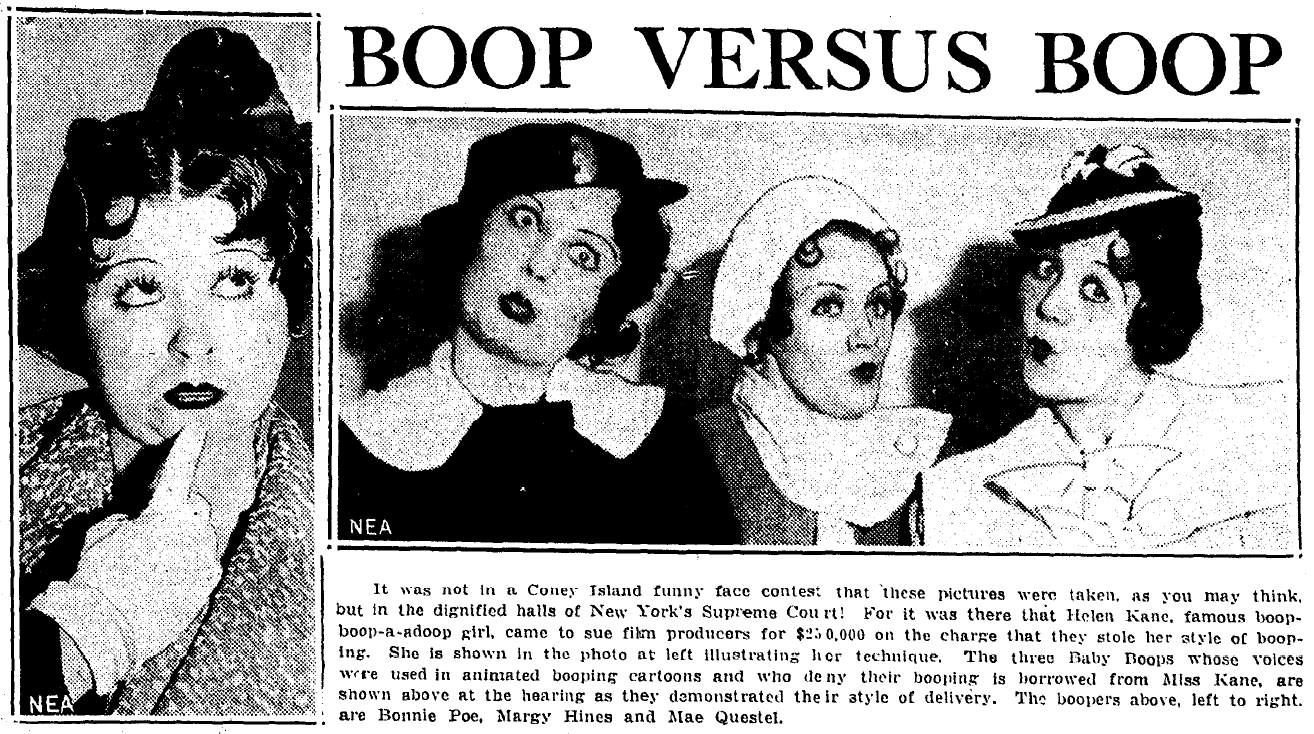
Helen Kane (left) claimed her mannerisms and techniques were unique but, as was revealed during the trial, other popular artists had been using many of the same mannerisms and techniques in their own acts.
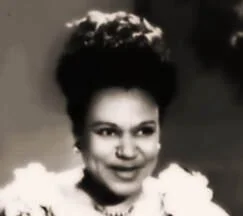
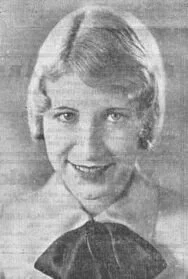
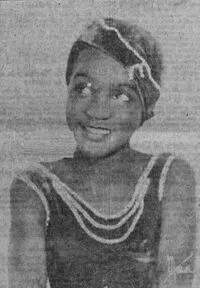
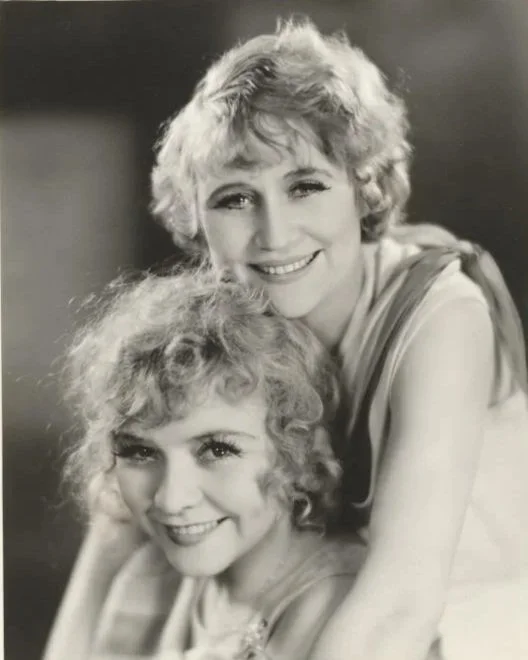
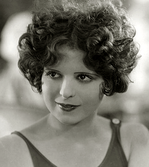
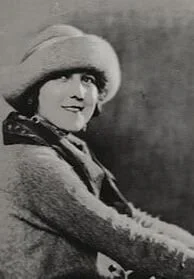
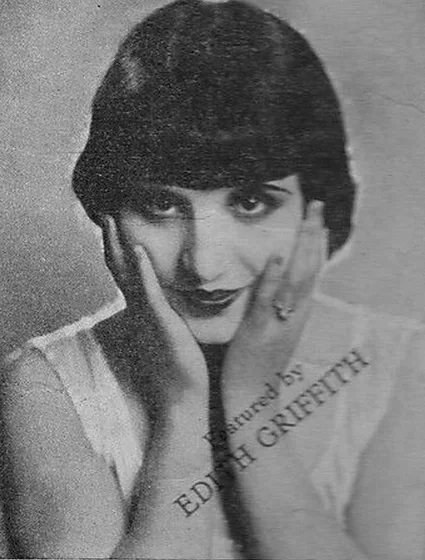
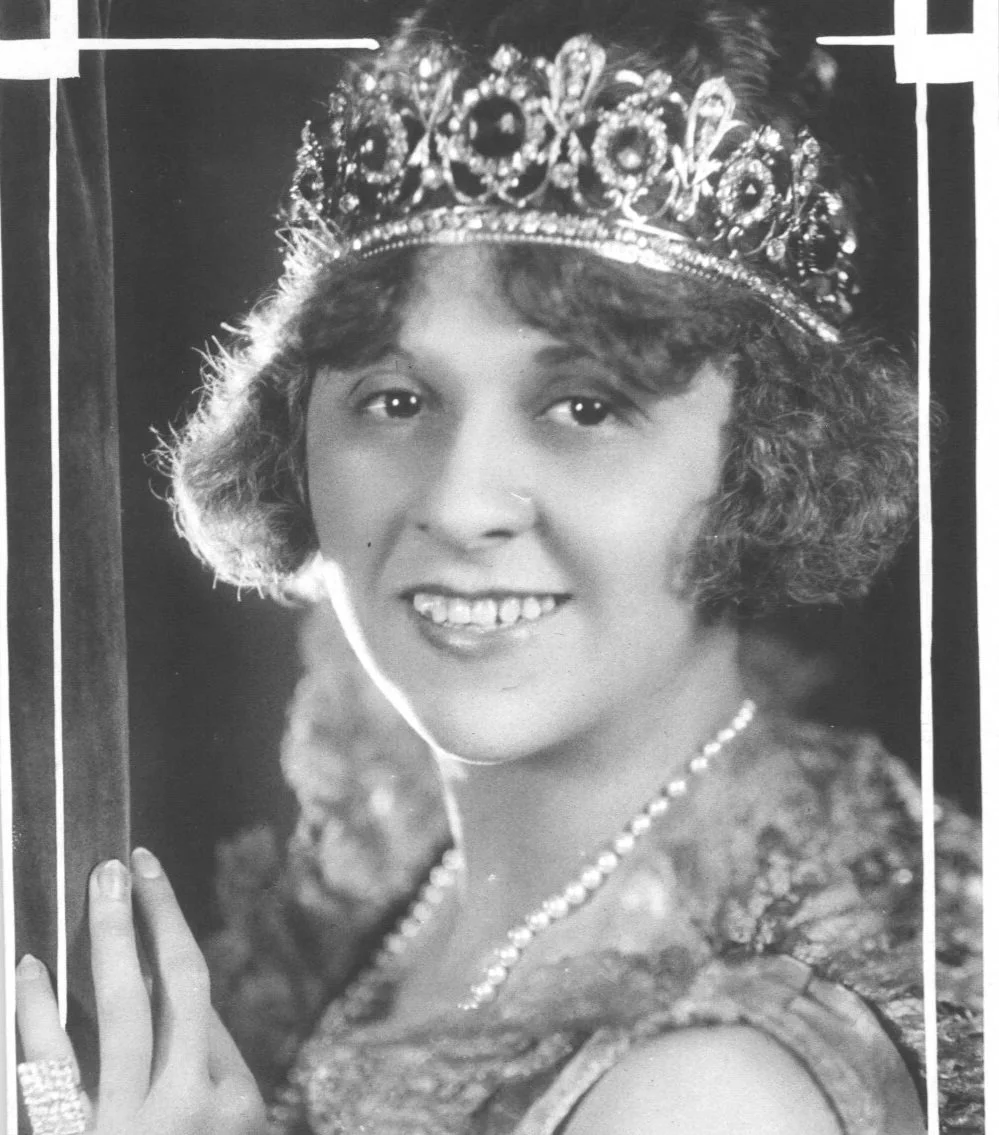
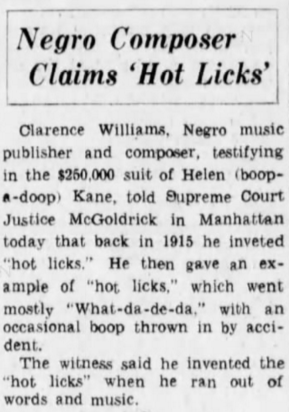
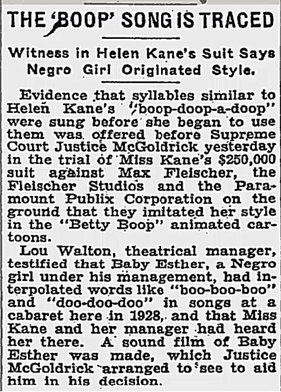
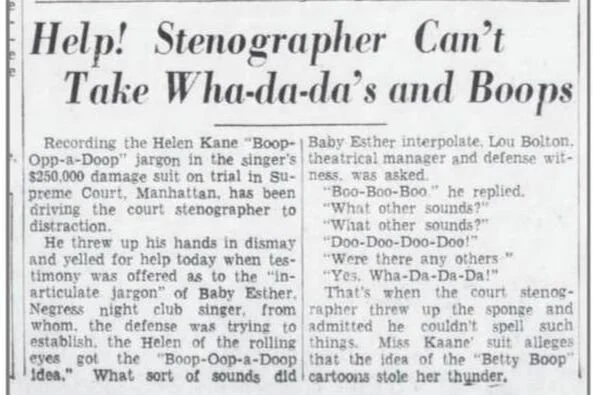
Also appearing as witnesses for the defense were recording technicians, music publishers and composers who testified they had witnessed other singers using the same boop-oop-a-doop style of scat-singing (sometimes referred to as "hot licks" or "breaks") for years. Famed African American pianist, composer, performer, music producer and publisher Clarence Williams claimed he'd been using the technique since 1915. Theatrical manager Lou Bolton testified that prior to 1928, he had trained an African American girl who performed under the name Baby Esther in the same technique, using the similar phrase of “boo-doo-boo.”
Bolton further testified that months before she’d started booping, Kane had seen Baby Esther perform at the Everglades Club in New York. Baby Esther did not appear in court herself, but Bolton’s testimony was supported by an early sound film of a scat-singing Baby Esther, who was just 8-10 years old at the time and was often billed herself as a “miniature Florence Mills.”
The chain of events established by Bolton's testimony was backed up by witnesses who claimed Kane had indeed seen Baby Esther’s act, and the film evidence established that Kane was undoubtedly well aware of the fact she did not originate or own her “unique” singing style. The revelation created a media frenzy and was ultimately so damaging to Kane's credibility that it is seen by many as the turning point in the case.
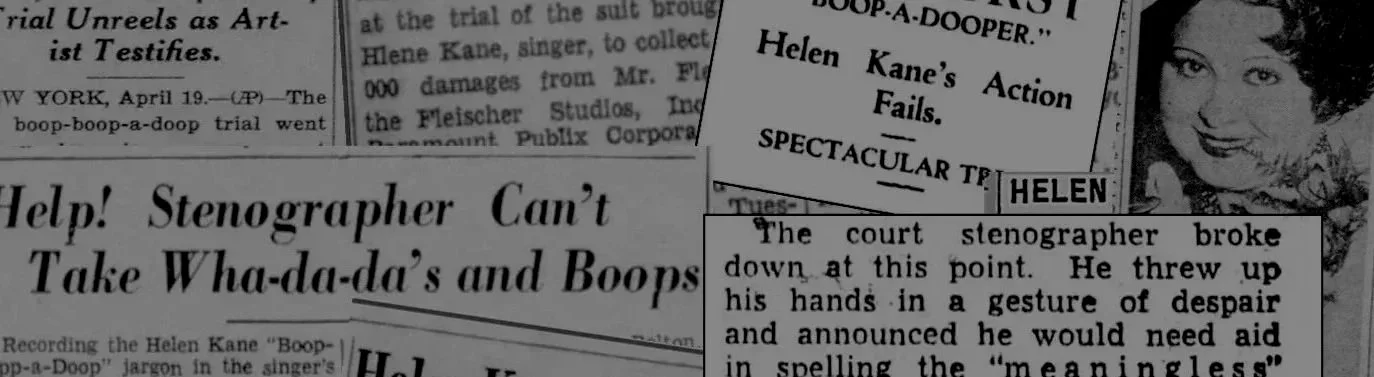
With a steady stream of popular entertainers on the stand and court stenographers described as being “on the verge of hysterics” as they struggled to accurately record scat phrases from “boop-oop-a-doop” to “do-do-de-do-ho-de-wa-da-de-da,” the case captivated the public’s attention for two years and was considered to be the best show in town.
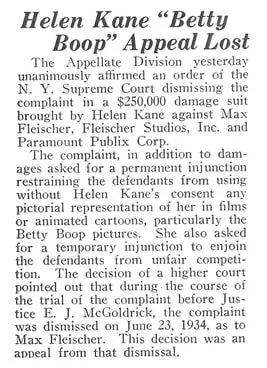
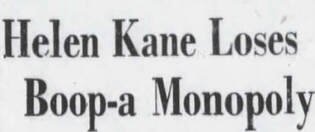
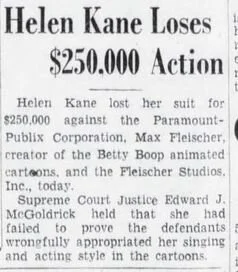
Finally, on May 5, 1934, the Court ruled that, based on the evidence presented, Helen Kane failed to show that her look, characteristics, and performing style were unique to her or that they had been taken by Max Fleischer for use in Betty Boop, and it denied her claims to ownership of the disputed characteristics. The Court further declined to assign these disputed characteristics to Max Fleischer, Paramount, Betty Boop or any other party. Accordingly, jazz artists of the era were free to continue performing in their own personal styles, many of which included similar traits, while also leaving cartoon Betty free to boop her way through the 100+ animated films we continue to enjoy to this very day.
During the trial Max Fleischer himself reminded the Court under oath that unlike everyone else involved in the case, Betty Boop was, after all, a make-believe cartoon character. Max and his animators, who were based in New York City, were inspired by the talent, energy and growing diversity of the Jazz Age and its impact on popular culture. While Betty wasn’t based on any one performer, she very clearly captured the spirit and sensibility of this remarkable and complex moment in America’s history.
Today, we’re grateful to embrace Betty Boop’s legacy and the opportunity it offers us to celebrate and amplify the voices of so many talented, trail-blazing female performers whose influential work continues to inspire us today.
Baby Esther (above) did celebrity impersonations and was often billed as "The Miniature Florence Mills."
Following the trial, Max Fleischer poses with some of the women who voiced Betty Boop.
Media Gallery
The media's fascination, and the public's appetite, for the dramatic, sometimes comic, twists and turns of this extraordinary case led to some unusual coverage.
The Brooklyn Eagle, May 1, 1934
Brooklyn Daily Eagle, May 5, 1932
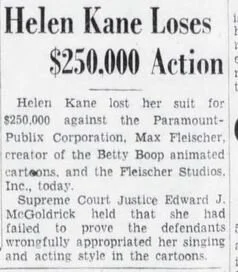
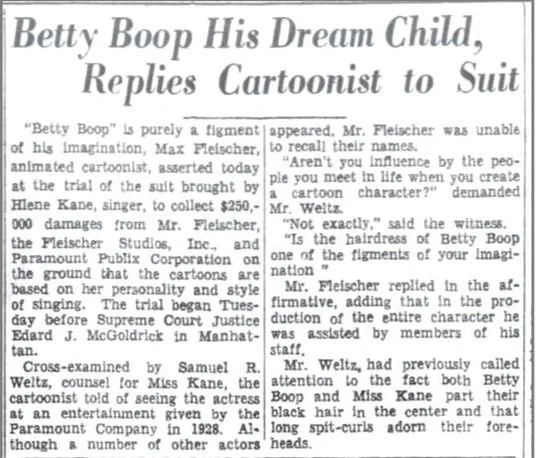
The Brooklyn Eagle, April 19, 1934
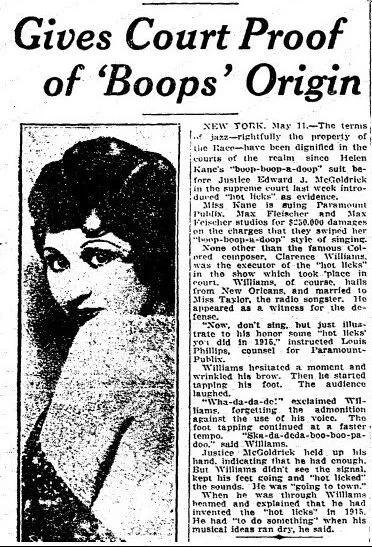
The African American, May 12, 1934