
Audible Thought Balloons
An interview with Ray Pointer
The Art and Inventions of Max Fleischer, a new book by Ray Pointer who is a preeminent animation historian, and animator in his own right, takes the reader on an amazing journey - not just through Fleischer Studios - but through the entire history of animation.
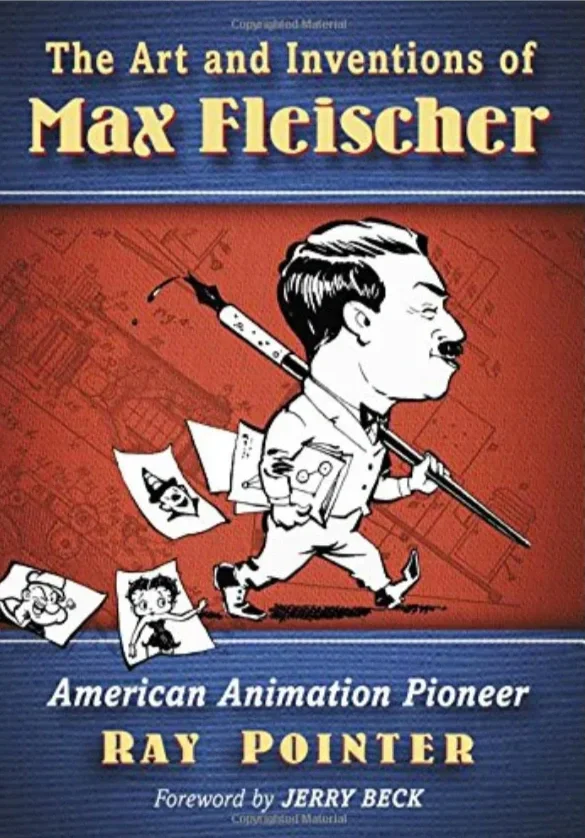
This comprehensive new book is the result of Mr. Pointer's 40-plus year commitment to investigating and studying Fleischer cartoons - and the work of Max Fleischer in particular. The book, which includes a forward by Jerry Beck, is now available on a number of websites including Amazon.
We were curious to talk to Mr. Pointer about this exciting new book, what led him to write it and the impact of Fleischer Studios, and its innovative work, on animation history. For this interview we matched Mr. Pointer with Jane Reid, a member of the Fleischer Studios Board of Directors ... and Max Fleischer's granddaughter!
We are thrilled to share their conversation with you!
Jane: What inspired you to write a book about Max Fleischer?
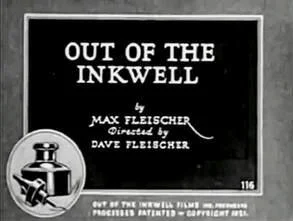
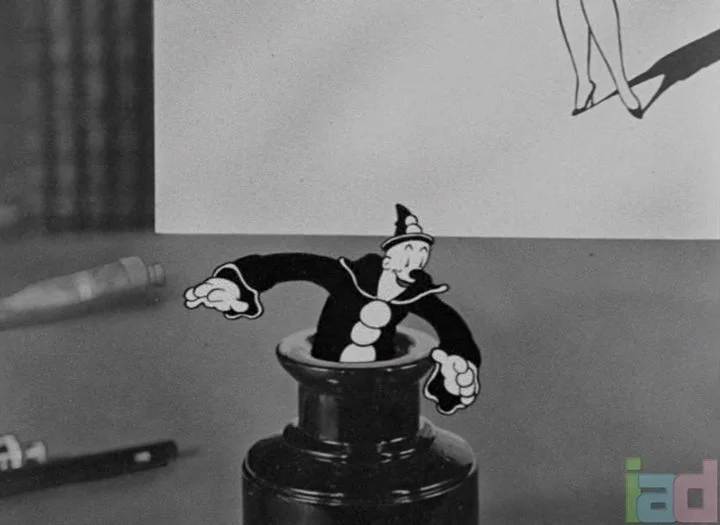
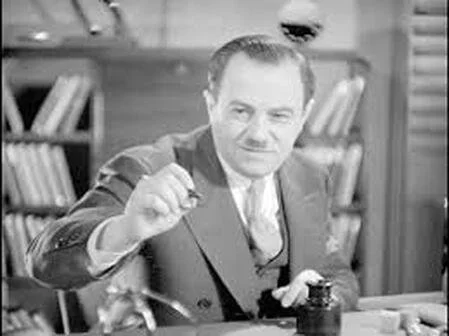
Ray: The first animated cartoons I recall seeing on early television were the Out of the Inkwell films that Max pioneered. His pen seemed like a magic wand that created so many clever things each time he dipped it into the ink. It was never the same, always something different, surprising, and clever. I guess the illusion of these things coming off his pen captured my imagination and I wanted to do the same. Of course, I knew the difference between fantasy and reality. This is something that my father noticed about me even as a small child. But my interest in Out of the Inkwell cartoons came essentially from my mother who got me started on them when they were run at the 7 a.m. hour on WXYZ in Detroit.
Jane: What was it about Max's cartoons that caught your attention?
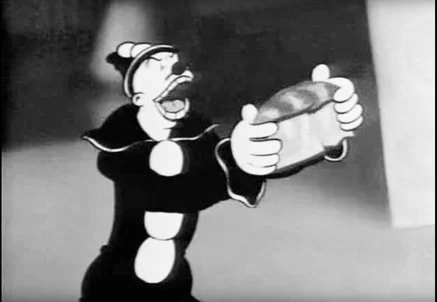
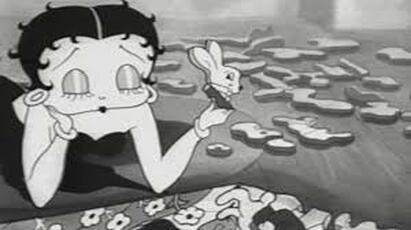
Ray: Aside from the novelty, there was something about the style of these cartoons that I was attracted to, and I came to recognize a continuation of the "look" in other cartoons coming from his studio including Betty Boop and Popeye. Once in a while I learned a valuable lesson, too. I still have the memory of seeing Koko come out of the inkwell after Max had left at the end of the day. And finding a candy bar, Koko broke off a corner that was the size of a large slice of cake by his scale. He started eating it with gusto until his jaw started swelling up. He got a tooth ache! That taught me to brush my teeth. In fact I developed the habit of brushing my teeth right after eating candy. I've never had a cavity in my life thanks to "Uncle Max."
Jane: Glad to hear he was such a good influence! Were Max's cartoons the only ones that appealed to you?
Ray: No. I saw a good share of other cartoons and liked them, too. And I certainly enjoyed Walt Disney's cartoons, of course. But there was something different about Max's cartoons that was rather indescribable. Aside from the fluidity of the animation, there just seemed to be more of an intimate nature about them as if the characters were addressing me directly, involving me with their antics, and sharing their thoughts as they sometimes spoke without moving their mouths, letting me in on their private thoughts. This was what I termed in my book as "audible thought balloons." Considering that Max saw animation as an extension of the comic strip, this makes perfect sense.
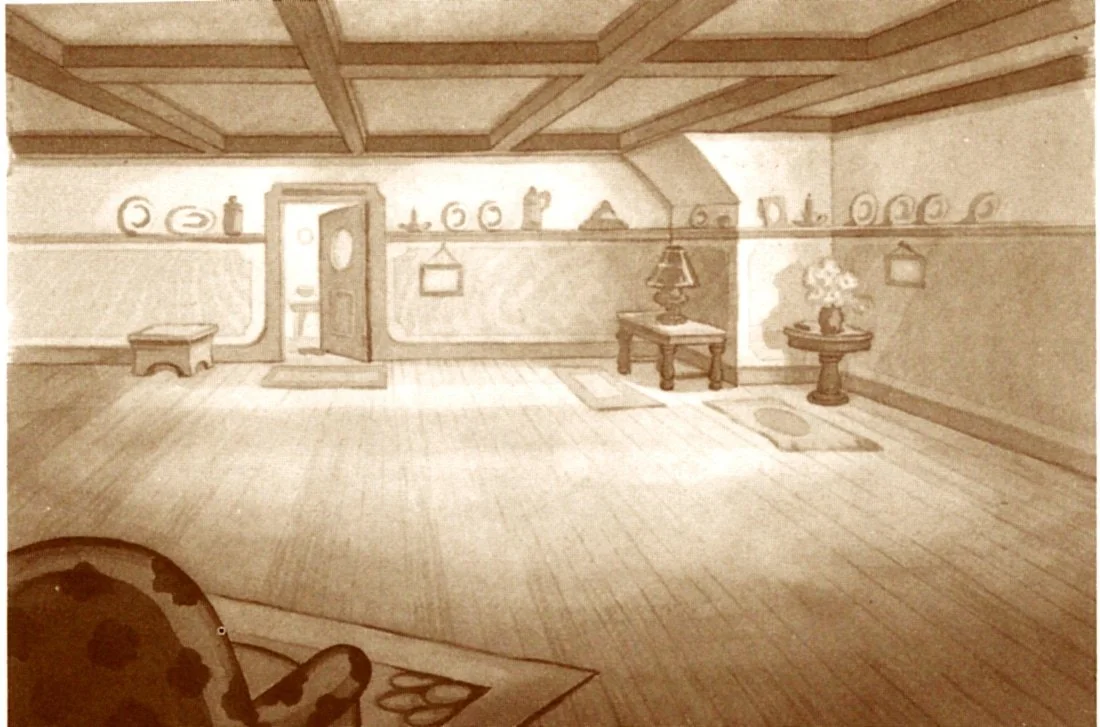
Another aspect of the personal connection was the environments in the cartoons. I was always impressed by the attention to detail in the architecture used in the backgrounds. Of course much of the credit here goes the the Background Supervisor, Eric Schenk, whose style reflected Max's due to similar artistic training. These environments were similar to my surroundings growing up on the west side of Detroit with its assortment of Dutch Colonial, Craftsman, and Tudor style homes built in the mid 1920s. Our first home was a Craftsman with lots of interior woodwork. And considering that my father was a member of the building trade, this was natural.
Jane: What would you say was your greatest influence from Max Fleischer?
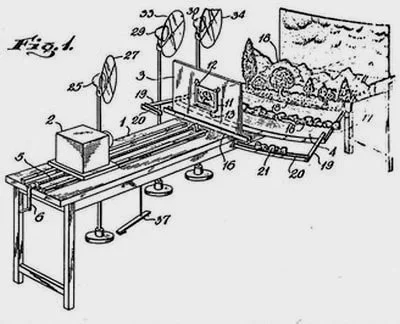
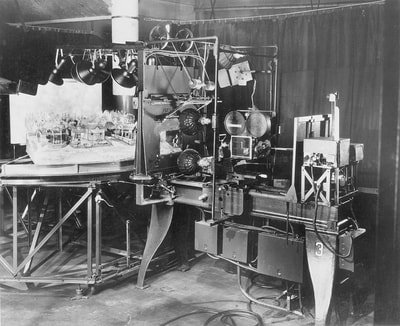
Ray: There were many. Of course, my greatest influence was his Popeye cartoons. I was always fascinated by the ones with the special three dimensional background effects. I was also fascinated by the dance sequences that were so well animated. I remember vowing "One day I'll know how this is done!" And I set out to do that some years later when I started my research.
Jane: And what got you started on that research?
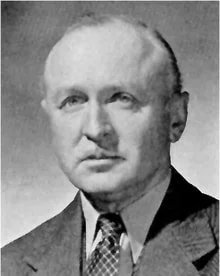
Ray: The summer before I started high school, I got my first professional animation exposure at Jam Handy, and met several Animators who had worked for Fleischer Studios. It was during my job interview that I was introduced to two pioneers of the animation field, Frank Goldman and his best friend Max Fleischer. While the circumstances are not clear, I gathered that Max was on a brief visit on his way to the west coast when he came to see Frank. I go into this in detail in my book. It was then that I learned that Max was an inventor. Frank and others told me things about Max that had never been documented. I recognized that these stories needed to be culled together, especially since all histories of animation up to that time were focused on Walt Disney to the extent that it seemed no one else existed in the field. I came to the realization that Max was actually the foundation for what later became the Disney empire.
Frank Goldman
Jane: Where else did you go for information for your book?
Ray: Aside from a few brief references in obscure newspapers, magazine articles, and books, the only extensive information to be found on Max Fleischer was a four page entry in The Richardson Encyclopedia, and a listing in The Motion Picture and Television Almanac. These sources at least gave me a starting point and reference, placing Max in the field a decade before Disney got started. In fact, Max was pioneering the animation field when Walt was only 14 years old.
But I finally made the full plunge into my research when I started at Wayne State the fall of 1970. The main branch of The Detroit Public Library was near the campus, and after classes, I looked up all of the copyright registrations to trace Max's studio history. The library also had an extensive Patent Library. So I looked up every patent in Max's name. I also combed through the periodical looking for news clippings and magazine articles. After two years, this material was exhausted and the holes were still not filled. By this time Max had passed away. I contacted Max's son, Richard, who graciously referred me to his sister, Ruth Kneitel. Ruth was very cordial and generous. Her initial question to me was "Why are you interested in my dad's career?" I answered quickly, "I guess I've always liked jigsaw puzzles." Ruth laughed, responding with "You're right, my dad's life was something of a jigsaw puzzle!"
Jane: What were you hoping to do with all of the pieces to the jigsaw puzzle?
Ray: I was interested in producing a documentary on Max Fleischer while I was enrolled in the Film and Television program at Wayne State. Max's cartoons had been off television for five years largely because the bulk of them were in black and white and television had gone to all color. But there were special film history programs being produced for National Educational Television, which later became PBS. I quickly learned that a good share of the milestone films were considered lost, or existed in poor condition. In other cases, the use rights were very complicated, and the university seemed unable to take on a project of this nature. So I considered writing a book. It was at this time I learned through Ruth that a book was in the works by Leslie Cabarga in San Francisco. She suggested contacting him and gave me his address.
When I contacted Leslie, it seemed I had the missing details he needed for his book. We made a friendly exchange through the mail, and spoke on the phone several times. I could see that he needed the help of someone understanding the medium. And most of all, since there had never been a book on Max, I considered the bigger picture, and gave him a copy of my notes in order to help make the book as good as it could be. That was 40 years ago.
Jane: And that brings us to why you've written your book.
Ray: People have tapped into me for information on Max Fleischer for many years. And many artifacts thought to have been lost over the decades have surfaced in recent years. At the same time, many people continue to be interested in the subject of Max Fleischer as an alternative to the Disney story, which has been overexposed. Most of what was being written was done by fans with good intentions, but confused in content and limited to career summaries. The problem with writing about this subject is that it requires the understanding of many things on many levels including 20th Century history, American Cultural History, as well as art, animation, and film technologies, with something of an understanding of psychology.
Writing about animation first of all is a challenge since it's a moving art form that needs to be seen to be totally realized. Most authors writing about animation are not artists, animators, or film makers. This makes it difficult for them to understand the creative mind and the disciplines involved with making animated cartoons. What people really want to know is "how were the cartoons made," and most of all, "what made these men 'tick'?"
This was my approach in writing my book - to share my insights combined with qualified sources on this fascinating subject and the man at the center of it. It's not enough to say that I just told the story because, in a sense, I've lived it!
Jane: How did being an animator yourself inform your research and writing of this book?
Ray: As I said previously, part of the problem with most books on animation and animation history is that they have been written by people who are not artists or Animators. So they don't have the same realization as one would coming from the profession. Having done a share of it has given me the insight because this is an intellectual process in many regards since animation is an art as well as a science. This is central to my book, and was at the core of Max Fleischer's very being. This is found in his declaration that "Mechanics is the art form of the 20th Century." And it was this combination of art and technology that was central to his work.
Jane: So coming from an Animator's perspective is an advantage?
Ray: Yes and no. Merely being an "Animator" may not always be enough since Animators are individuals with their own natural abilities and realizations as well as strengths and weaknesses. Most Animators, especially those in the last generation, have been compartmentalized. They've pretty much worked within their specific area of training. They were not brought up in the old studio system where you started at the bottom and were promoted to the next level according to demonstrated ability. The closest to that are independent Animators who do all of the functions out of necessity. I came out of that through my experimental period which led me to my first professional work. And when I was hired, I was of that last generation who learned every aspect of the business from cel painting to working the cameras.
I seemed to gravitate more towards the technical aspects, and I'll admit that I neglected some of my artistic development while I focused on the details of film technology, optical sound recording, and so on which I applied to my personal films as I continued my self-training. All the same, this broad exposure to the entire process I believe has given me the depth of understanding necessary to write a book of this nature. So in order to give the subject its proper coverage, one needs to be able to "see the big picture."
Jane: You mention the "old studio system." Would that include the old Fleischer Studios?
Ray: Oh, yes of course. Most everyone started out as cel painters -- 'Opaquers' as they were called on the East Coast. In fact they used that same term at Jam Handy, which isn't surprising since they were largely influenced by New York animation production methods. There was also a stream of New York Animators from Fleischer and the Terrytoons Studio working there from time to time. But most everyone started out painting cels, inking, and moved up to Inbetweening as positions opened up leading to the level of Animator.
Jane: So this was the path at Fleischer Studios, too?
Ray: Yes. Even in the days before the use of cels, high schoolers were hired as "Inkers" to blacken in the characters on paper. Several of Max's top Animators started out that way.
Jane: Who were some of them?
Ray: Dave Tendlar and Berny Wolf had been Inkers on Krazy Kat before coming to work for Max.
Jane: And did they all do Inking for Max?
Ray: No. According to Berny Wolf, Max hired him for a new Assistant position called "Inbetweener."
Jane: What was that?
Ray: Inbetweeners were assistants to Animators who completed all of the drawings needed in a scene. The Animator might make six or eight main poses and make notes in the margins for where the positions were to fall like halfway, a quarter, or a third, and the Inbetweener would make those positions accordingly. Usually they were positions fitting in evenly, which contributed to the fluid action that Fleischer animation was known for.
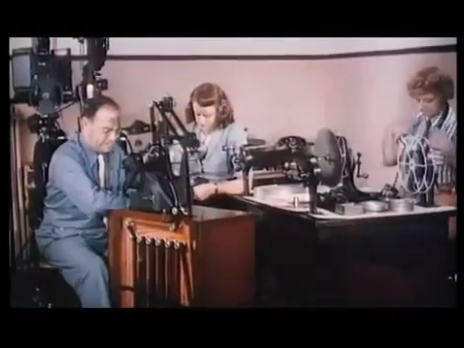
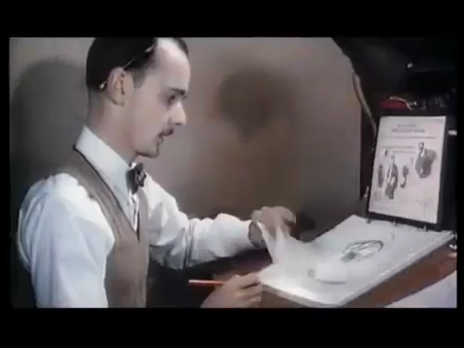
The old 'cel animation' process is detailed in a 1938 Popular Science filmfeaturing the work of Fleischer Studios.
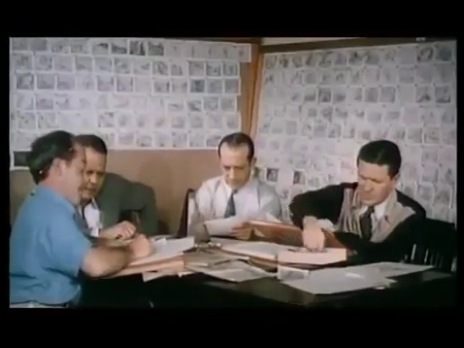
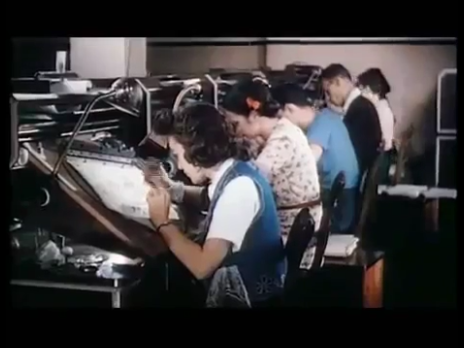
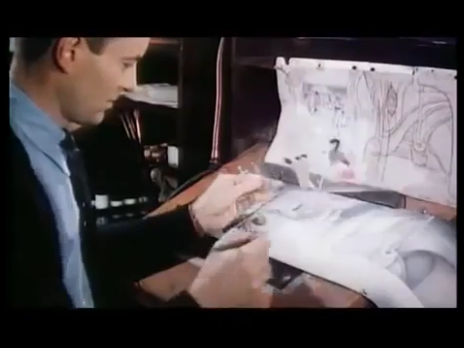
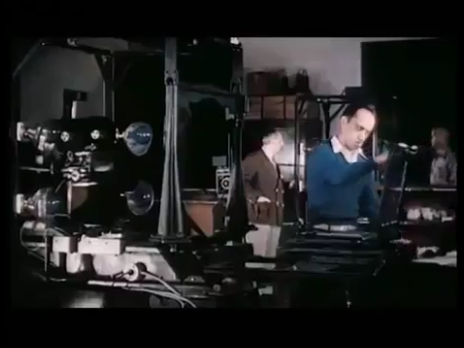
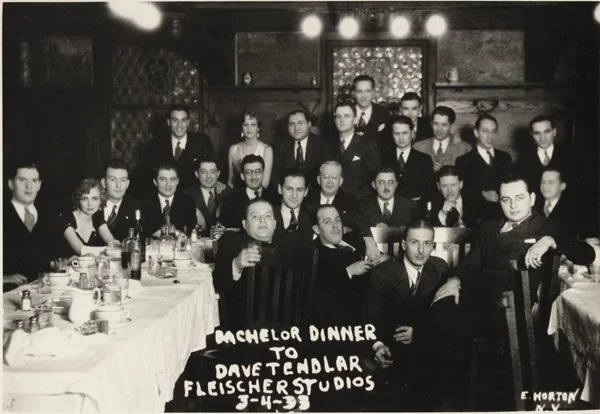
Fleischer Studios staff bachelor dinner for Dave Tendlar (seated near the middle with mustache and glasses). Seymour Kneitel is seated right foreground, Izzy Sparber standing in rear third from left, Myron Waldman standing in same row, third from right. Collection: Fleischer Studios
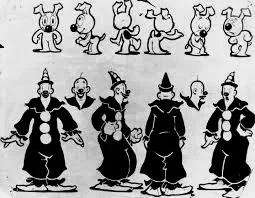
Model Sheet for Ko-Ko the Clown and his dog Fitz by Dick Huemer
Jane: Was the Inbetween process unique to Fleischer Studios?
Ray: Some sources claim that others approached animation the same way. Winsor McCay called it a "Split System" where he made key drawings and went back and drew the in between positions. But he worked virtually alone on his animation without an assistant other than his teenage neighbor, John Fitzsimmons, who meticulously copied the backgrounds onto each drawing used in GERTIE THE DINOSAUR. Otto Messmer of Felix the Cat fame worked as an Assistant doing Inbetweens on the Charlie Chaplin cartoons. But for the most part the Inbetweening system was not in full use by other animation studios in the silent era. The story has it that it all started at Max's first studio, Inkwell Studios, when Dick Huemer left the Mutt and Jeff series and came to work for Max. Dick re-designed the clown character, named him "Ko-Ko" and had a knack for drawing directly in ink. He had a very attractive thick and thin pen line that Max liked very much. So to get Dick to work more efficiently, he asked Dick to make just the main poses and have an assistant fill in the rest of the positions. This was unheard of in those days since Animators took pride in seeing their work represented on the screen with each drawing made themselves. Art Davis was assigned as Dick Huemer's Assistant, and for all practical purposes was the first official "Inbetweener" in the business. You may recall the name Art Davis from the credits of the Warner Brothers cartoons from the 1940s on as an Animator and Director.
Jane: So it sounds like the position of Inbetweener was another Max Fleischer invention.
Ray: In essence, yes. It was Max's idea. And the Inbetweening method proved to be an efficient form of production, where Animators could produce more work in less time with the same results as they had when they made every drawing. This way, Animators could animate four or five cartoons in the time it would take to do one. And as animation production became more and more industrialized, this was practiced throughout the industry. But by all accounts, it started with Max's studio on the Out of the Inkwell films.
Jane: This sounds like it was something of an Apprenticeship or Training Program for Animators.
Ray: It was. And after some period of time, several Inbetweeners were promoted to Assistant Animators and Head Animators. And in the 1930s, Fleischer animation was largely animated on 'ones,' meaning that one drawing was made for each frame at a time when Disney cartoons were animated largely on twos, or each drawing exposed for two frames. While this cut the work in half, it did not produce the fluidity that graced the Fleischer cartoons of this period. Of course the use of animating on twos was used where smoothness of action may not have been as critical. Max made a generalized statement in the mock interview in BETTY BOOP'S RISE TO FAME where they made between 12,000 to 14,00 drawings in each cartoon.
Jane: Wow, that's a lot. Why so many?
Ray: First of all there are 24 frames per second in film. This comes to 1,440 frames per minute. The average cartoon ran seven minutes, or 10,080 frames. In a few cases some cartoons ran a full 10 minutes, or 14,440 frames. So of course, Max's figure was an average because many factors affect the number of drawings, or "cel count" based on how elaborate the animation is, how long the scenes are, or how many cel levels are used in scenes, which amounts to additional drawings and cels.
Cycles would always be a shortcut to meeting footage requirements. That's where runs and walks help. If there was a five second scene of a walk or run, this would require 120 frames. The action cycle could be used to fill the 120 frames without making that many drawings. They would make anywhere from six to 24 drawings depending upon how fast the run or walk was to be, and repeat them for the total of 120 exposures.
Another form of cycle would be the musical rhythm cycle such as a character playing a musical instrument and bobbing up and down in time to the beat. The early 1930s Mickey Mouse cartoons used this a lot in their musical sequences. But this is not to be confused with the "moving hold." That was something else that Dave suggested to keep the characters alive when standing still. They would bob up and down to avoid being frozen on the screen. These were usually done randomly and not necessarily to the actual beat of the music. But the illusion was that they were moving in time with the musical tempo. That was another use of a cycle short cut.
In other cases where you had several characters working in a scene at different places on the Time Line, additional cel levels would be required, which added to the number of drawings and cel count. While there was the illusion of what in the theatrical days was referred to as "Full Animation," certain short cuts were used, similar to those used in Limited Animation for television. Fleischer Studios did have the mouth movements for dialogue in most of their cartoons on a separate level from the balance of the character. This is particularly the case in many of the Betty Boop cartoons where she sings and turns from one side to another as she sings. This is another example of a cycle. This time the mouth shapes on a top layer could be changed while the balance of the action could be cycled back and forth as needed. Even with the use of certain commercial shortcuts, there were still thousands of drawings necessary. And because of this, animation studios had to employ a large workforce to produce these many drawings within a short period of time.
Jane: Yes, it does seem like this would have been time consuming work for one person to make the thousands of drawings. How long did it take to make a cartoon this way?
Ray: All indications are six to eight weeks. Sometimes 12 weeks. Some could be done in four weeks if a lot of shortcuts were taken. Again, the Inbetween process was crucial to this assembly line process. And there were a lot of Inbetweeners, Inkers and Opaquers needed to get the scenes ready for the camera quickly. When Winsor McCay made his cartoons, he took two years. This clearly was impractical for commercial purposes. Max discovered this as well when he first approached the President of Pathe with his Rotoscope experiment. When Max modestly remarked it had taken him the better part of a year to complete it, the Pathe Rep asked him to come back with something he could offer once a week or even once a month. But it should be understood that Max worked on his first animated cartoons in his spare time assisted by a skeleton crew that included his brothers Joe and Dave. This he did while working his day job at Popular Science Magazine. Of course, I go into these details in my book.
Jane: So it sounds as if the Inbetweeners, Inkers and Opaquers were crucial to the production of the cartoons.
Ray: Yes. And because of the need for so many thousands of drawings and cels, the labor was divided in order to finish the large volume of work. And once a scene was finished it went to camera immediately. Keep in mind that there were several cartoons in various stages of production at the same time. So a trafficking system was in place to track scenes for each cartoon as they were photographed, the film processed, and sent to edit assembly. This is what Izzy Sparber did before he was promoted to the Story Department. Keeping track of all of the individual scenes was crucial by the mid 30s when Fleischer Studios was producing four series with a new cartoon released to theaters each week.
Jane: That's was a lot. What were they releasing?
Ray: The Betty Boop series was still going along as well as the Screen Songs, Color Classics, and of course their greatest success, Popeye. This amounted to 52 releases a year. But with all of this activity, it eventually came to a head, which changed the course of Fleischer Studios. I go into lengthy detail on this in my book.