Fleischer Studios
Where Women Made History
Betty Boop: The First Lady of Animation
The first of many women to make history with Fleischer Studios was our own Betty Boop - the first fully human, female star of animated films. A precursor to the character first appeared in Dizzy Dishes, released on August 9, 1930. She’d been created as a love interest for Bimbo who was, at the time, the star of Fleischer Studios’ popular Talkartoon series. Though he was a dog, Bimbo— like most inhabitants of the the Talkartoon Universe— had many distinctly human traits, so it’s not surprising that he would fall for a floppy-eared singer with a puppy-dog nose. She appeared only briefly but quickly won Bimbo’s heart and captured the public’s imagination.
As she grew in popularity, she began to evolve. Her features became increasingly human, her floppy dog ears transformed into her now iconic hoop earrings, and she eventually got a name: Betty Boop. In a world where animated female characters played second fiddle to their male counterparts, she took center stage. Eventually she surpassed Bimbo in popularity, and in 1932 she was honored with her own Betty Boop Series of cartoons. With a flirtatious persona, modern sense of style, and flare for self-determination, Betty truly embodied the new American woman.
fleischer studios employs first female animator
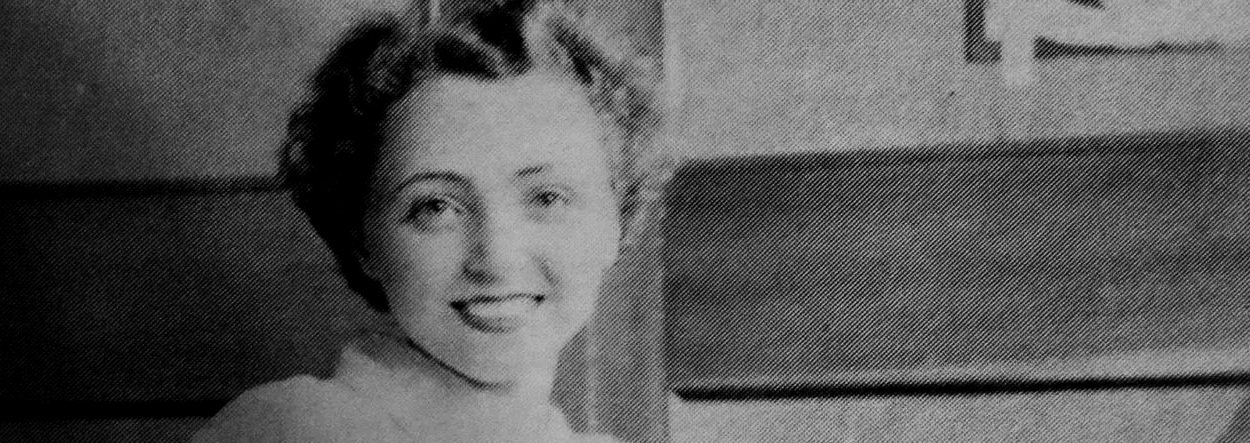
Lillian Friedman (from "Talking Animals and Other People" by Shamus Culhane)
In 1933, when Fleischer Studios promoted a then-22 year old female artist to the position of animator, Lillian Friedman became the first woman to be hired as a commercial animator at a major American animation studio.
Lillian was just 19 when she joined the team at Fleischer Studios in 1931 as an inbetweener, which already a fairly prestigious position as women were generally employed only as inkers or opaquers. Head animator Shamus Culhane quickly recognized Lillian as a highly talented artist. He arranged for Lillian to serves an assistant animator, and later advocated for her advancement to the role of animator.
Convincing his fellow animators to accept a woman in their ranks was no easy task. At the time, it was accepted as ‘fact’ within the industry that women did not possess the creativity necessary to be animators, just as it was widely believed in so many fields that women lacked in the competency, capability and commitment necessary to function successfully beyond a small range of basic, clearly-prescribed tasks.
As Shamus Culhane recalls in his book Talking Animals and Other People, he had to devise tricks to get some of his more resistant male compatriots on board with a female animator. But, by Lillian’s own account, she soon enjoyed a warm, congenial, and very productive working relationship with her fellow animators.
“Nobody knows just why, but women generally are not successful as cartoon animators.”
As late as 1939, Disney Studios did not accept “girls” into its training program. As the letters below demonstrate, when it came to the women animators, the response was simply a matter of policy:
“Women do not do any of the creative work in connection with preparing the cartoons for the screen, as that work is performed entirely by young men. For this reason girls are not considered for the training school."
Though the language in the letters below varies slightly, both characterize women as being more suitable for work that includes:
“...tracing the characters on clear celluloid sheets with India ink and filling in the tracings on the reverse side with paint according to directions."
The Internet Movie Database credits Lillian as an animator on only 11 films at Fleischer Studios between 1934 and 1938 (and she received screen credit for only seven of those films). The IMDb doesn’t include her work as an animator on the Popeye classic Sindbad the Sailor, which the above article clearly attests to her being an animator on, or Betty Boop’s A Language All Her Own, which Shamus Culhane has referenced as a film she served as an animator on. This is not entirely due to gender. Fleischer Studios only credited two animators per film, regardless of how many animators worked on any given project, but it does make tracking her work and impact challenging.
Unfortunately, but not surprisingly, Lillian was paid significantly less than her male counterparts. She would go on to be become very active unionizer, and this strained her relationship with management when Fleischer animators went on strike in 1937.
In 1939, shortly after the Studio moved to New York, Lillian (whose husband had remained in New York) resigned and returned to New York. 1987, she was named a special honoree at Golden Awards Banquet “for her services to the cause of unionism in the art and industry of screen cartooning.” For more about this special recognition, check out this article on Cartoon Research by Harvey Deneroff which includes a short interview with Lillian.
If you’d like to enjoy some of Lillian’s wonderful work, you can click on the following links to watch A Language All My Own and Pudgy and the Lost Kitten, both in our Fleischer Studios Theater. Lillian’s work can also be seen in Betty Boop's Prize Show (1934), Making Stars (1935), Judge for a Day (1935), Be Human (1936), The New Deal Show (1937), Pudgy Takes a Bow-Wow (1937), Buzzy Boop at the Concert (1938), Honest Love and True (1938), and the Color Classic Hawaiian Birds (1936).
Article in a Paramount promotional booklet for "Popeye The Sailor Meets Sindbad the Sailor" 1936. Collection: Fleischer Studios Family
That wholesale acceptance of women as being less artistically capable than their male counterparts is on full display in a 1936 article about Lillian that appeared a Paramount promotional booklet which states:
"Women do not do any of the creative work..."
An excerpt from a 1938 letter from Disney to Miss Mary V. Ford. See the full letter here , on Snow White themed stationary, (image by Ms. Ford's grandson.)
An excerpt from a 1939 letter from Disney Studios to Miss Frances Brewer - find the full letter on the Animation Archives Blog.
fun fact
According to an issue of the Fleischer Animated News, Lillian Friedman named her dog Popeye!
The second female animator, Laverne Harding, was hired in 1934 by Walter Lantz’s studio.
Another great, early female animator, working in Germany, was Lotte Reiniger who created the film The Advertures of Prince Achmed in 1926. This beautifully rendered work was created entirely with cut-outs, rather than more traditional animation techniques. Reiniger, who made the film herself, was not working as part of a larger studio-system. An impressive and noteworthy feat indeed!
learn more
You'll find more information about the
life and career of Lillian Friedman on these sites:
OliveOyl.com
Seymour Kneitel Blog
Great Women Animators
The Animation Guild Blog
The Animatorium
Read about the history of women in animation at:
The Women of Animated Film
Photo of Lillian Friedman is from Talking Animals and Other People by Shamus Culhane
Excerpt of Letter to Miss Mary Ford is from image by photographer Kurt Burg, Ford's grandson
Excerpt of Letter to Miss Frances Brewer appears on the Animation Archives Blog
Popeye © 2015 King Features Syndicate, Inc., TM Hearst Holdings, Inc.