

Celebrating a Century
1921 -
- 1929
the out of the inkwell years
Part Two 1921 - 1923
Two years of tremendous activity, innovation and expansion at Out of the Inkwell, Inc.
Having established themselves and their fledgling studio in the basement of 129 East 45th Street, Max and Dave quickly jumped into full production. The brothers agreed Max would serve and be credited as the Studio Head, and Dave would serve and be credited as the Director on all their films, an arrangement that continued unchanged for two decades.
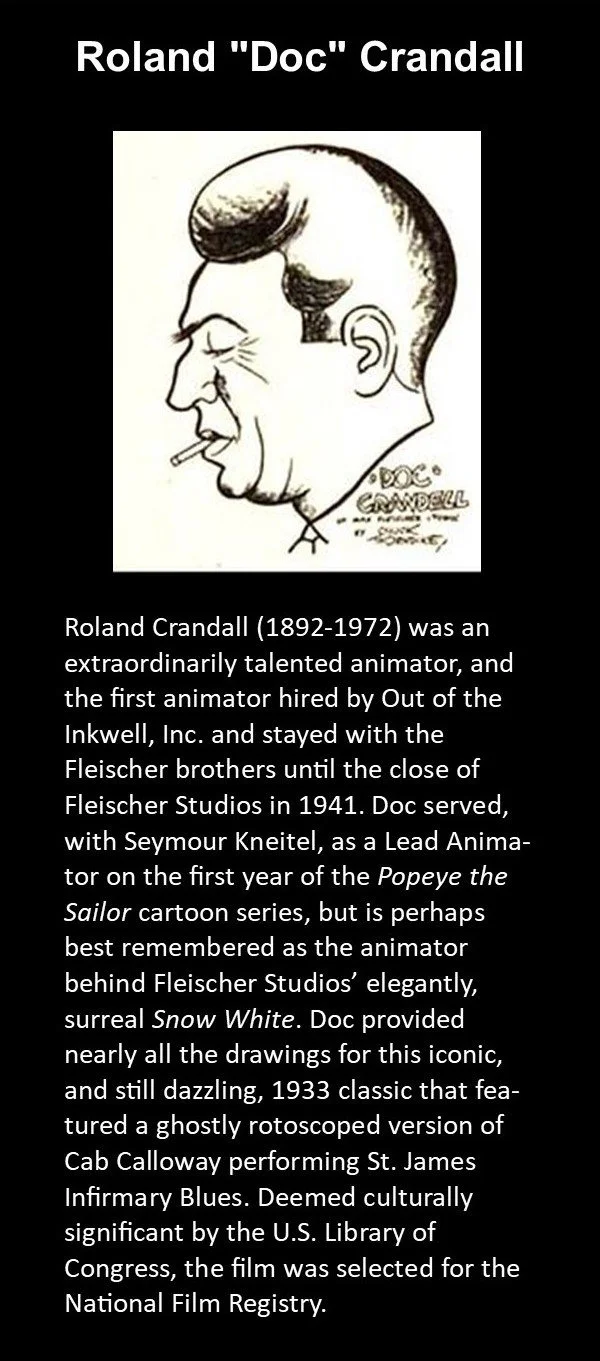
A second employee, fellow Bray animator Roland “Doc” Crandall, quickly joined the team. Doc’s work as an animator and an actor is featured in the Studio’s first release Modeling. Doc plays a sculptor whose efforts to satisfy a vain, demanding customer are thrown into chaos when the Little Clown created by his studio partner breaks loose from the drawing board.
For all its light-hearted, rambunctious fun, this first Out of the Inkwell film also demonstrates the enthusiasm for innovation and invention that, in the coming years, would attract so many talented animators to the Fleischer brothers. Modeling featured the use of Max’s most recent invention, the Rotograph, which further refined the Fleischer’s novel blend of live action and animation. The film also featured extensive use of Claymation, at the time still a relatively new technique. Blending Claymation with live action and animation, Modeling creates a world in which the power of the artists’ imagination- at times awkward, at times hilarious- seems to know no bounds.
Dave Fleischer can be seen in the 1922 Film The Mechanical Doll (a.k.a. The Dresden Doll) in which he plays a projectionist whose screen and projector are highjacked by Max’s Little Clown who draws and then falls in love with a dancing girl only to have her melt when she is hit by a drop of oil from the projectionist’s oil can. It has been suggested that Max's daughter Ruth served as the model for the Little Clown's dancing doll. Ruth was a dancer in real life and would later be featured in the Studio's live action Carrie of the Chorus series and- both animated and in live action- in the film Ko-ko's Queen.
The live action sequences, especially in these early films, tended to feature the people who happened to be around. Often sequences were shot in their own living rooms. Descendants of the brothers have recognized everything from family rugs to hand mirrors in these early films.
Dave Fleischer, who also served as the model for the Little Clown, comes face-to-face with his alter ego in "The Mechanical Doll."
Max climbs a ladder to prepare for a scene. (photos courtesy of J.J. Sedelmaier Collection)
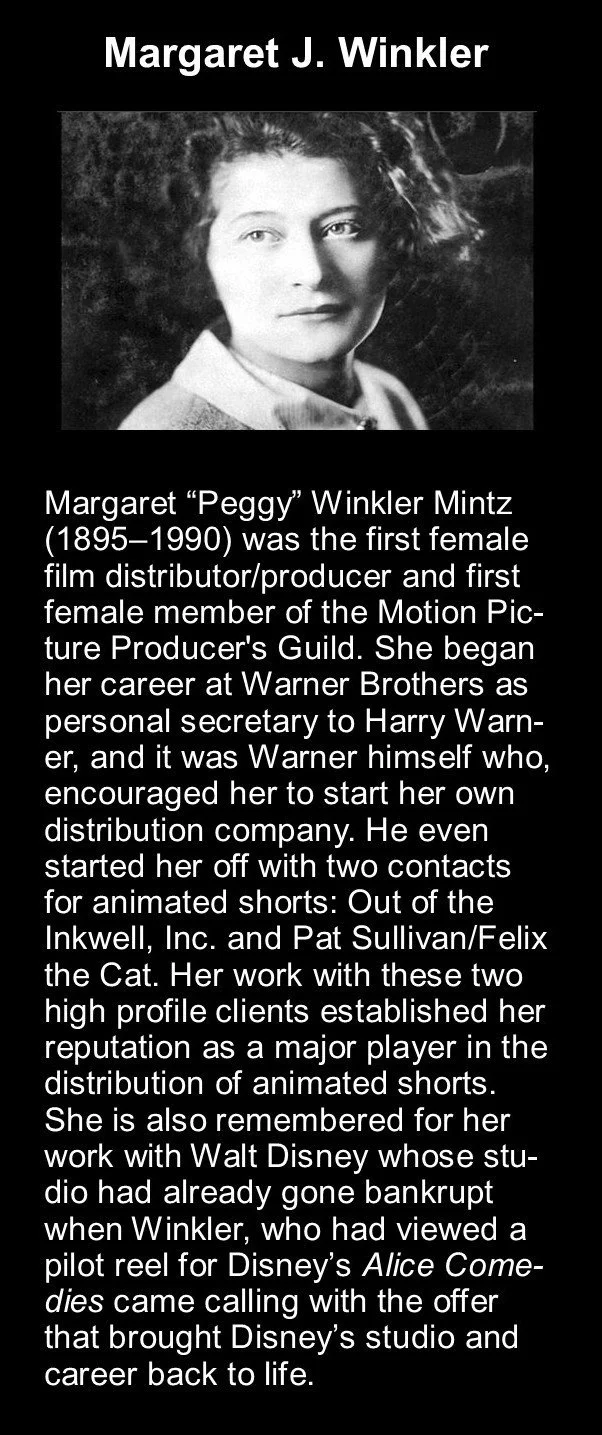
In 1922, Out of the Inkwell became one of the first studios to sign with Margaret “Peggy” Winkler, the first female film producer/distributor. Under the gender-shielding moniker of M.J. Winkler, Peggy Winkler would go on to play a critical role in the success of many great animators of the era, including Walt Disney.
Out of the Inkwell, Inc. released 27 films between 1921 and 1923. Most were shorts that featured their famous- and still unnamed- Little Clown. But in 1923, the studio released two longer, scientific films, Relativity and Evolution, that marked a dramatic departure from the studio's usual animated antics.
Relativity and Evolution reflected Max’s lifelong interest in science, as well as his deep belief in the power of film to convey new and complex ideas to audiences regardless of their access to education. While this may not seem like a particularly radical statement today, it was not a generally accepted point of view at the time.
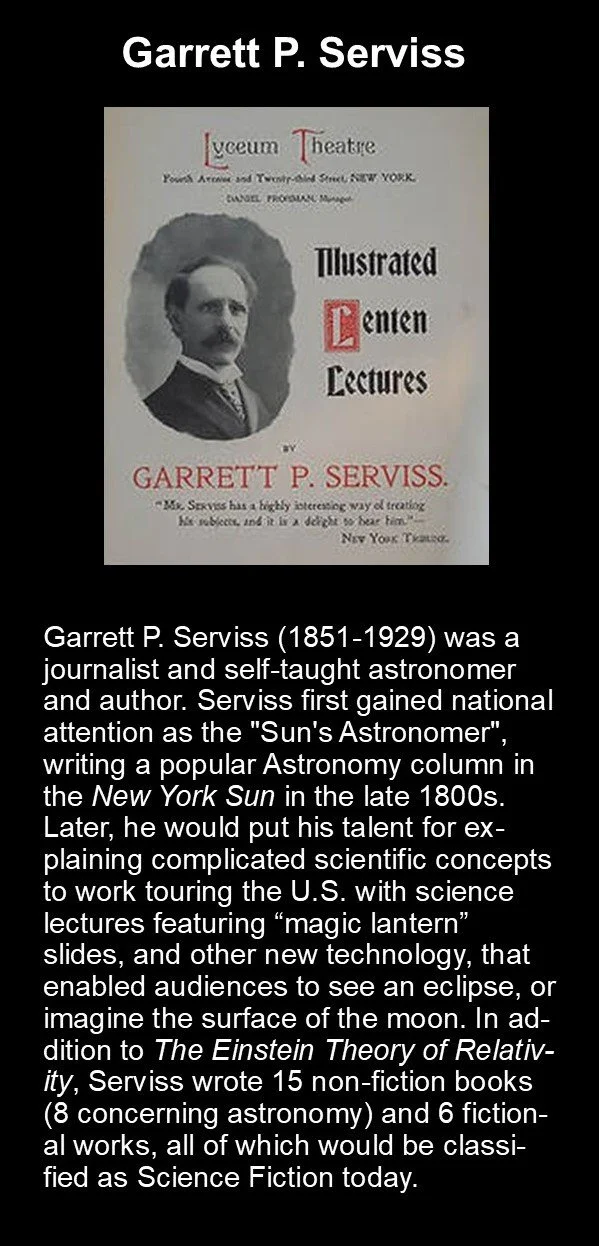
For Relativity, Max enlisted the help of Garrett P. Serviss, a self-taught astronomer and journalist. Known for his ability to distill and explain complicated scientific principles to ordinary people, Serviss was a consultant on the film and wrote a book entitled The Einstein Theory of Relativity that was released in conjunction with the film. It featured images taken directly from the film, including a wonderful image of Max’s Little Clown intently studying Einstein’s Theory on the back cover.
Relativity and Evolution explained complex scientific theories that were still new to the general public.
Relativity was a critical and popular success, drawing praise from Albert Einstein himself and refuting a 1922 article in Scientific American claiming silent film could not successfully explain the theory of relativity to the general public.
Evolution, drew audiences but it also drew controversy. Released two years before the Scopes Trial in which a Tennessee teacher was accused of illegally teaching Darwin’s theories, it introduced audiences to ideas that, at the time, were still considered quite radical.
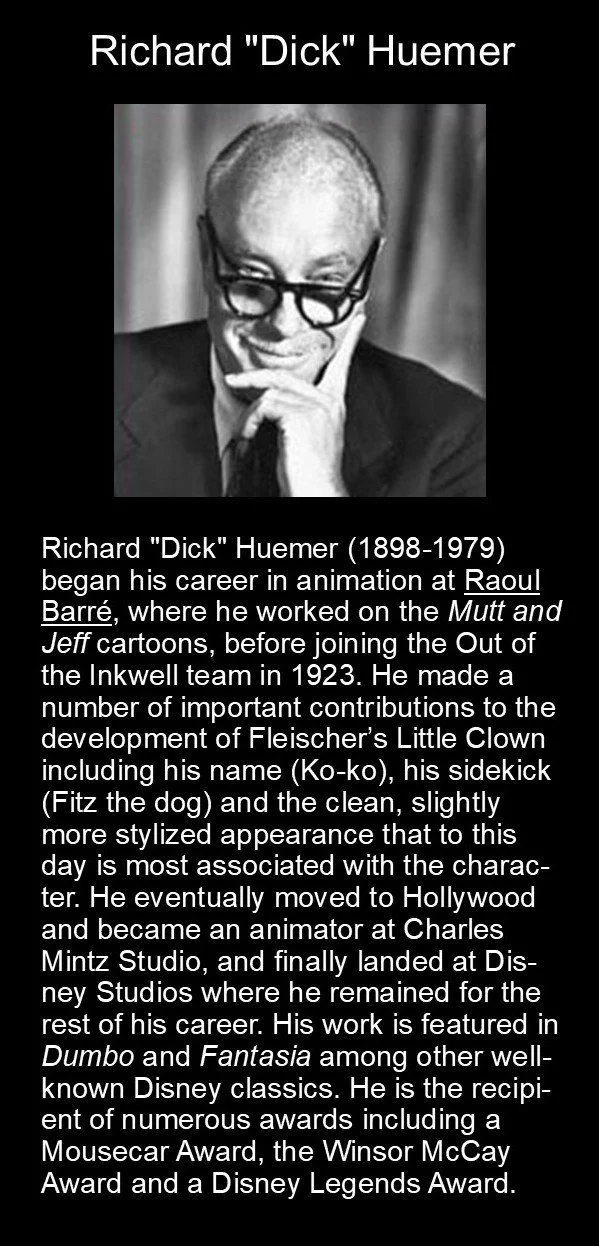
1923 was also the year that animator Dick Huemer joined the growing Out of the Inkwell team as Animation Director. Huemer's work had a remarkable style and energy that transformed the look and feel of Max’s Little Clown.
Huemer named the clown Ko-ko and gave him a sidekick; the mischievous little dog Fitz.
Max was so impressed with Huemer’s skill and distinctive style that he hired an assistant to create the “in between” images that carried the characters from one gesture or motion to the next. This practice of having a second animator create these in-between images sped up production and allowed Huemer to take the lead on a greater number of films. It also created a new job in the field of animation: the inbetweener.
Over the years, many great animators would start their careers as inbetweeners. Dave Tendlar, Shamus Culhane and Bernie Wolf all started as inbetweeners at Out of the Inkwell, as did Edith Vernick, the first female inbetweener who eventually became the "Inbetween Supervisor."
It wasn’t long before the brothers outgrew their basement beginnings. In November of 1923, now with 19 employees, Out of the Inkwell Studios moved to the 6th floor of the iconic Studebaker Building at 1600 Broadway in the heart of New York City.
Bedtime (1923) is a great example of the ambition and creativity behind Out of the Inkwell's early films. The live action sequences were filmed in Max's own home. The brush on Max's dresser (far right of the frame at the 1:11 mark) is still in the Fleischer family!