
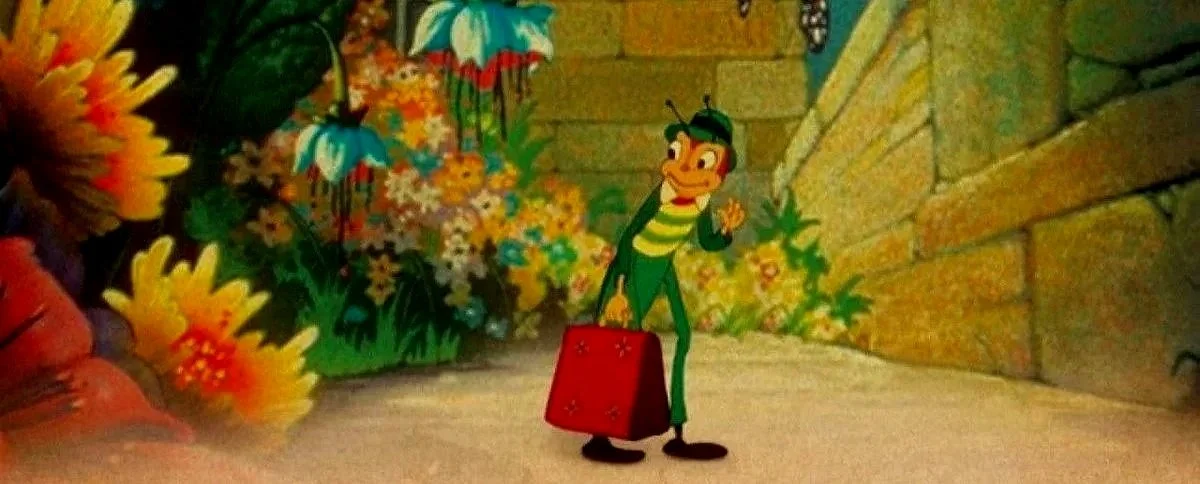
Mr. Bug Goes to Town
Part 1:
The Story Behind the Story
With the commercial success of Gulliver's Travels in December 1939 and Fleischer Studios with its 700-plus staff members now happily settled in Florida, the Fleischers were eager to get started on their second full-length feature film. And Paramount, with optimism riding high even before Gulliver’s opening, had already given them the green light. By March 1939, Fleischer Studios was already hard at work developing ideas for their next feature-length film!
Story Concept 1: Mythology
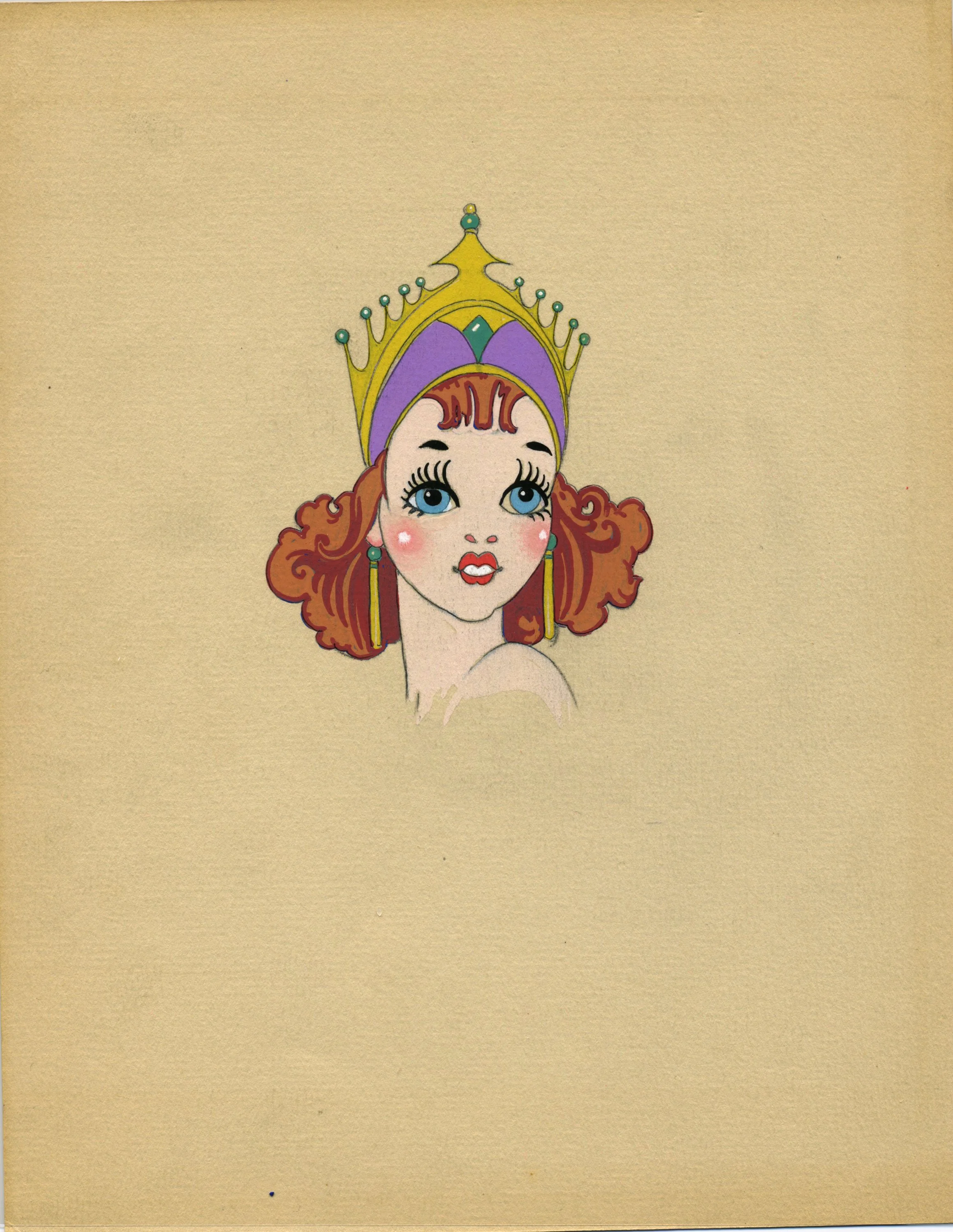
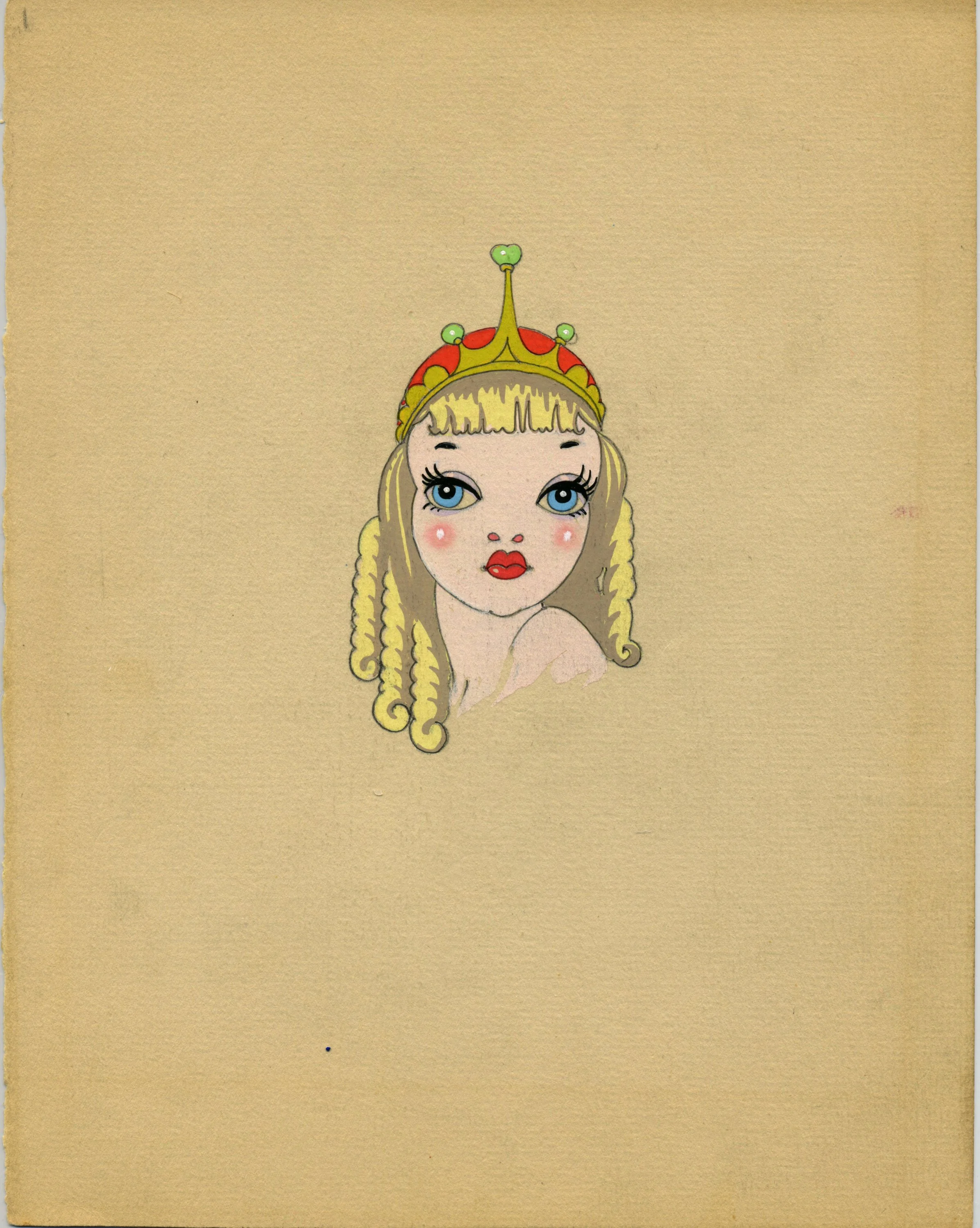
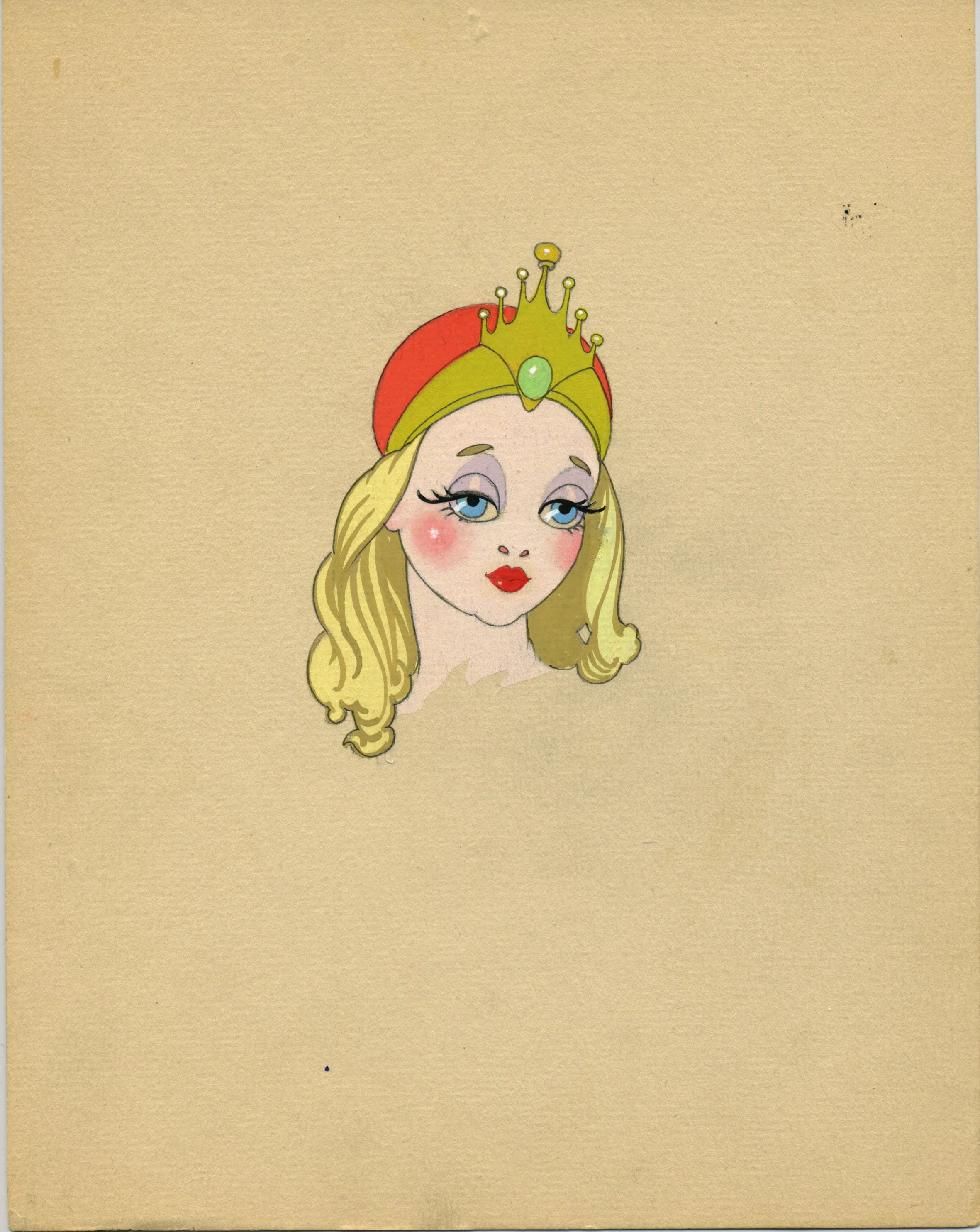
In keeping with the myth theme, staff members began developing character drawings. In addition to Pandora, the story of Neptune’s Daughter was also being considered.
Some gorgeous drawings of women exist from this time, including the drawings here. Likely a concept drawing for some of the proposed stories, these head drawings were probably created by Grim Natwick, a talented animator who had returned to Fleischer Studios for the making of Gulliver’s Travels.
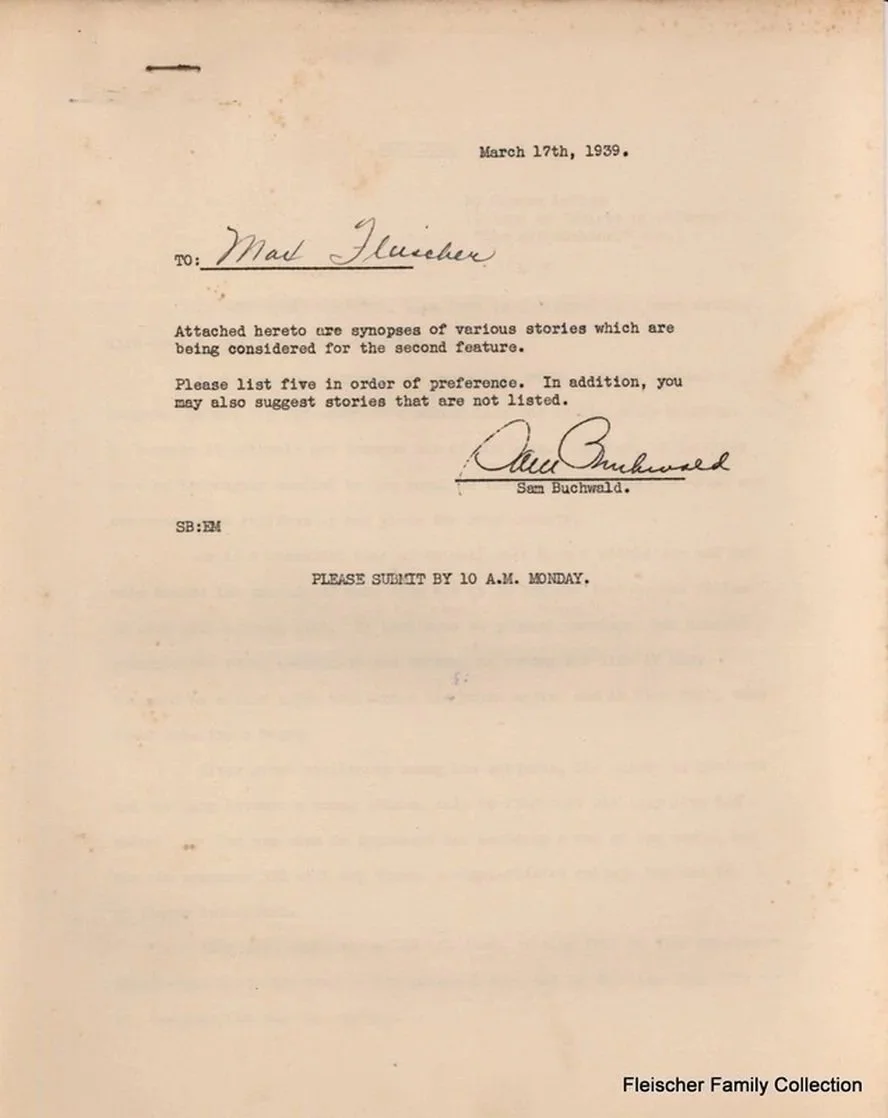
Early on in the process, Paramount executives weighed in with their ideas for the Studios' second feature film, narrowing their choices down to four possible stories with a preference for those based on themes from mythology. With this in mind, a memo was distributed to upper level Fleischer staff in March 1939 containing five story ideas they could vote on, including one based on the Greek myth Pandora.
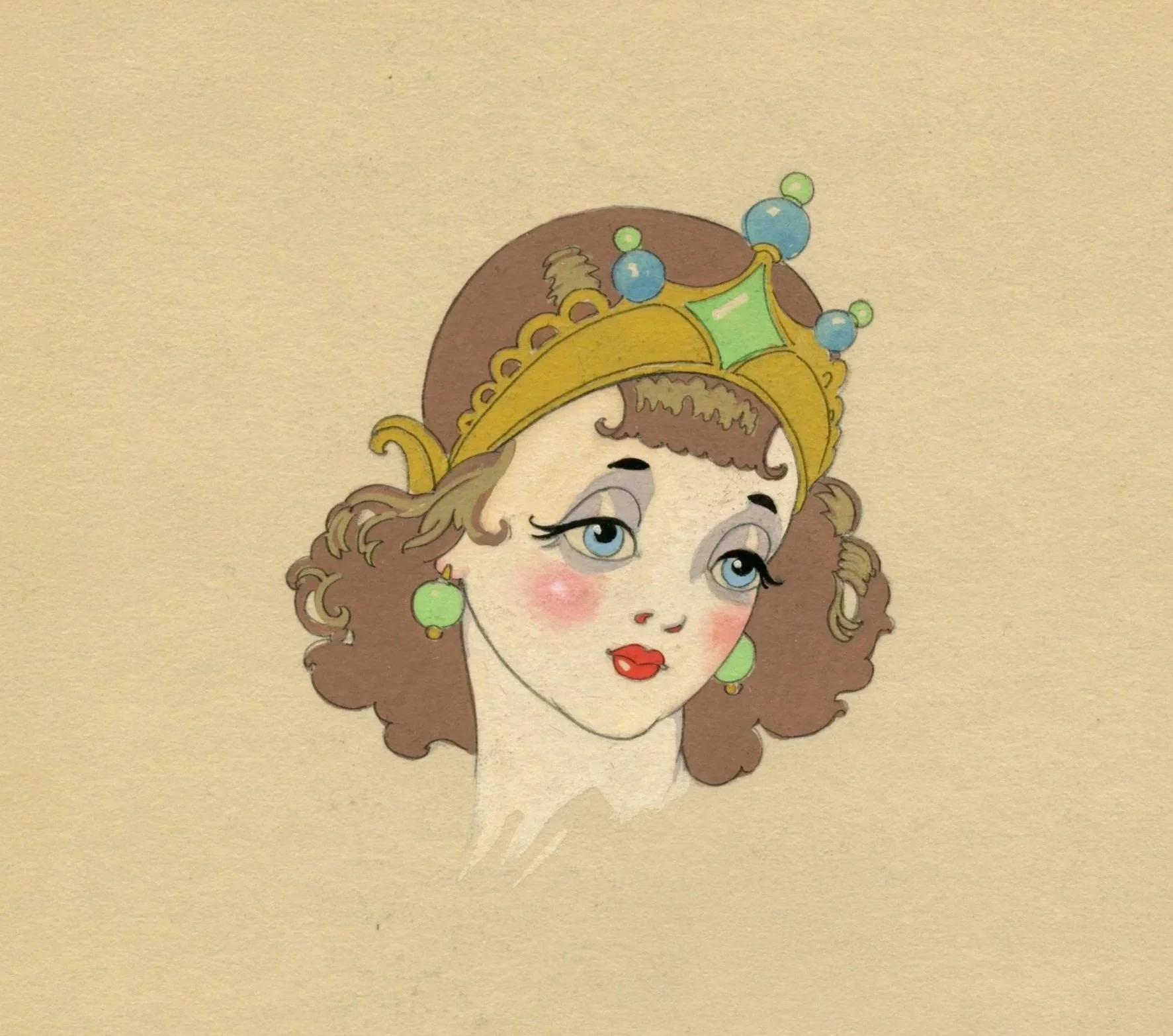
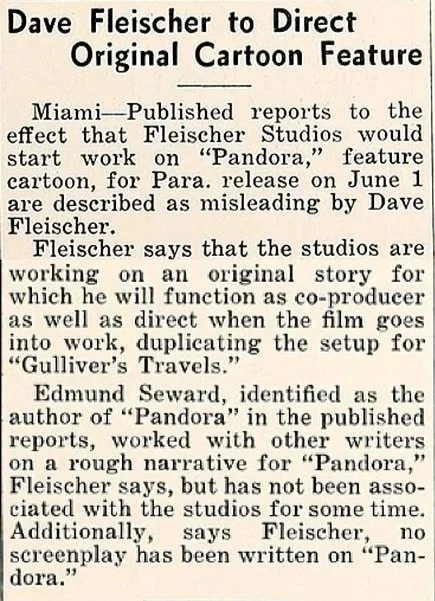
Natwick was well-known for his exceptionally beautiful drawings of women. The reverse side of one of these drawing has ideas for film titles: Maid of the Sea, The Voice of the Sea, A Davy Jones Locker, and The Song of the Sea is a Song of Mystery.
Character concept drawings. Head drawings were likely created by animator Grim Natwick. Mermaids were drawn by an unknown artist. Fleischer Family Collection
We don’t know exactly when or why… but at some point, the myth story line seems to have met a tragic end.
Dave Fleischer is quoted in the August 8, 1940 edition of Film Daily saying that previously published reports that the Studio would soon start work on Pandora, a feature cartoon, were “misleading” and that Fleischer Studios was, instead, working on an "original story."
While it was indeed true that the studio was no longer considering the Pandora story, it hadn't moved on to story ideas entirely of their own creation ... at least not yet.
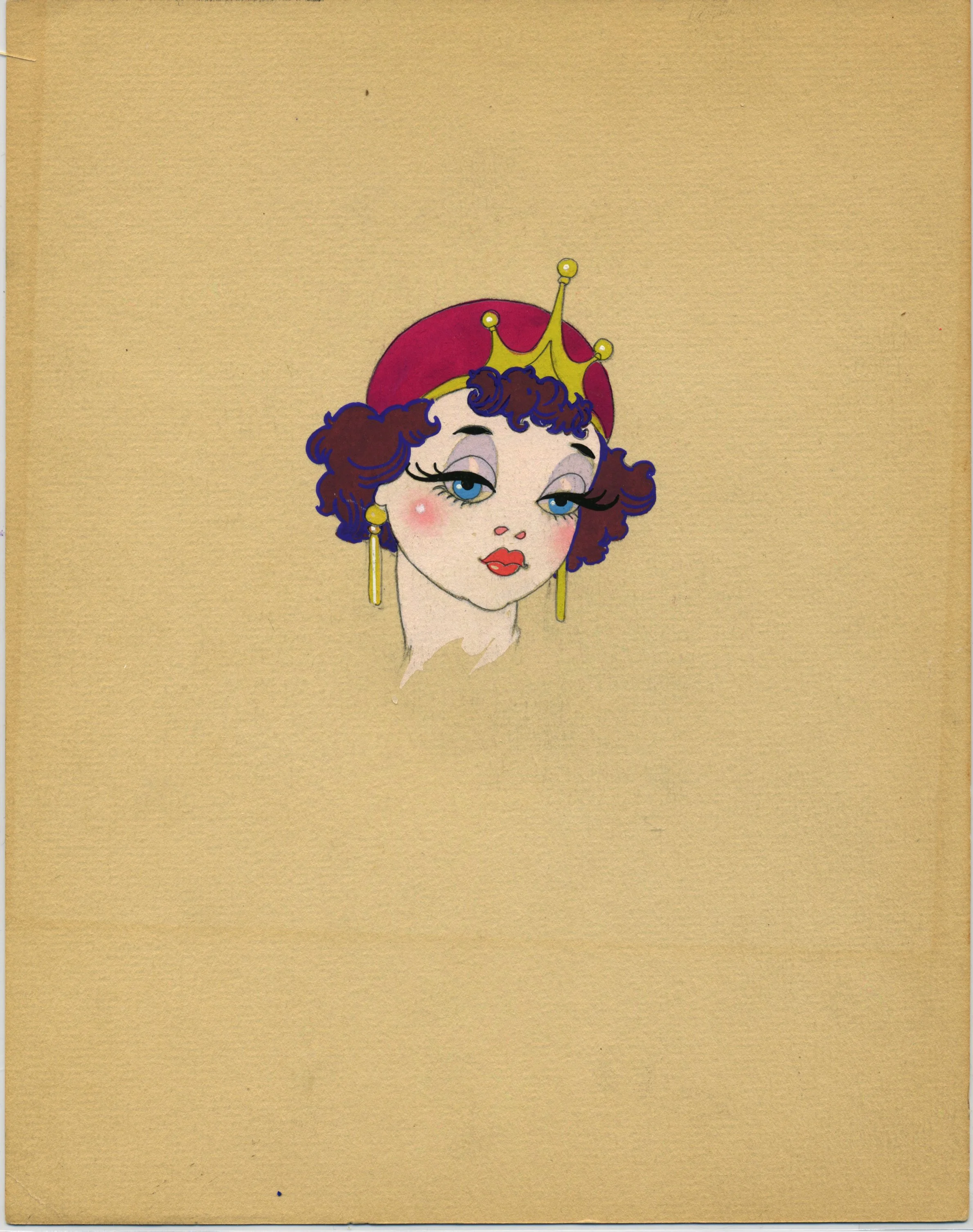
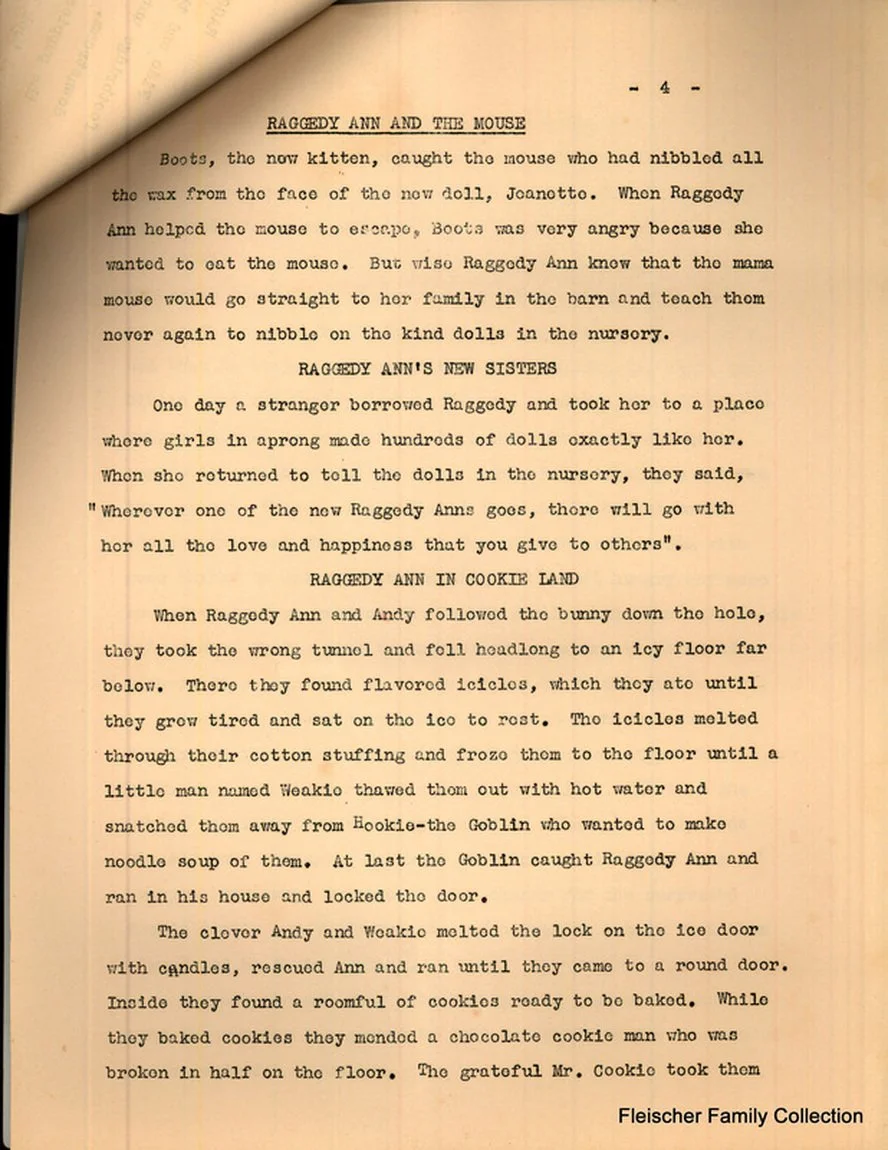
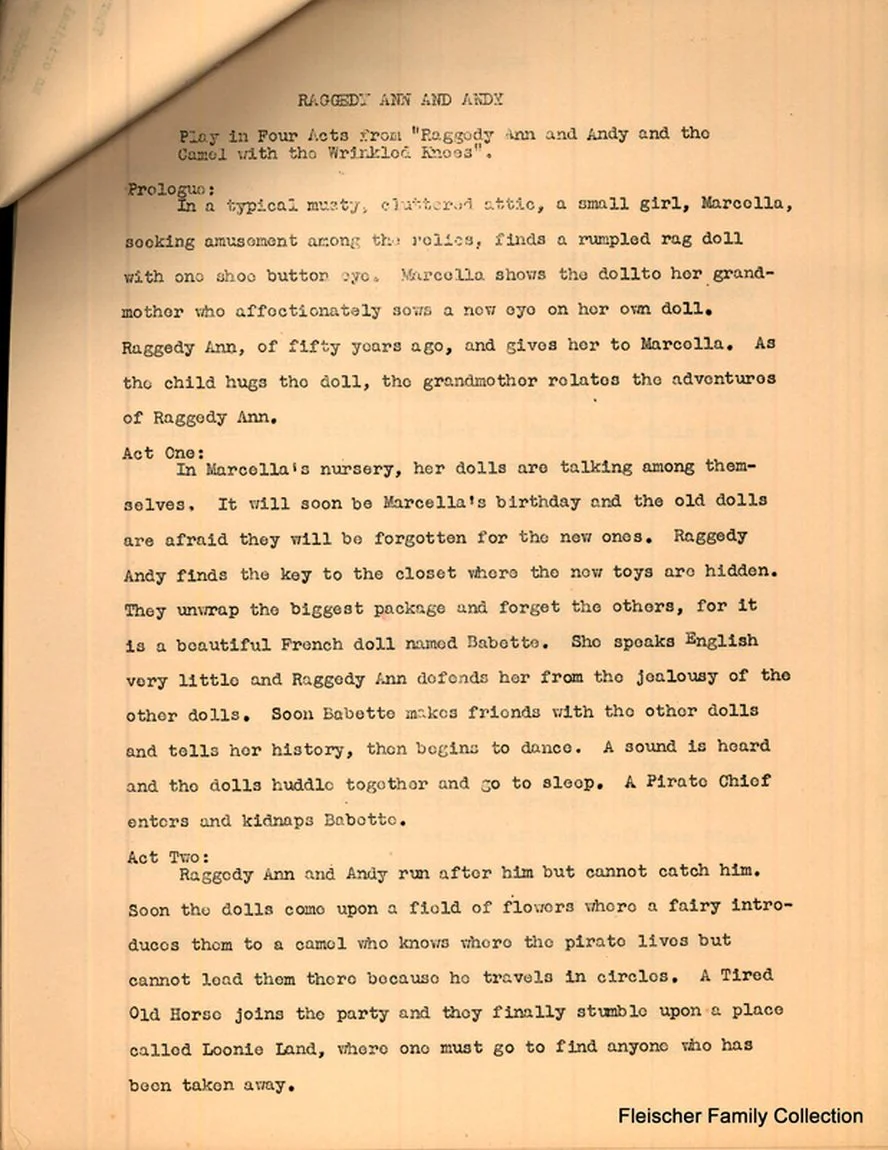
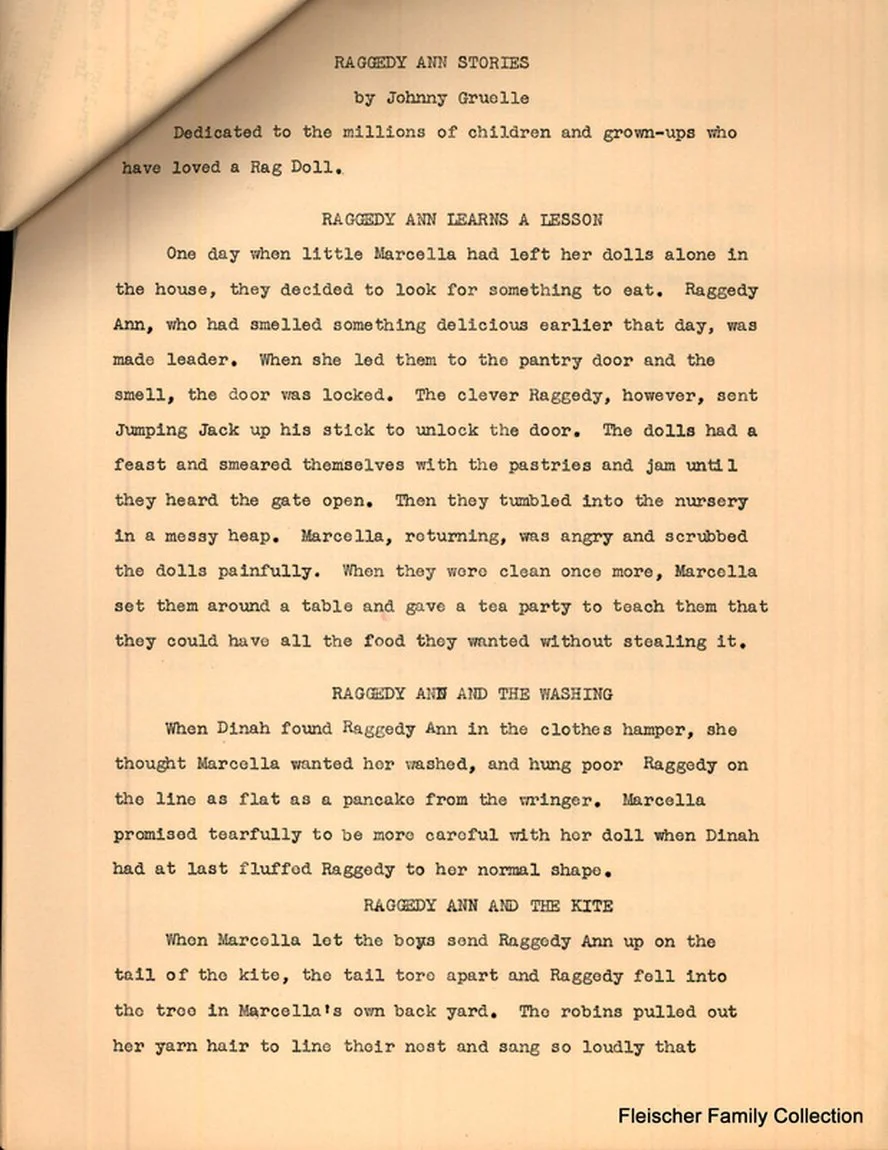
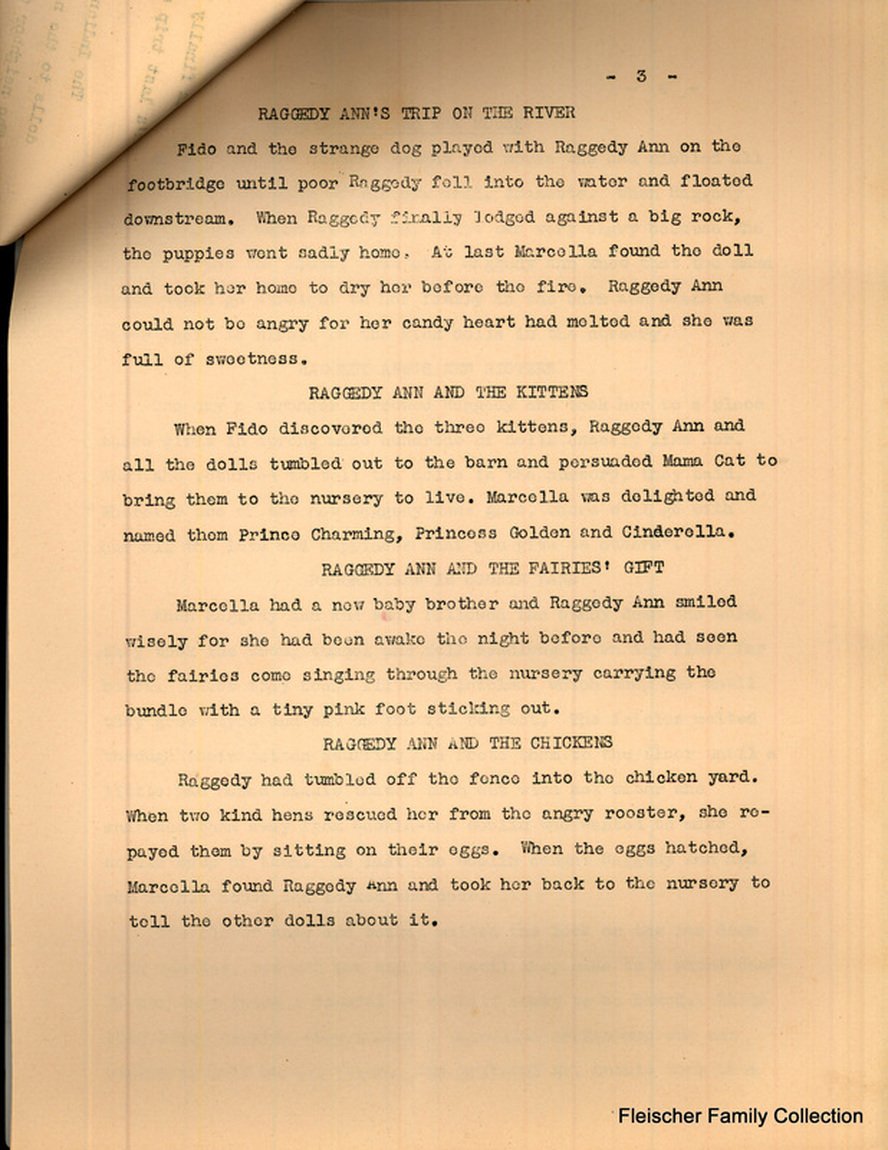
This memo, consisting of five story ideas and dated March 19, 1939, was circulated among Fleischer staff. While none were made into feature films, Raggedy Ann and Andy was later made into a 17 minute long Color Classic film.
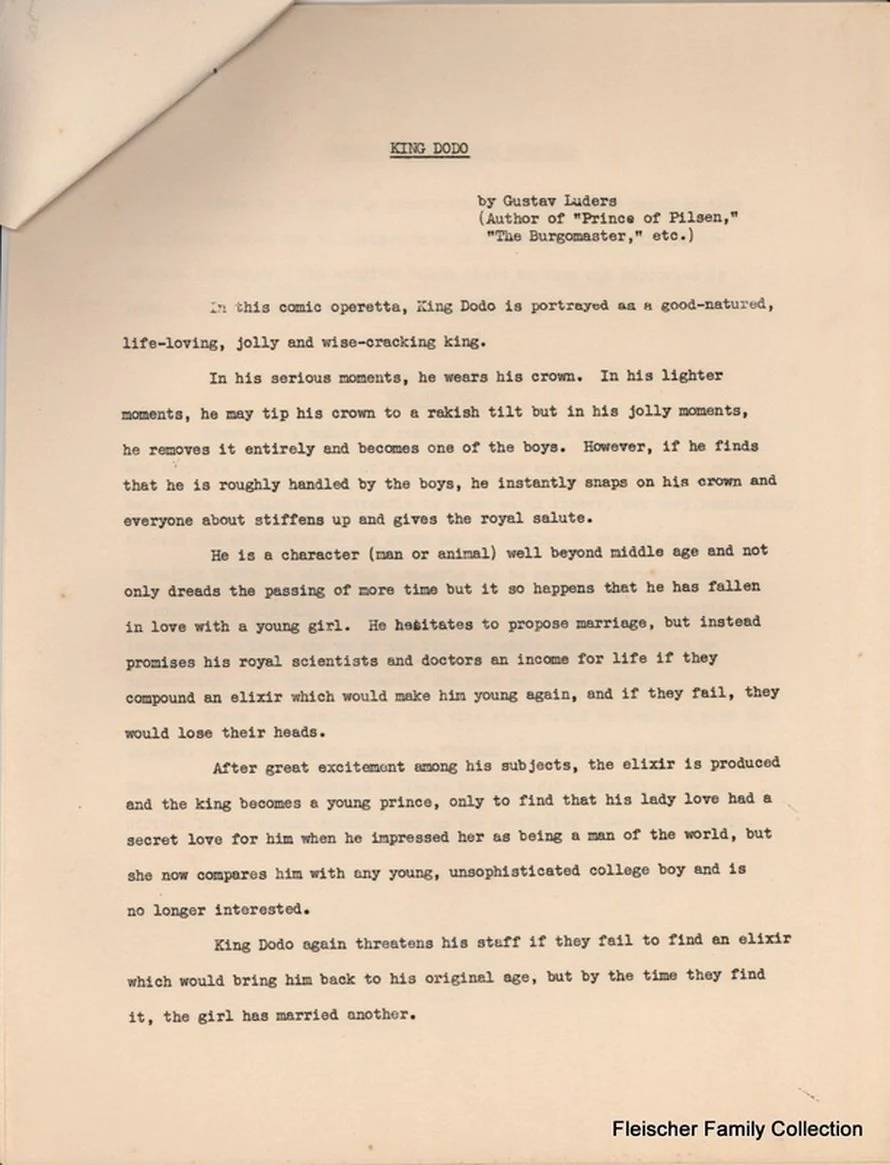
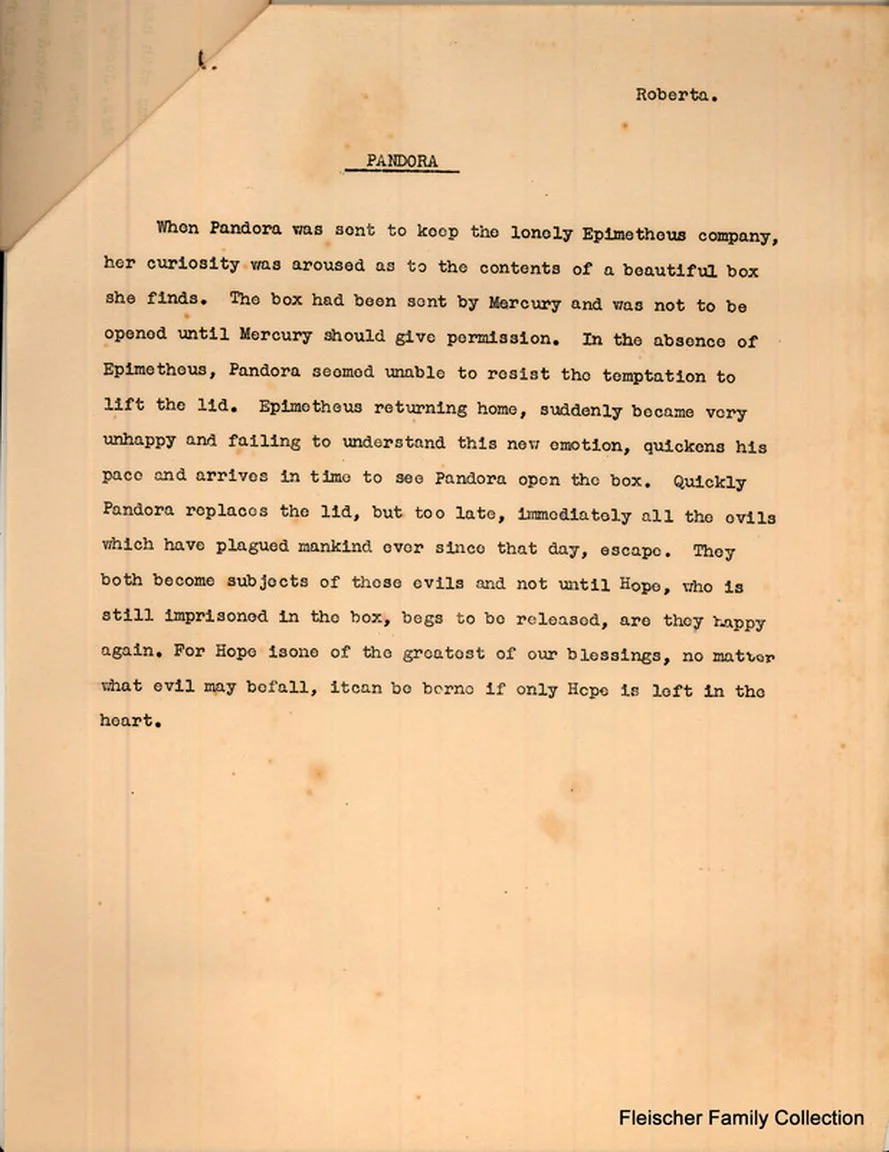
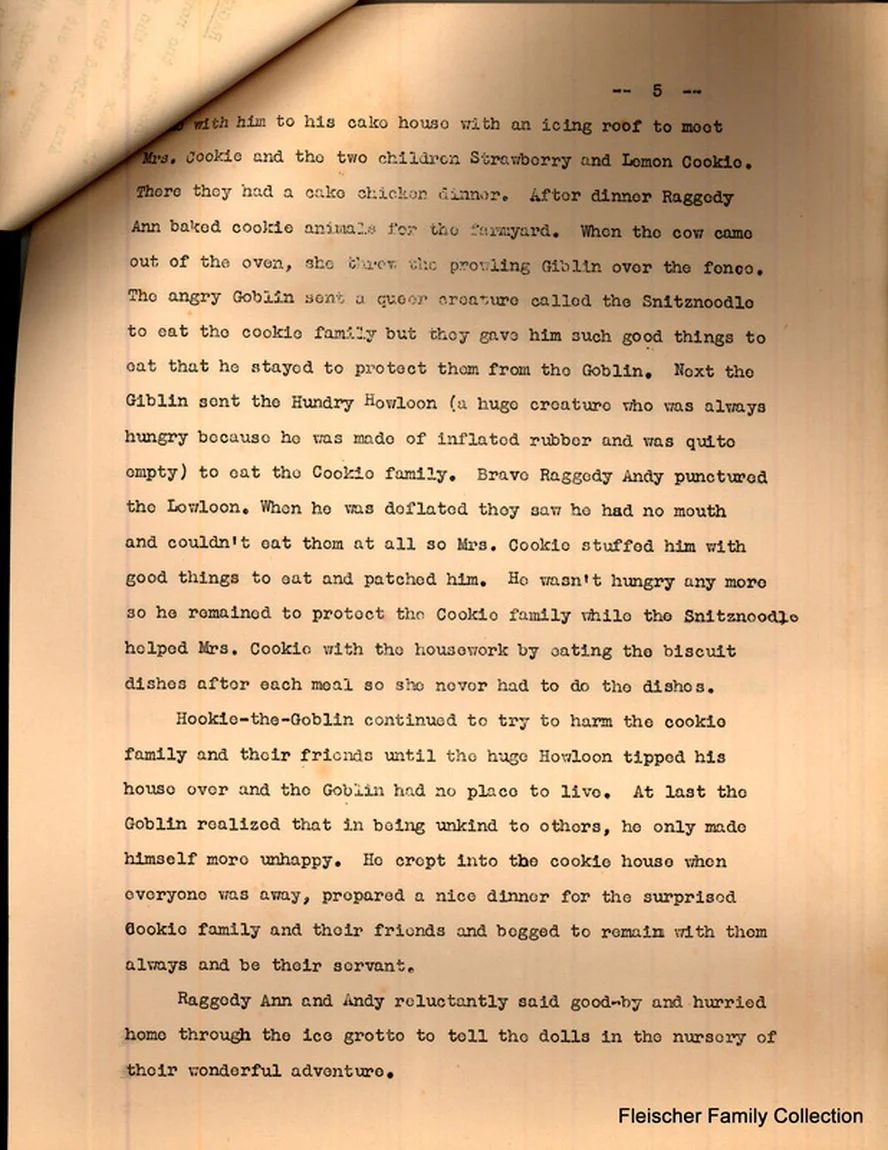
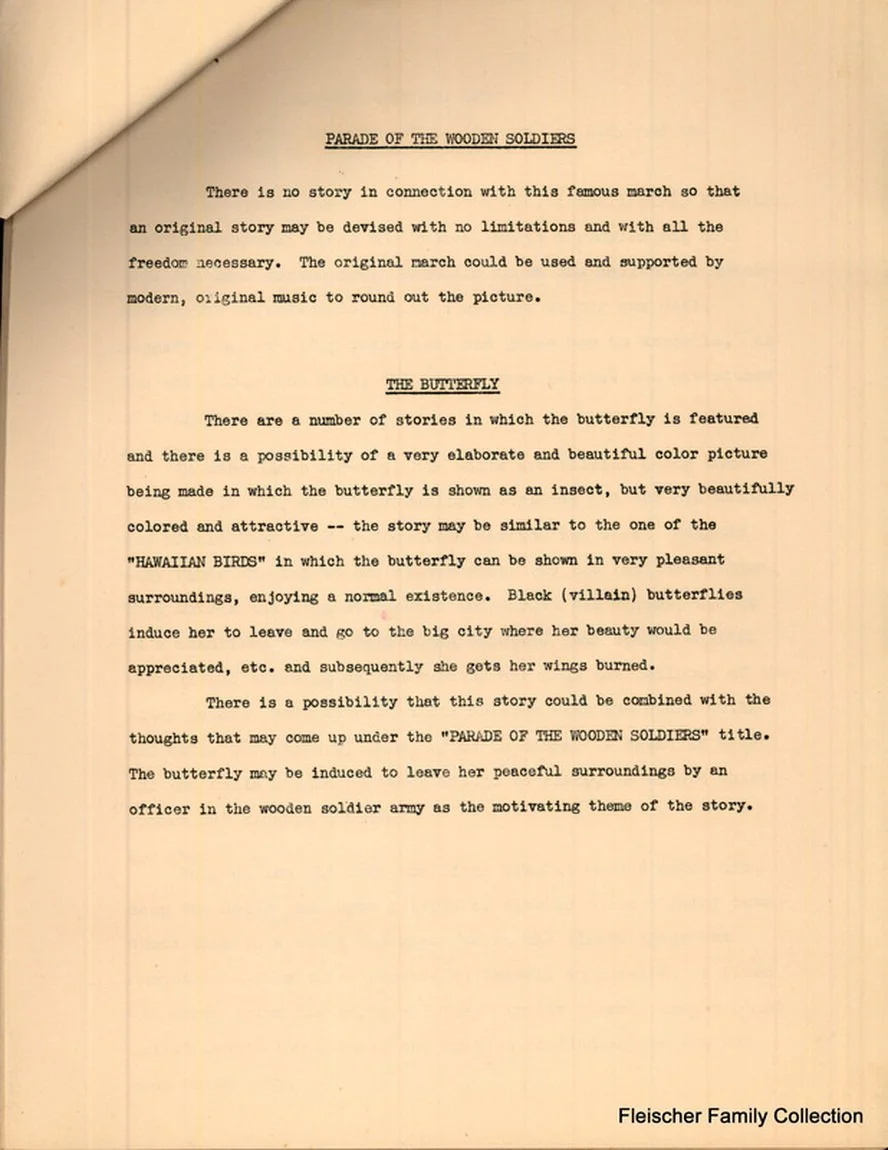
Motion Picture Herald, January 1940
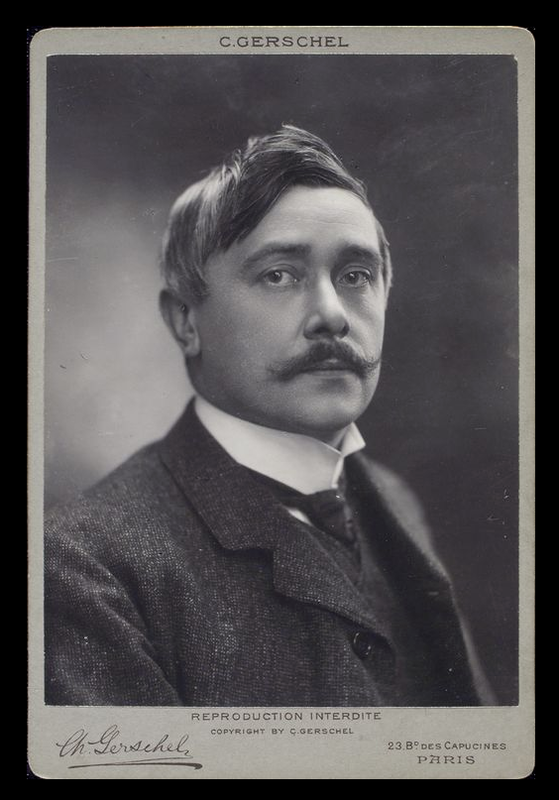
Maurice Maeterlinck
Concept 2: The Life of the Bee
Perhaps it was Max Fleischer’s deep and lifelong interest in science at play, but suddenly there was a completely new proposal for the Studios' second feature: The Life of the Bee, a well-known book by Nobel Prize winning Belgian playwright and author Maurice Maeterlinck.
While the book, published in 1901, offers a "bee's-eye view" of the world, it is as much a reflection on the human condition. Maeterlinck, who was himself an expert bee-keeper, wrote: "it is not my intention to write a treatise on apiculture, or on practical bee-keeping... I wish to speak of the bees very simply, as one speaks of a subject one knows and loves to those who know it not."
Maeterlinck came to the United States in 1919 at the request of film producer Samuel Goldwyn who asked him to produce a few scenarios from the book for film. Goldman reassured him: “I know you don’t understand picture technique. That doesn’t matter. All I want you to do is just go away and write your greatest book over in the form of a scenario.”
A few weeks later Maeterlinck returned with a manuscript. Goldwyn was delighted and retreated into his office, taking the manuscript with him to read. A couple of minutes later he ran out screaming, “My God, the hero is a bee!” That was the end of Goldwyn's collaboration with Maeterlinck.
But Max Fleischer, who had read the story, was intrigued by the work that had so baffled Goldwyn; so intrigued that nearly a decade later he proposed The Life of the Bee as the subject for the Studios' next animated feature. As Leonard Maltin writes in his book Of Mice and Magic, the Fleischers tried to acquire the screen rights to The Life of the Bee only to discover that - unfortunately - they were not available.
Story Concept 3: Bugs!
Returning to the drawing board yet again, the Fleischers decided that this time they would develop a feature film that was entirely their own; no more scripts dependent acquiring rights from others, no more stories borrowed from well-worn fairytales and folk stories (which until then had served as the source material for most animated films). Inspired by Materlinck's concept, Max started with a cast of insects, but the story was all his own: an original modern story, set in present day.
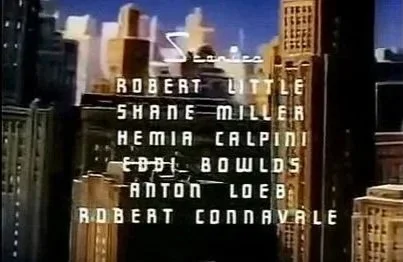
The opening of Mr. Bug Goes to Town features the skyline of New York City
Although they were now operating out of their new and custom-designed studio in Miami, Florida, the writers set the film in New York City. The story centers on inhabitants of Bugville, a colony of insects living in a small tranquil garden near a busy city street. But their lives takes a dramatic turn for the worse when a broken fence allows humans – and their dangerous behavior – into their midst. Suddenly humans are trampling their homes and discarding lighted matches that rain fire down from the sky upon them.
Did the writers intend this to be a cautionary tale about how carelessly humans were impacting the environment? Max himself had a specific interest in presenting layman's versions of important scientific and philosophical ideas. Two of Fleischer’s early films set out to explain Evolution and the theory of Relativity to audiences, and the underlying theme of Gulliver’s Travels was the folly of war and its dangerous impact on mankind.
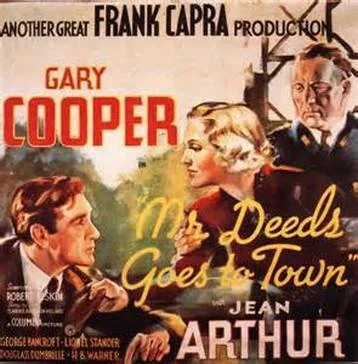
The Fleischers titled their story Mr. Bug Goes to Town; a play on the title Mr. Deeds Goes to Town, a film that had been released about four years earlier starring Gary Cooper. The story-line for Mr. Deeds Goes to Town actually has nothing to do with the story-line the Fleischer Studios writers came up with for Mr. Bug Goes to Town. They were just playing with the words in the title and discovered they made sense for their story as well… so it stuck.
Hoppity, the hero of the story, is a grasshopper. Having been away on a journey, he returns to Bugville and – upon witnessing the destructive power of the humans - quickly becomes involved in plans to save Bugville. But humans aren’t the only ones endangering Bugville. A corrupt beetle, C. Bagley Beetle, has designs on Hoppity’s sweetheart, Honey Bee, and Beetle's two pesky henchmen, Smack the mosquito and Swat the fly, are out to foil Hoppity at every turn.
Just as there are good and bad bugs, there are bad and good humans. Through many twists, turns, disappointments and near disasters, Hoppity ends up changing the fate and fortunes of a couple of very good humans, Dick and Mary, and, in the process, manages to saves all of Bugville.
Go to:
Max's son, Richard Fleischer (a well-known film director) went by the nickname Dick and married a woman by the name of Mary (Mary Dickson who went by the nickname Mickey).
While one might presume Max named the two "good" human characters for his beloved son and daughter-in-law, the truth is that Dick and Mickey weren't married at the time, and may not even have started dating yet!
The two most prominent humans in Mr. Bug Goes to Town are Dick and Mary: a struggling composer and his wife, an avid gardener. The couple's future (and as it turns out the future of Bugville) is riding on expected royalties from Dick's composition, Castle In The Air.
Fun Fact
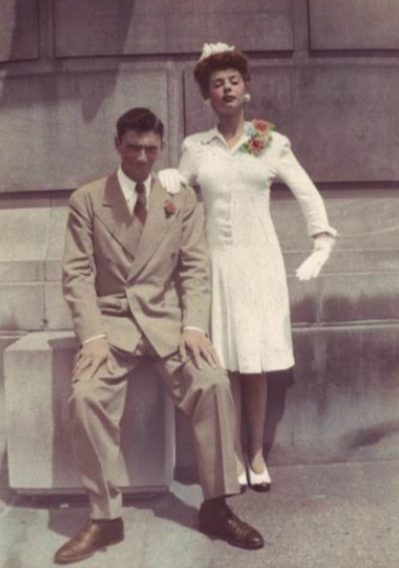
Newlyweds Dick and Mickey (Mary) Fleischer pose for the camera in 1943 (Courtesy Jane Reid)
During the making of Mr. Bug Goes to Town Mickey and Dick were either just starting and/or about to start college, which is where they would eventually meet. They were married in June 1943, well after the film had already been completed and released.
While it's possible that they might have known each other, it certainly would have been a stretch, or an amazing act of premonition, for Max to have envisioned their eventual marriage. That being said, family lore has it that Max did have a special talent for such things... at least when it came to family matters.
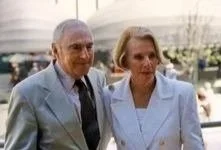
Dick & Mickey Fleischer, mid-1990s (Courtesy Jane Reid)